

"When we start these things, we’re pretty good": Japanese GP Data Debrief
Oscar Piastri may have narrowly missed out on a win from his first race of the season, but the level of performance he showed when he was in the mix is promising...


‘To finish first, first you must finish’. It’s an old motorsport adage, but it became entirely relevant again in Japan. Oscar Piastri not only started his first Grand Prix all year - at the third time of asking - but also finished it after genuinely having looked to be in with a shot at the win over its first phase, proving what is possible when you are in the fight to begin with.
As Piastri said on the radio post-race, “turns out when we start these things, we’re pretty good”.
How one moment changed the picture out front…
But arguably the pivotal moment in taking that shot away from Piastri and moving it to be in the hands of the Mercedes of Antonelli was the safety car which emerged on lap 22 in response to Ollie Bearman’s heavy shunt into the tyre barrier at the entry to Spoon curve.
The incident is widely acknowledged to have been caused by the speed differential between himself and Colapinto ahead into the corner; a dangerous quirk of this regulation set in its current state. Thankfully, Bearman walked away from the 50G crash and was checked over at the medical centre before returning to the garage and his team, but it was an incident that created the pivotal reactionary moment of the race.
For some, like George Russell especially, it couldn’t have come at a worse time as he’d exited the pits less than a minute before the safety car did, but for others, like his teammate Kimi Antonelli, it was dream timing. He was in the lead and able to retain it through a ~10s pit loss compared to the typical ~22s under green flag conditions that Russell and Piastri had suffered.
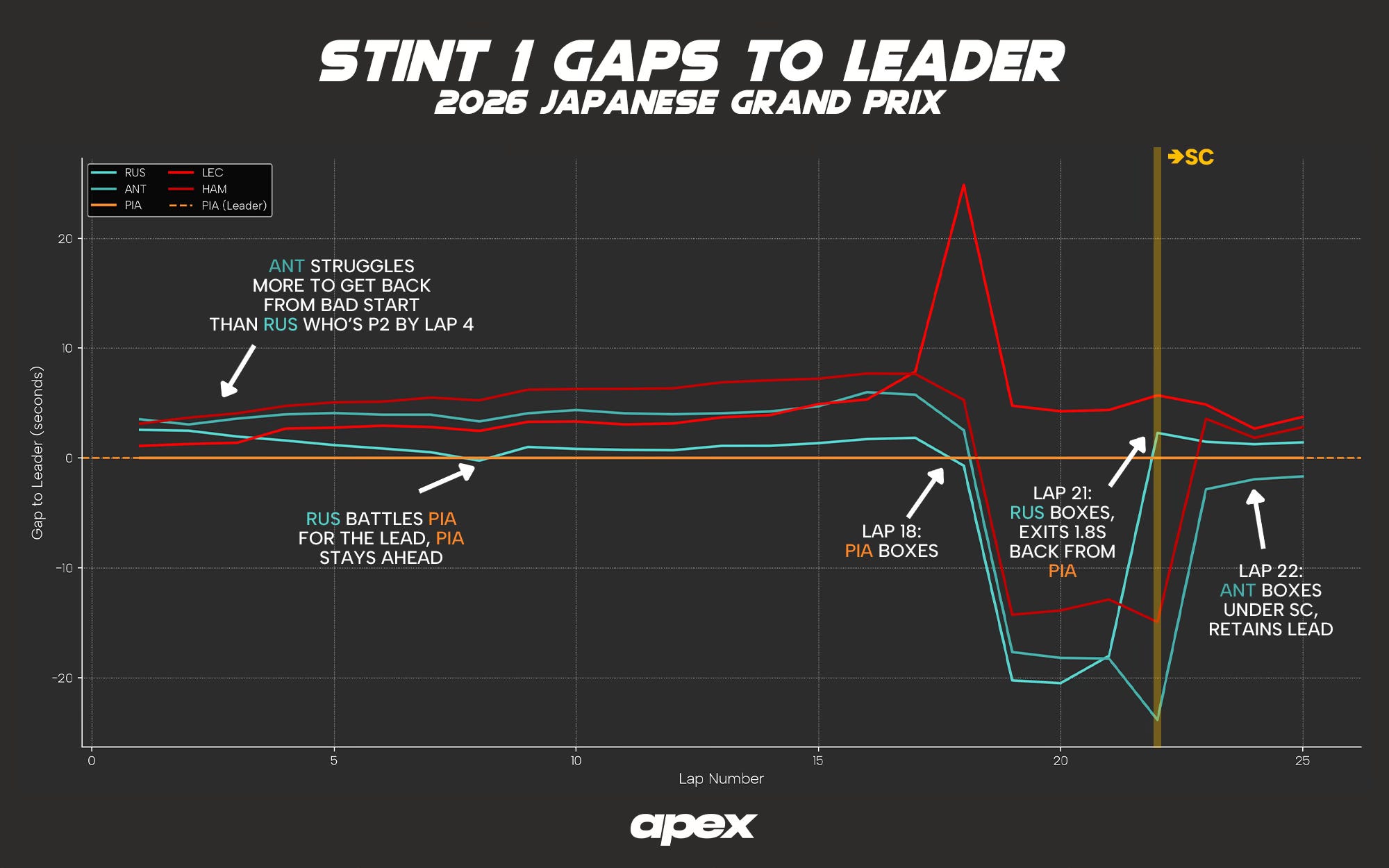
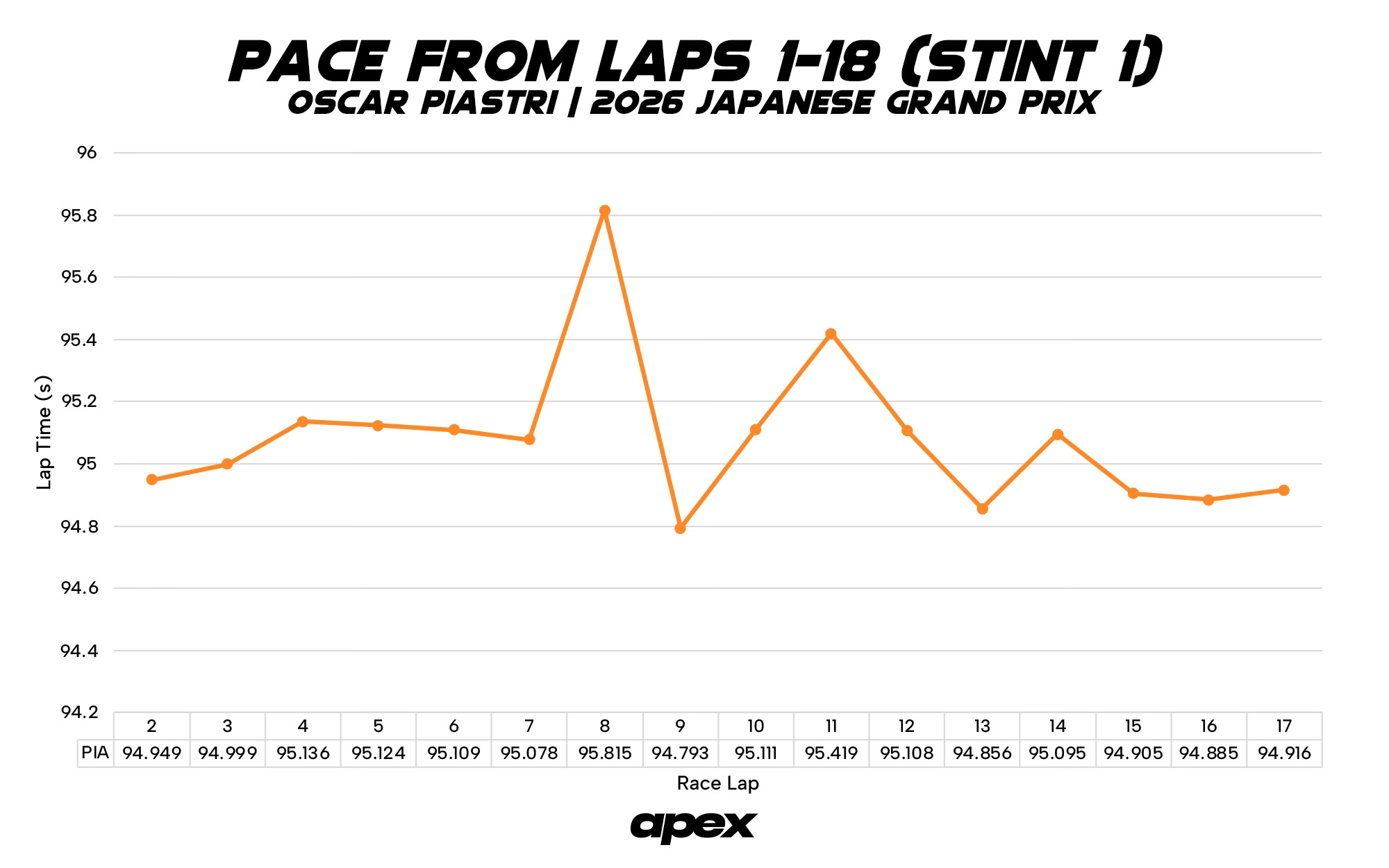
For others though like Oscar Piastri, it sat somewhere in the middle. He’d boxed on lap 18 as McLaren felt it was necessary to bring him in and cover off any threat of an undercut from Russell particularly, but just Mercedes more generally. But that wasn’t a decision that had been prompted by a drop in pace or tyre performance for him, and so could have actually been unnecessary in the bigger picture.
What it did do was sacrifice his track position, which had been the lead of the race and with clean air, and effectively hand that advantage to Antonelli as Mercedes hadn’t blinked to bring him in to cover off the stops of Norris or Leclerc further back. It meant that, as mentioned earlier, Antonelli held the net lead he’d gained over the pitstop phase under the safety car.
Whether Piastri would have been able to hold the lead, had McLaren opted to prioritise track position and wait, over the full second phase of the race versus the Mercedes is, of course, an unknown.
Based on pace alone on the hard tyre, it looks doubtful, as Antonelli lapped an average of 0.493s quicker than Piastri from the end of the safety car period to the chequered flag. However, that has to be tempered with the fact that he had clean air, which he would not have had had he been behind Piastri, and its clear that the Mercedes W17 strongly benefits pace-wise from that factor.
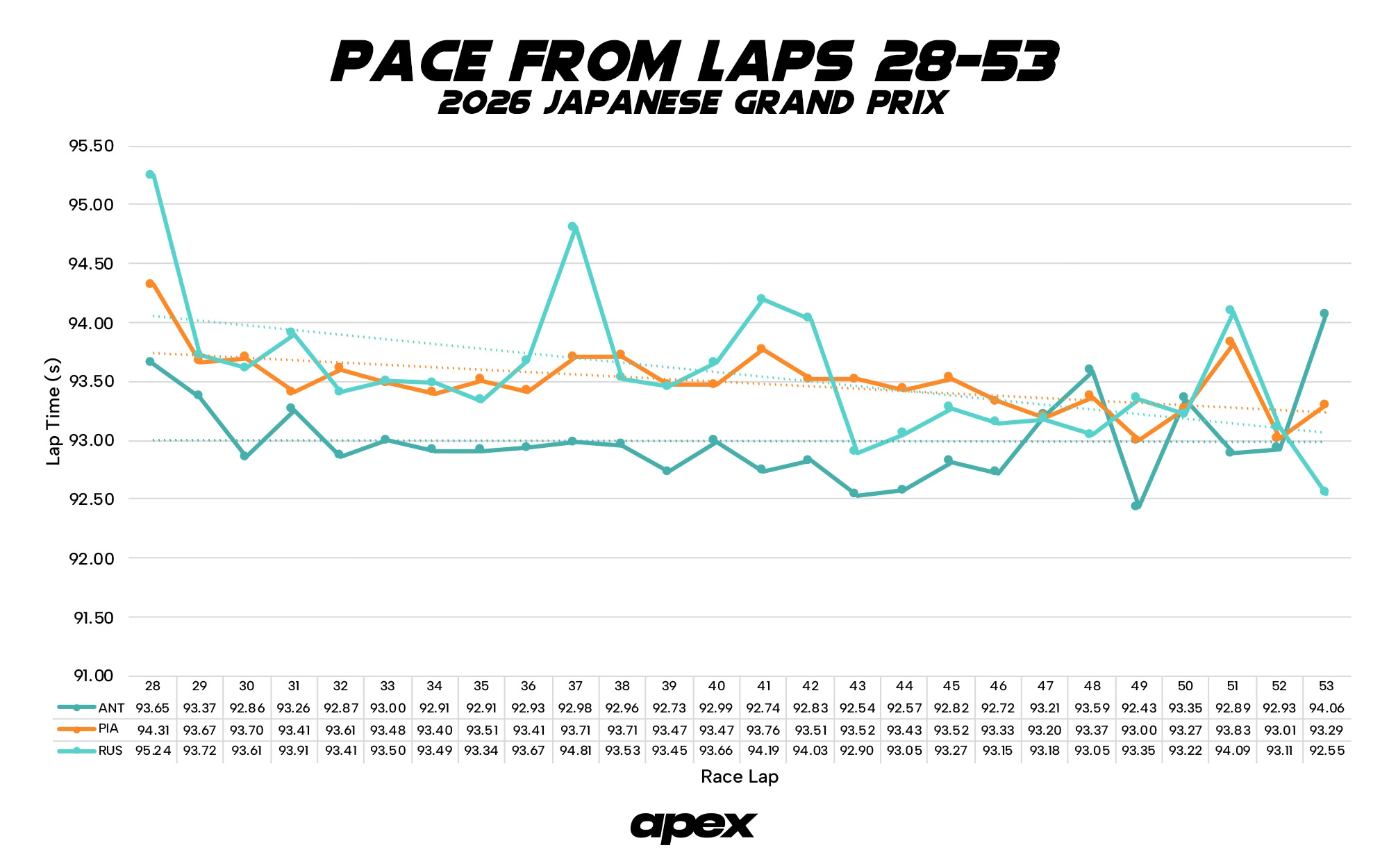
George Russell’s average pace over the same phase of the race shows the impact of that. He was within a second of either Leclerc or Hamilton for the majority of it as they battled for the final podium place, and as a result was 0.553s slower per lap than his teammate.
So although the Mercedes have the lead for race pace once again this week, as they have done over every race so far, the field tightening up in Suzuka and both McLaren and Ferrari being in positions to more closely challenge them meant that lead was not as big as it has been, and seemed more sensitive to additional variables, like that clean air effect.
Race Pace


At a team-level, Mercedes sat just 0.216s clear of their closest rival, which this weekend had switched from Ferrari to McLaren - largely driven by Piastri’s pace given that Norris was 0.241s slower than him at a driver-level. However, Ferrari were not far off and sat 0.340s back from Mercedes’ benchmark average with Leclerc more able to utilise it than Hamilton who felt he “simply didn’t have the pace to compete”.
It’s a promising sign of the level of competition we might expect from here, with three teams in the fight out front more consistently. But what prevented that in the first place remains perhaps the biggest threat to it moving forwards - reliability.
Dropping back…
It’s getting to grips with the regulations and their impact on performance beyond reliability that’s preventing one team specifically from getting in that mix - Red Bull. It’s safe to say a huge rift appeared in Suzuka between their average pace and that of the teams in the front group. Verstappen and Hadjar’s combined average left them over 1.2s back from the benchmark, but the majority of that delta came from them to Ferrari in P3, at 0.918s.
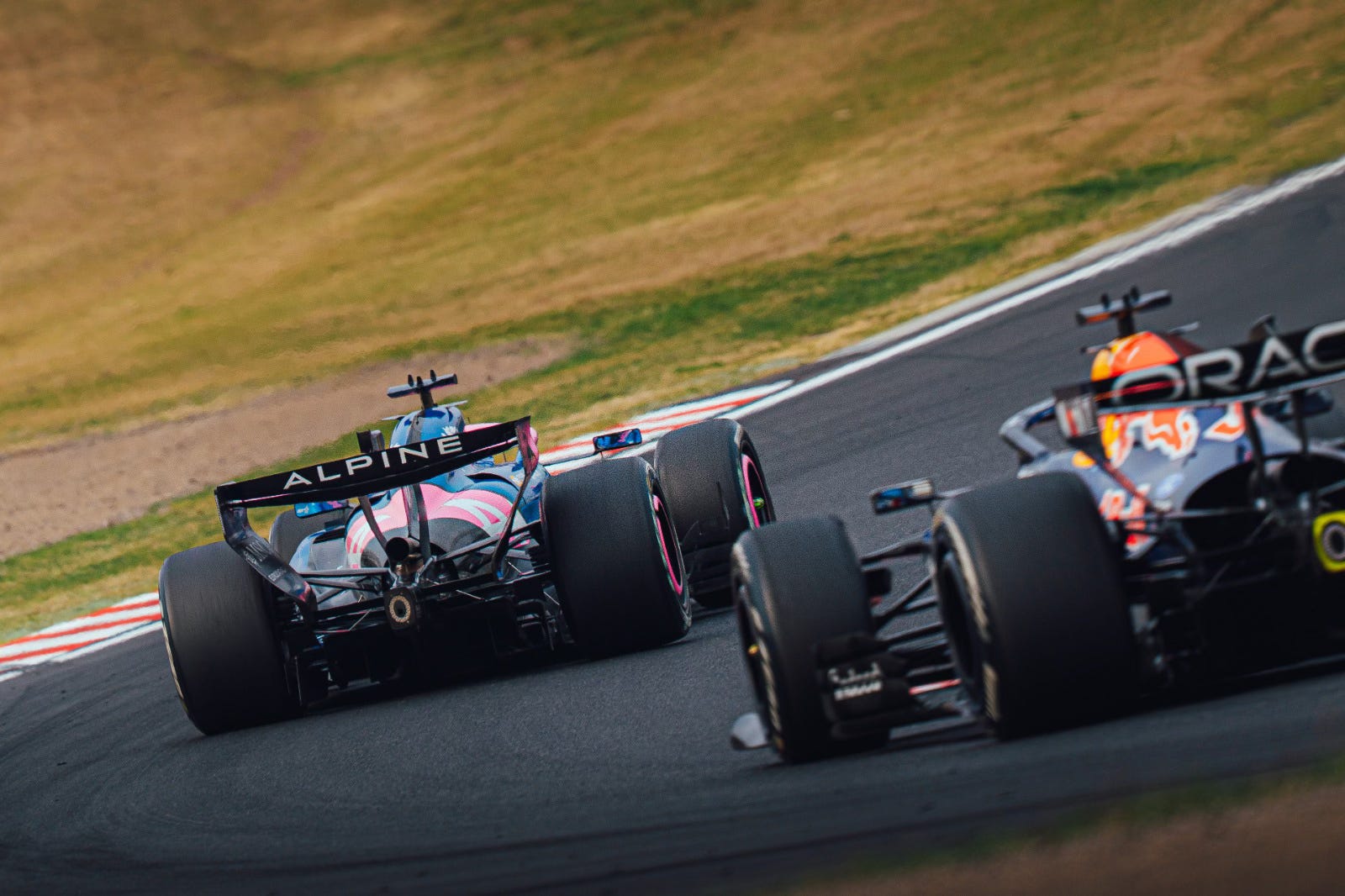
In fact, Red Bull’s pace was much more closely matched with Alpine and that was both a consequence and cause of the battle that played out between Gasly and Verstappen, which saw Gasly finish P7 to Verstappen’s P8 with just 0.337s between them at the line. At a driver-level, Gasly’s own pace was very marginally quicker than Verstappen’s.
On Hadjar’s side, he also suffered from the safety car timing by boxing the lap before it came out which initially left him behind Hulkenberg’s Audi at the restart, and then Bortoleto’s further into the stint, before he was able to get by before losing out again to Hulkenberg in the closing stages, who had taken an extra set of hard tyres. “I had a good fight with the Audis”, he said, “but didn't have the pace to get passed [sic] them”.
It’s not “really where [they] want to fight”, as Verstappen said, but getting involved in these close battles will have allowed Red Bull to assess and gather data about how their car performs in them which will inform how they move forward from here in improving not only flat out performance, but raceability too.
A tightly packed midfield…
Perhaps as a result of the safety car condensing the field in the mid-phase of the race, but also of all but five drivers following the same medium>hard one-stop strategy, just over half a second (0.539s) split Red Bull at the front of the midfield group from Haas at the rear, whose average is somewhat compromised by Bearman’s DNF.
There were some drivers in this group, as there were out front, who benefited from the safety car timing and others who lost out, meaning that their result wasn’t necessarily a result of their pace potential.
Franco Colapinto was one of the latter, saying post-race that “those I was fighting with at the time ended in the points” while he finished P16. Arvid Lindblad was another who’d been running in the points over the first phase before losing out (P14), while his teammate Liam Lawson had the opposite experience - a tough first half with fortunate safety car timing promoting him to the points positions (P9).
At a driver level in the race pace that contrasting experience shows - less so for Racing Bulls where Lawson and Lindblad were split by 0.117, but more so at Alpine where Colapinto was 0.993s slower than Gasly as a result of spending the majority of his race following.
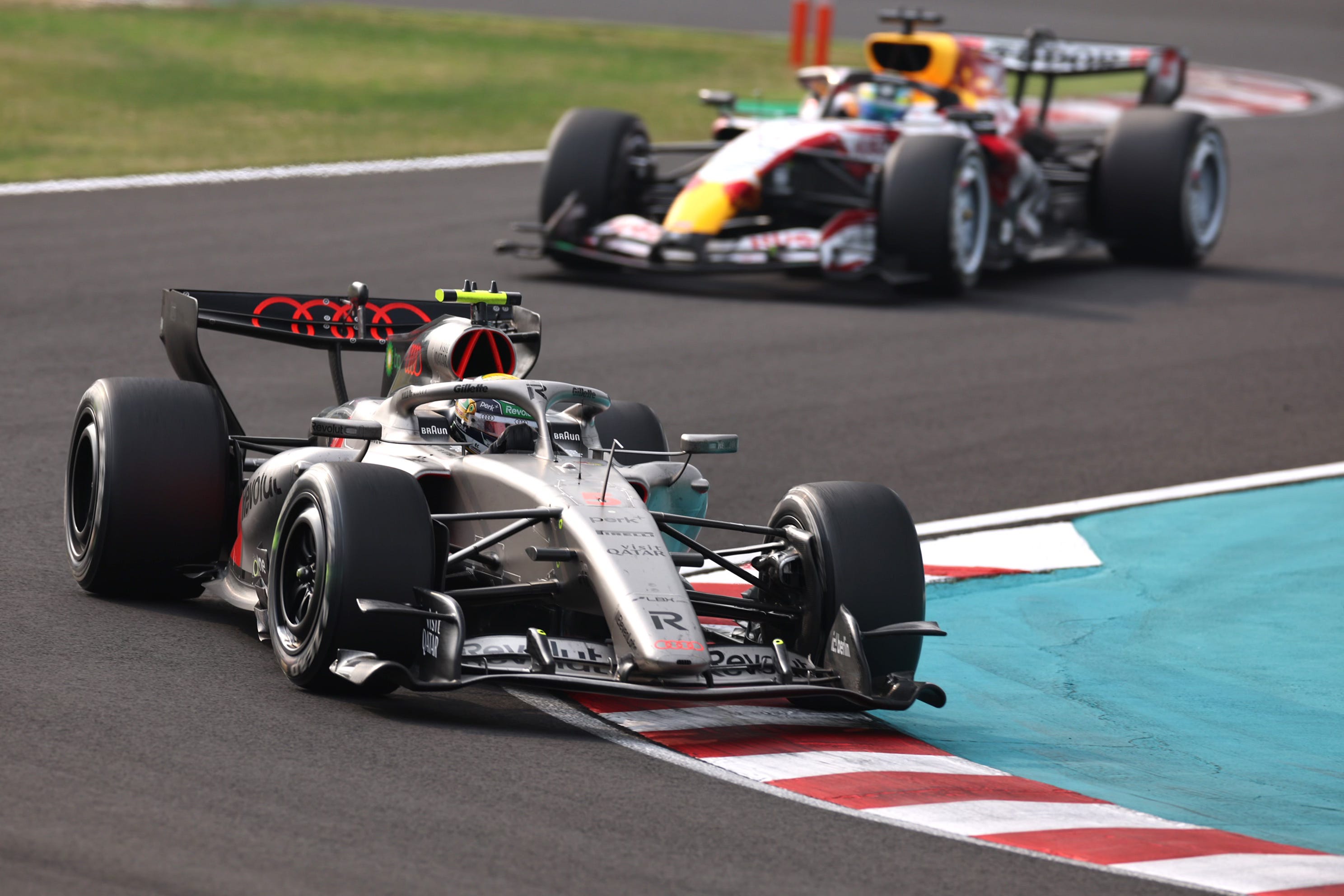
At Audi however it was a different story. The safety car worked in favour of Gabriel Bortoleto and Audi’s decision to hold him out for longer to avoid getting stuck behind cars on harder tyres. But while he initially stuck around P10 as the race restarted, he then lost out to Ocon, Hadjar, and his teammate Hulkenberg as his pace was 0.135s to 0.354s slower than those cars.
Nevertheless, in just their third race, getting two cars to the finish, one of which was inside the points with generally “encouraging pace”, as Mattia Binotto said, has to be taken as a positive for Audi.
Williams in ‘no man’s land’…
Between the midfield and the backmarkers we find Williams, who simply lacked pace both outright and as a result of their switching the race into a test session for Alex Albon. His pace, as a result, was almost three tenths slower than Carlos Sainz’s who was himself still over 2 seconds off the benchmark despite feeling he’d maximised the car.
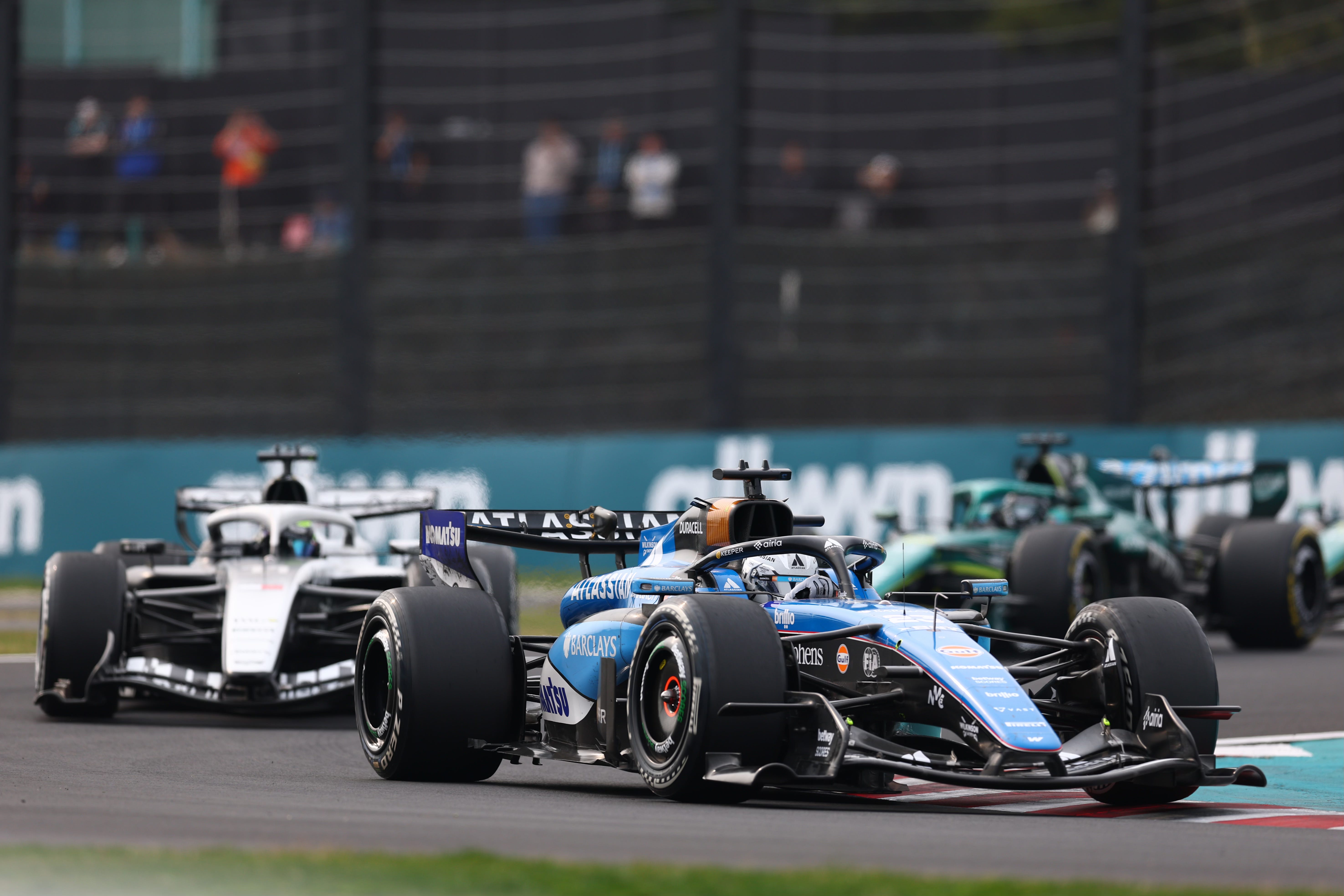
“Realistically we are achieving what we can achieve and executing our races as best as we can”, Albon said post-race, “but we just need to get on top of some issues and get a bit more speed in the car.”
Vowles echoed that sentiment, saying “these next five weeks will be some of the hardest for us, purposefully so, as we dig deep and make sure that we come back with a car in Miami that is worthy of scoring points.” Even without points-scoring in mind, Williams’ aim has to be to close down to the midfield pack which currently sits over 4 tenths away to the rear or over 8 tenths to the front.
Three of four backmarkers finish
While it is still Cadillac and Aston Martin who bring up the rear of the field for pace, Cadillac are again out-ranking Aston Martin but this time not just as a result of neither Aston Martin seeing the chequered flag.
For the first time this year, Fernando Alonso finished a race and while Lance Stroll did DNF, that marks a big milestone for the team with Mike Krack, their Chief Trackside Officer, calling it ”a significant moment for the team and our technical partner, Honda, at their home race.”
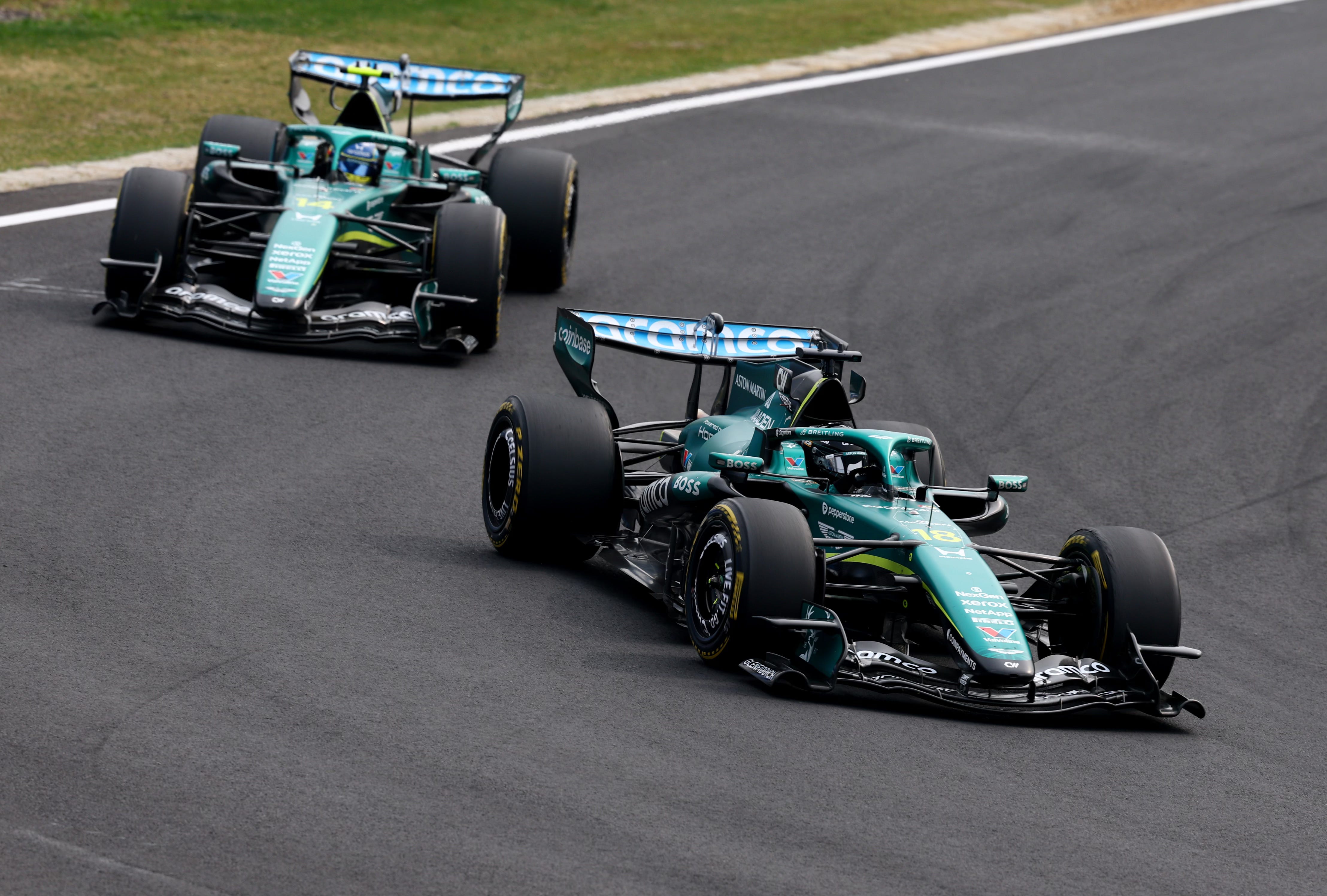
But with reliability issues slowly being resolved, even if “the water pressure issue on the ICE of Lance’s car shows there is still much work to be done”, as Krack said, their inherent lack of performance is now being exposed.
It comes as Cadillac enjoyed their “strongest race so far this year”, in Sergio Perez’s opinion which was reinforced by Graeme Lowdon’s comments about them taking “another significant step forward” in terms of “execution and reliability” to allow both cars to finish for the second consecutive race.
Tyre Performance
As had been anticipated heading in, the one-stop medium>hard strategy prevailed over the field with all but five drivers following it and only Bottas opting to start on the hard instead of the medium.
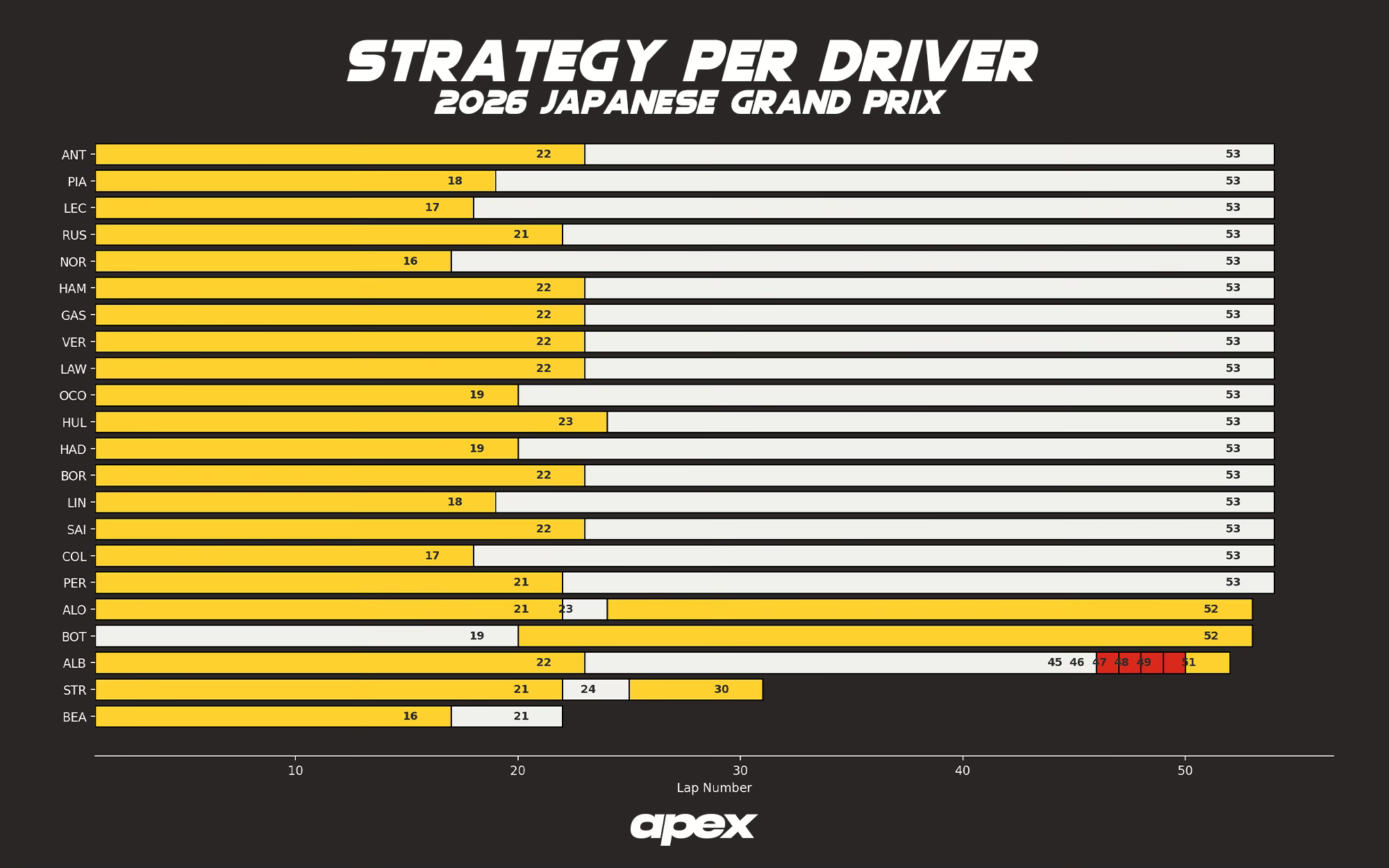
While Pirelli had predicted that the soft tyre could have been used for a starting stint to capitalise on its grip advantage off the line or for a shorter closing stint, no team saw that as worthwhile. Alex Albon was the only driver to run it during the Grand Prix, but only as part of the testing he was conducting, not as part of his strategy.
Its use could have been viable though given how low degradation remained on Sunday, as it had been on Friday and Saturday. Neither the medium nor hard suffered estimated degradation loss of over 0.04s per lap - with the average sitting at 0.035s a lap for the medium and -0.009s for the hard.
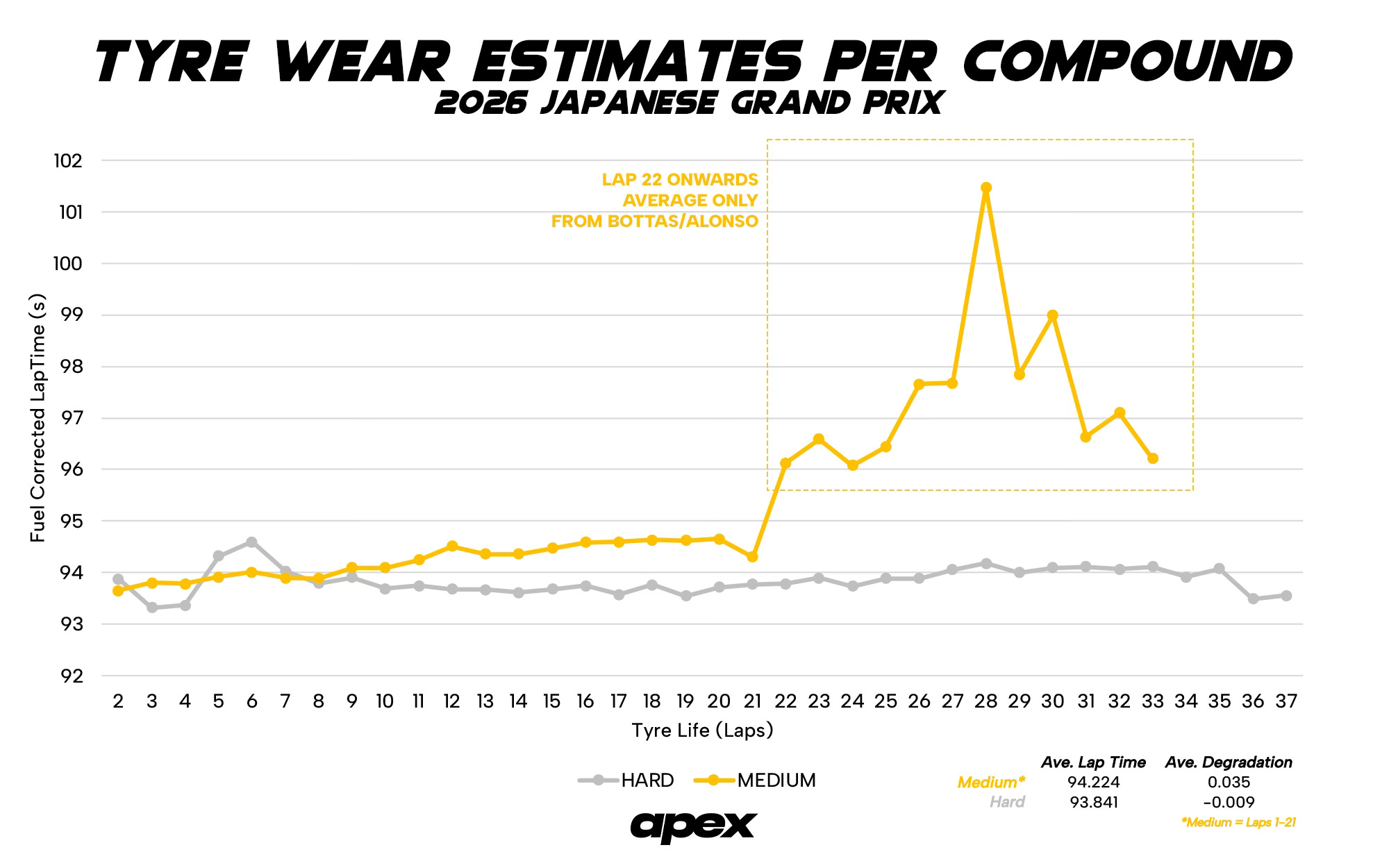
The majority of drivers ran the medium tyre only up until the safety car, where if they hadn’t already boxed they then did, but given that Bottas had started on the hard and Alonso opted to move to a medium>hard>medium strategy, we can observe a spike in the fuel-corrected lap times where only their pace is feeding into the averages as the only two drivers to push the C2’s life beyond lap 22.
The hard tyre in contrast was able to run for the remainder of the race, again in the majority of cases from around lap 22 to the final lap 53 with very little, if any, pace drop off. While last year the same observation had resulted in a ‘processional’ race, this year the additional factors of energy management, overtake mode, and the differentials in those car-to-car kept that possibility at bay.