

Legacy at stake? Technical preview for the Japanese Grand Prix
We head to Suzuka with much at stake competitively but also to see if these regulations can preserve the circuit's legendary technical challenge. So what impact might they have?


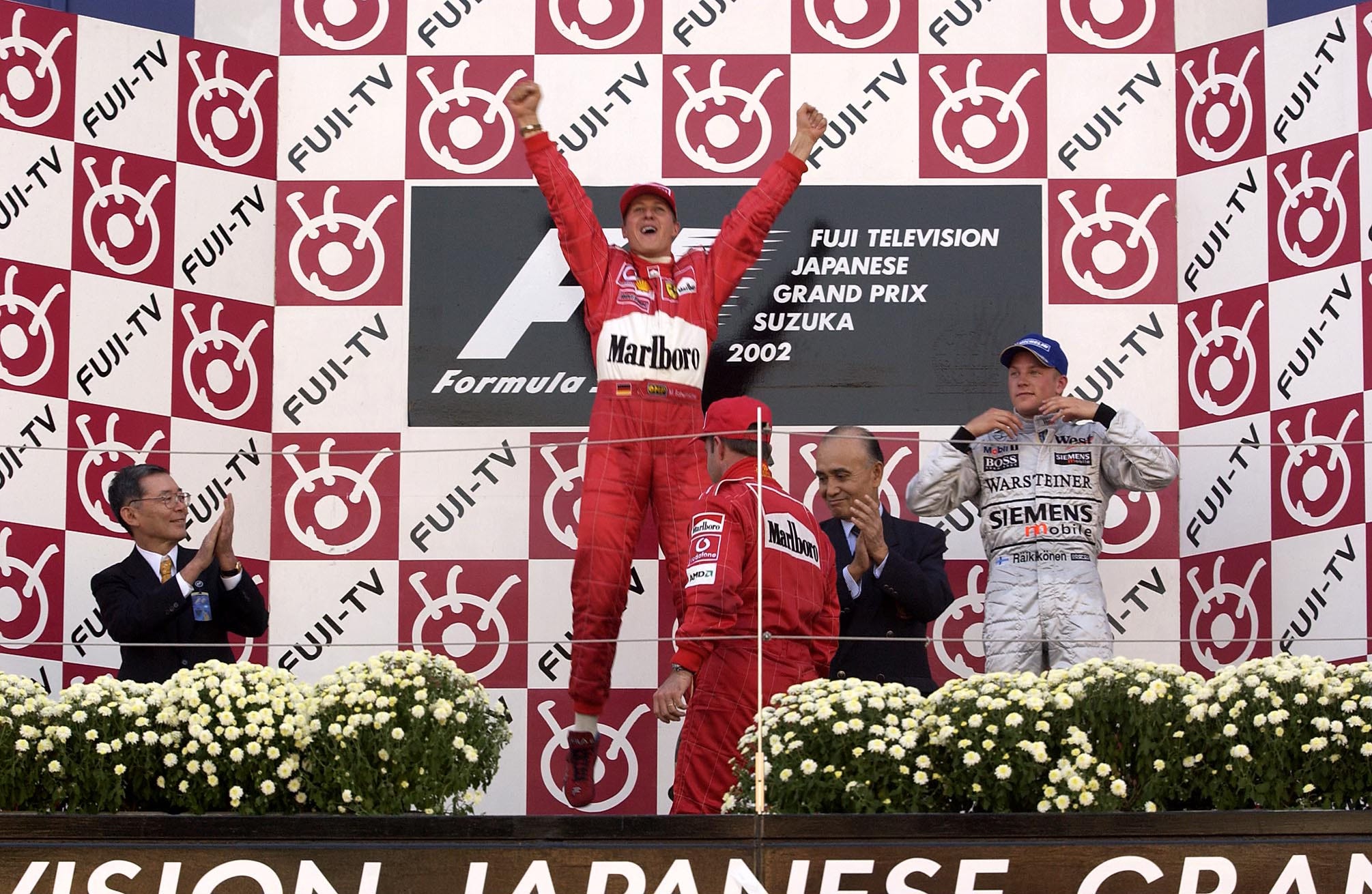
The Japanese Grand Prix is a driver and fan-favourite event, and much of that is down to the challenge posed by the highly technical, sweeping, legendary Suzuka Circuit. It’s been a feature on the calendar since 1987 (with the exception of a break from 2007-08 and 2020-21) and as such has hosted 35 grands prix, with Michael Schumacher having won 17% of those.
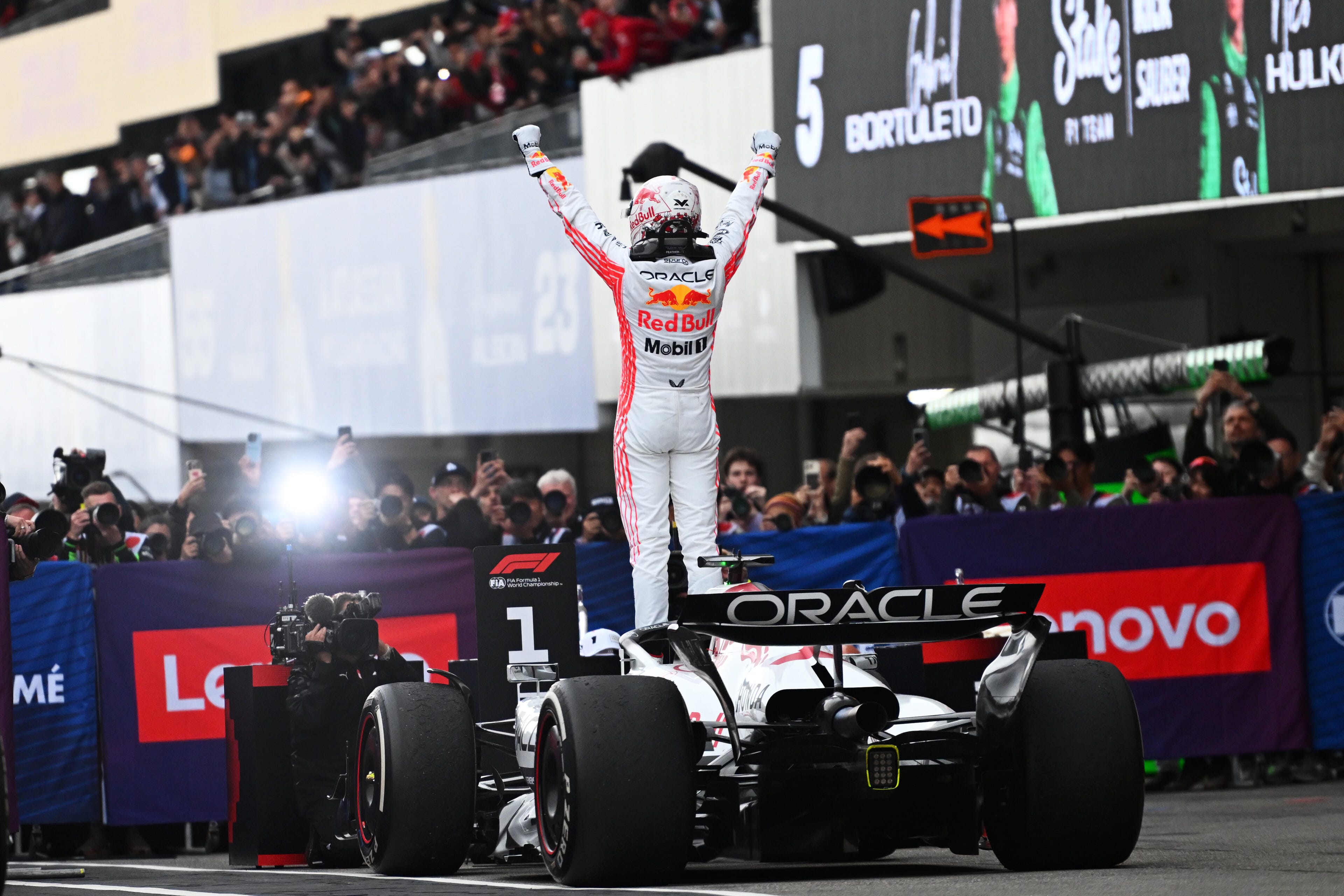
More recently though, it’s been Max Verstappen’s playground. He has dominated here for four consecutive years, claiming four consecutive pole positions and converting those to four consecutive wins - including one that was enough to earn him his second world title in 2022. Perhaps it’s that success that’s why he says it’s “one of my favourite tracks to race at”, or perhaps it’s because it’s traditionally been a track that rewards the ‘pure’ driving Verstappen enjoys most, and drivers who push their cars to their limits.
Heading into this year, how much the heavily increased emphasis on energy management under these new regulations will dilute that challenge is an unknown. It may mean we see the challenge change to one of finding the right balance and maximising the harvesting and deployment over the lap, lap after lap come the grand prix, particularly because this is set to be a more ‘energy poor’ circuit than Shanghai was last time out.
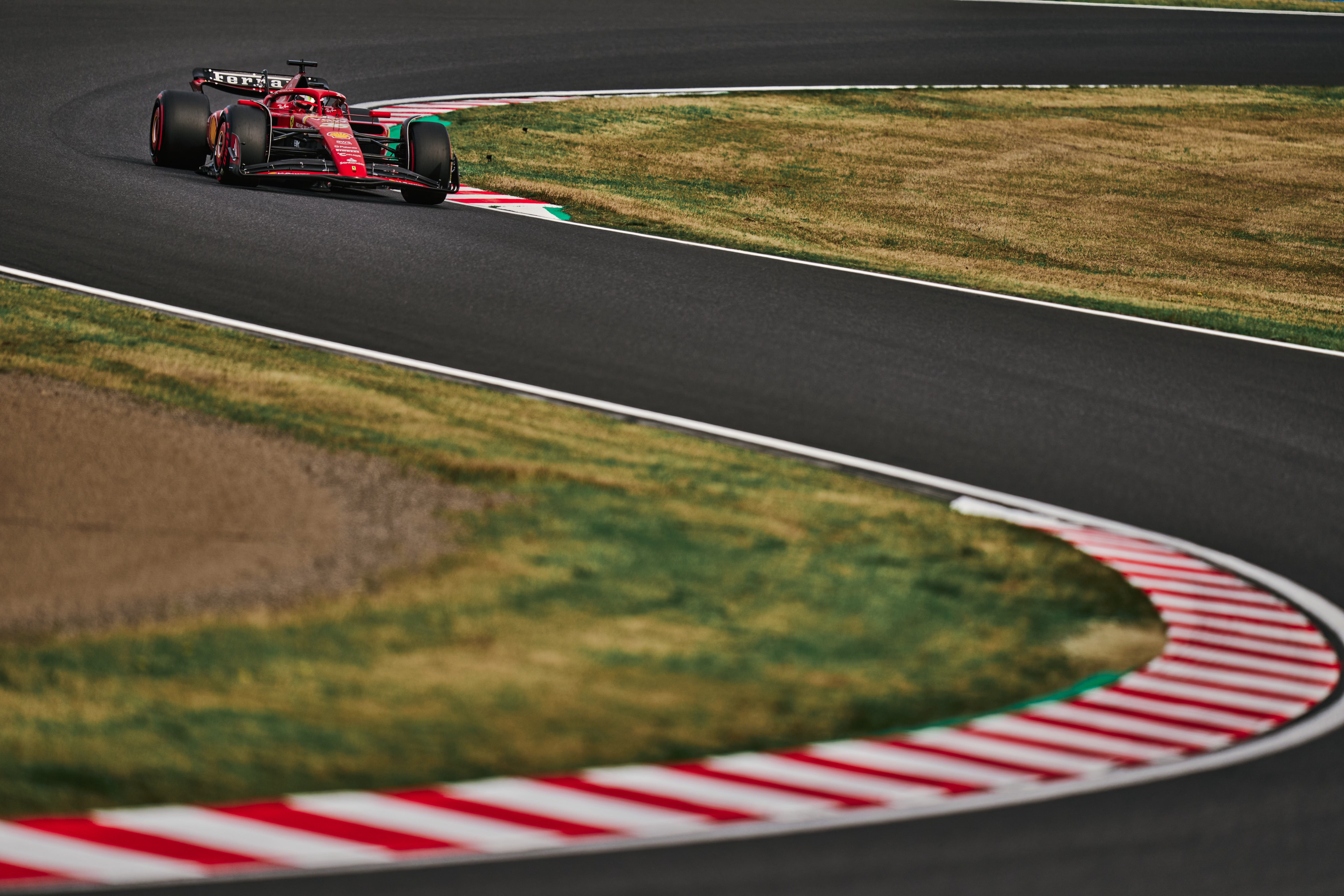
Nevertheless, the legendary corners that Sebastian Vettel famously said “must have been designed by the gods” remain - the esses, the Degners, Spoon Curve and 130R, to name a few - and attacking them in these more nimble, lower downforce machines in what are set to be lower grip, cooler conditions could create some real moments.
Characteristic Considerations
Lateral Loads
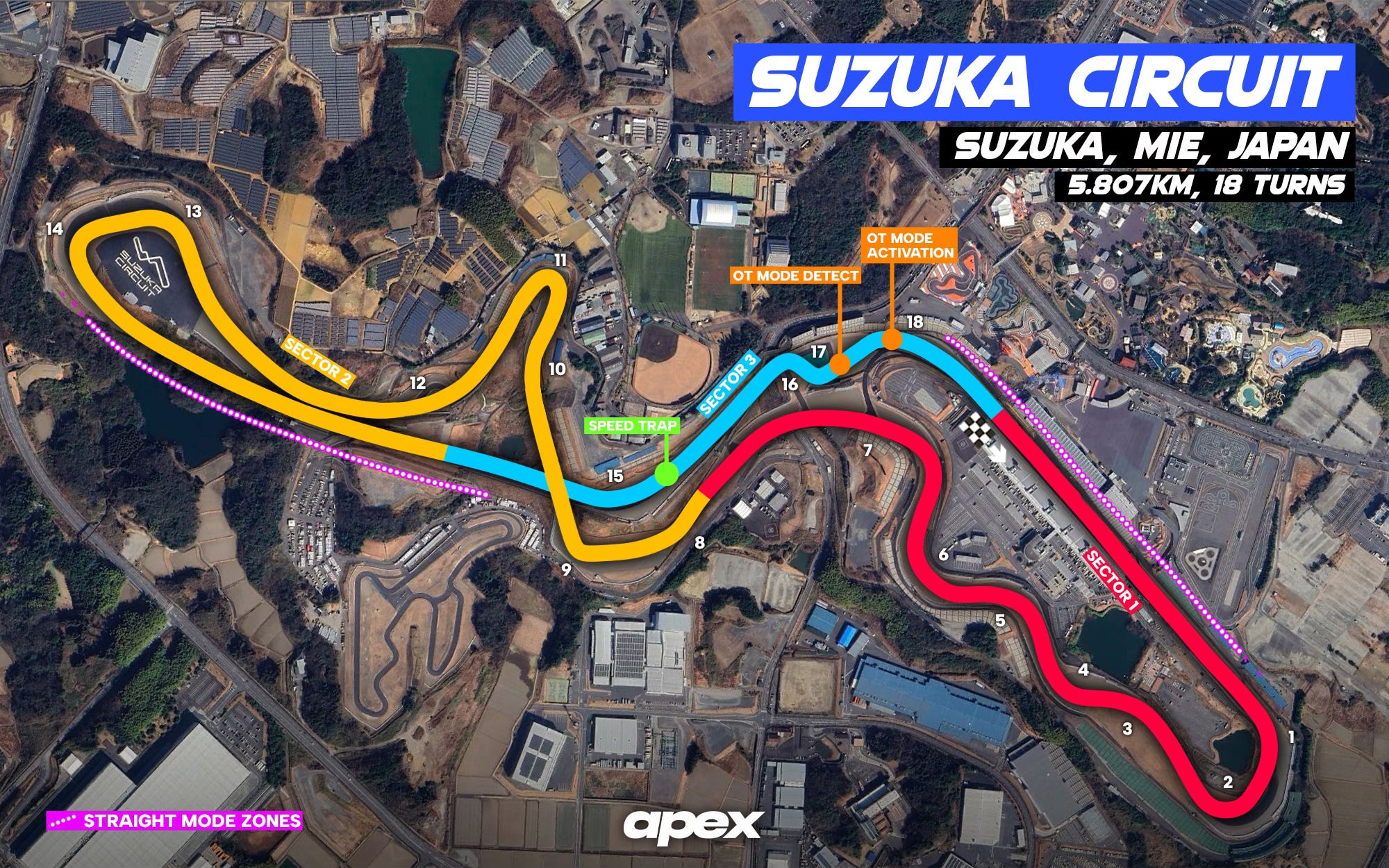
It’s those very corners, the continuous changes of direction they create over the lap, and the fact that only the hairpin (turn 11) and the final chicane (turns 16-18) are taken at speeds under 140km/h that mean the drivers, cars, and critically the tyres are subjected to high lateral loads here.
These loads and demands make Suzuka one of the toughest tracks on tyres on the entire calendar. In fact, Pirelli rank it 5/5 on their scale for lateral forces and 5/5 for tyre stress too, which is why they bring the hardest compounds here year after year.
The first sector is particularly demanding, with mechanical grip vital for navigating the esses and critically the lateral G-forces they exert as the driver, at least last year, takes them at a minimum speed of 200km/h. But they’re also sustained at corners like Dunlop (turn 7) as a long, flat-out left hander, the quick right hander that feeds into the slower 90-degree one during the Degners (turns 9-10), or Spoon Curve (turns 13-14) again as a long left-hander, double apex sequence. That feeds into the infamous 130R, a left-hander kink taken with the foot flat on the throttle and thus at speeds of 300km/h.
Impact on degradation…
Typically, high energy being exerted through the tyres would result in increased thermal degradation, which is something that’s been observed in Suzuka before and has previously influenced strategy here.
This year though, the impact of the new narrower width tyres on that has to be considered, as does the higher level of load already going through the rear axle due to the increased MGU-K deployment. But equally, straight mode zones are going to pull load off the cars, and therefore also the tyres, over two stretches of the lap.
Engine braking being much more powerful also means the rear brake discs and callipers are running cooler, transferring less heat into the rear tyres and therefore generating less thermal degradation on the rear axle.
All of these new-for-2026 factors combine to mean the challenge facing the tyres is changed, and that may mean a different strategic picture again too. But the true cumulative effect of them won’t become clear until some running, especially longer running, has been done over Friday practice.
Straight Mode Zones
Unlike the two races we’ve seen so far under these regulations, this event will only see two straight mode, lower-drag, zones implemented over the lap. The first will come down the main straight with the second coming on the run out of Spoon Curve towards 130R, but critically not through the high speed corner.
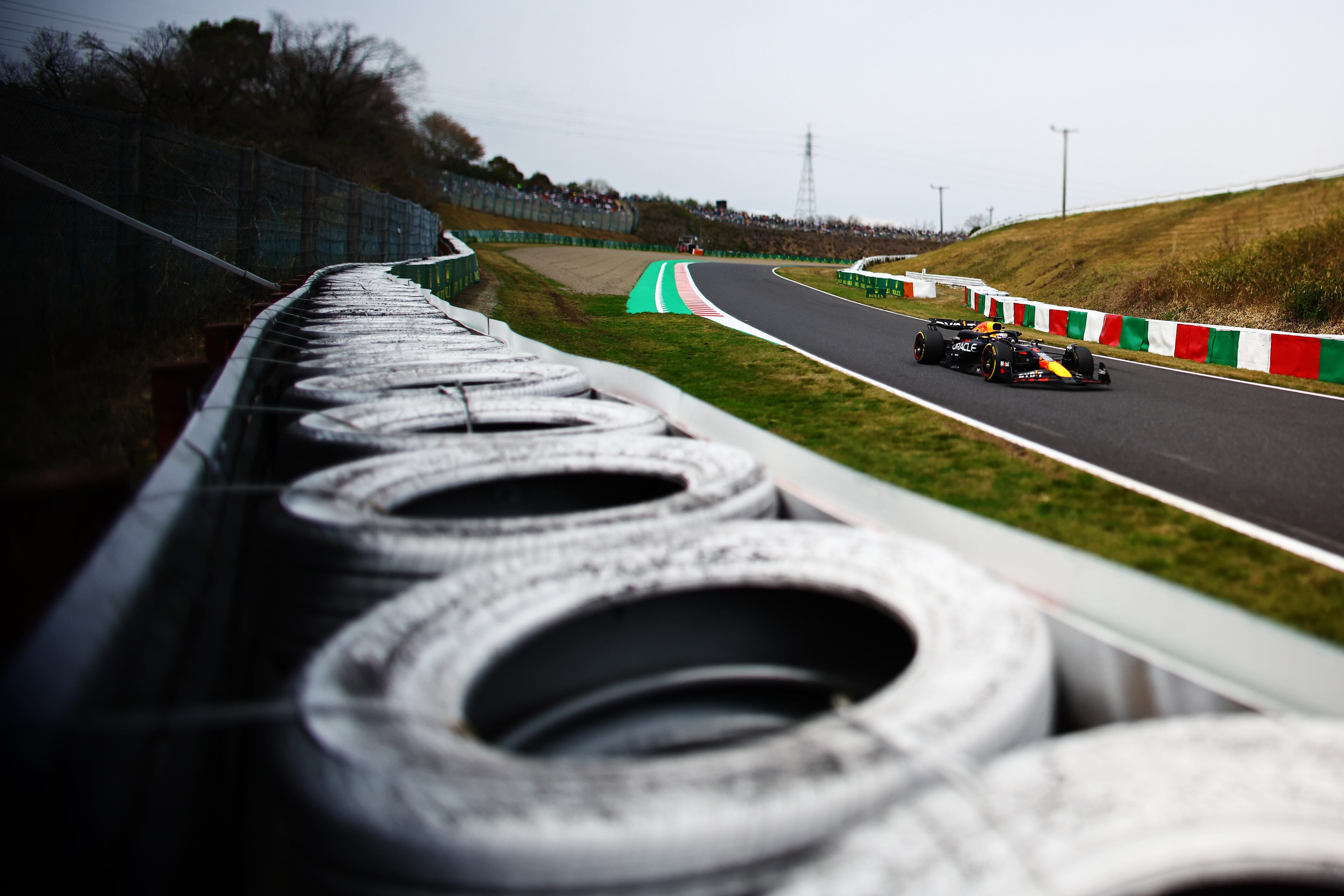
It’s quite a conservative approach to SM-zone use by the FIA but they will help mitigate the impact of the super clipping or lift and coast that is expected to be more prevalent here, to a level perhaps similar to that of Melbourne. But the lack of zones in other areas of the track and into key corners like Spoon Curve (T13) or on the run out of 130R to the chicane (T16-18) mean the teams have noted that front ride height and its impact on front floor legality could become a key consideration.
Tough to overtake…
Overtaking is infamously tricky in Suzuka, given that turns 1-2 are not the slow, heavy braking events they are at some other tracks and are also narrow. But, they are one of the only sequences that will offer a chance for a following driver within one second of the car in front to access overtake mode into them, as the main straight is one of the only runs where the 290km/h threshold is met. Getting a move done into the first corners is advantageous to a driver’s chances of sticking ahead given that they’re followed by the esses, which have to be taken single-file.
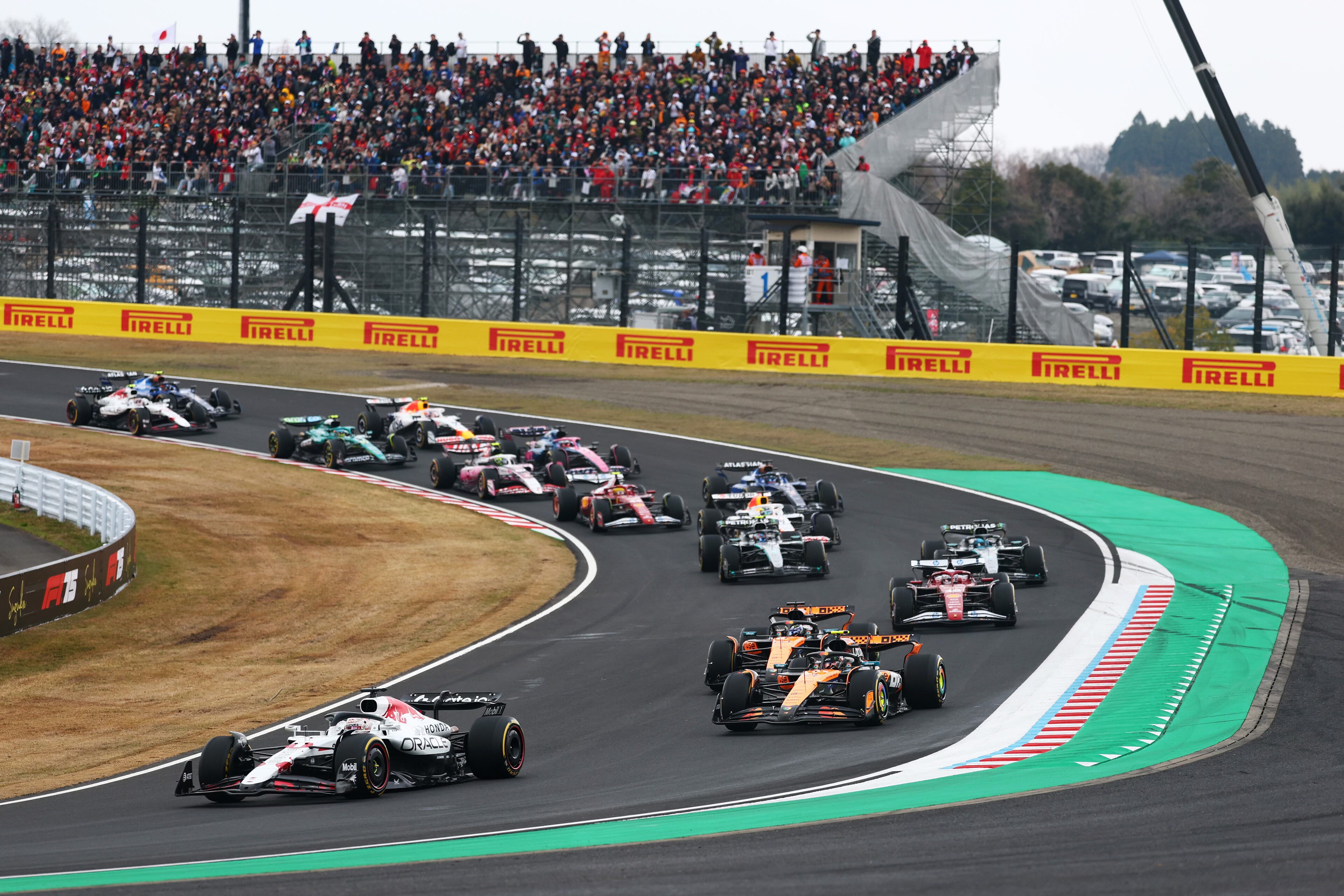
The other place where overtake mode is likely to be available is the run through and out of 130R. Although we have seen moves there before, given how narrow the track is and how close the armco barriers are it’s not a favoured place for overtaking. The chance of moves there could increase this year though, especially if it becomes a place where some drivers/teams are opting to superclip to harvest in preparation for the chicane that follows, which can be a key overtaking place. With it also being the detection point for overtake mode this year, we might expect to see drivers holding off more to have access to that for the next lap.
As we saw last time out in China though, moves are not only done where overtake mode is deployed, they can also come in key traction zones as they always have which could keep the hairpin as a prime, yet somewhat risky given the camber, spot for a move.
Back to super clipping?
Super clipping is likely to be back as a key buzzword this weekend after a week off from it being in the vernacular in Shanghai. With just five braking events over the lap of Suzuka, only one of which is truly heavy (the hairpin), energy recovery is going to have to come in a different way to feed deployment to maximise approach through the numerous higher speed sections.
That will likely include super clipping, the phenomenon of the MGU-K switching from deploying to harvesting while the throttle is still fully applied and thus ‘clipping’ the top speed, perhaps around Dunlop, the run from turn 12 to 13, then the long run out of Spoon (exit of T14) through 130R before the chicane. The esses may also provide an opportunity for harvesting, which could mean the speeds and approaches we’re used to seeing through these corners become more compromised versus previous years.
That may be a negative point come qualifying, but where approaches differ, it could generate some power discrepancies car-to-car during the Grand Prix which may offer up some more racing opportunities.
Note: As of 26/03, the FIA, the power unit manufacturers, and the teams have decided to reduce the maximum energy recharge per lap in qualifying only from 9MJ to 8MJ, to prevent the use of excessive clipping or lift and coast and maintain qualifying “as a performance challenge”.
The Compounds
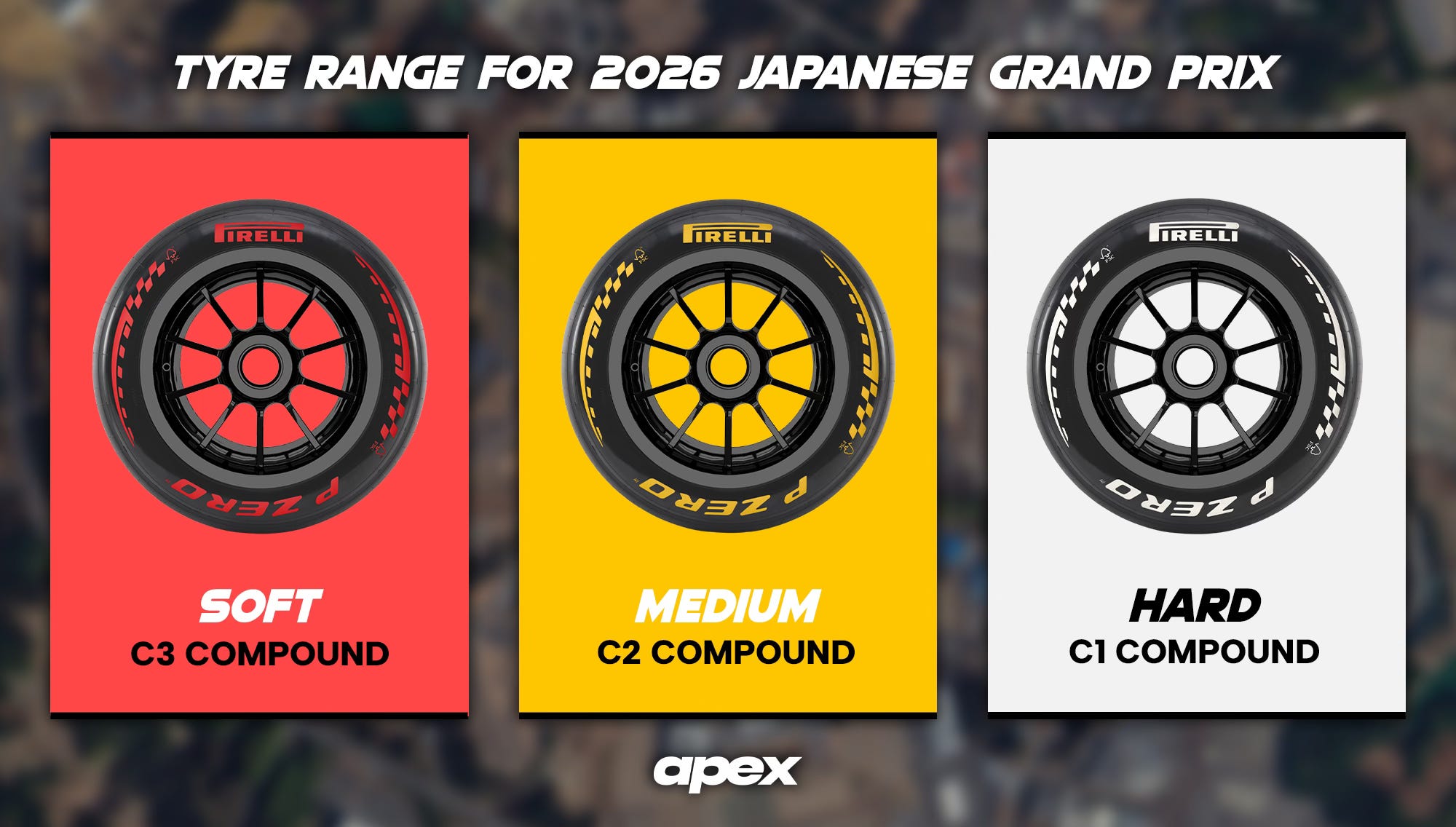
Due to all of the demands and factors already mentioned here, Pirelli are bringing, as they always have done to Suzuka, the hardest compounds in the range - the C1 will be the hard, C2 the medium and C3 the soft, with the C1 actually making its 2026 debut this weekend.
Even with the intense demands placed on the tyres here, the first sector being resurfaced ahead of last year’s event meant graining was seen on the front axle, but that diminished progressively as the weekend went on and as track evolution ramped up.
This year, the resurfacing work has been continued with the final two sectors (from turns 7 to 17) now also having new asphalt. Pirelli expect this to be smooth, dirty and relatively low grip early on which could mean a similar graining versus track evolution profile to last year’s as the weekend progresses, but with the potential for it being more impactful on degradation this year given that the majority of the lap is affected now.
Pirelli have also highlighted the hardest and softest compounds as ones to watch this weekend as potentially the most influential in shaping what strategies are possible on race day. If the C1 hard offers good grip levels even on the smoother surface, and if the C3 is as consistent as it was last time in China, Pirelli believe that all three compounds could be viable race options.
Strategy Corner
Beyond the impact of the 2026-specific factors on degradation likelihood, temperature is still going to be an important one too, particularly when it comes to determining strategy. Last year, the cool temperatures combined with the new surface that gripped up by the race, even just in sector one, to create something of a tyre delta stalemate where pace simply didn’t fade off as their life extended. In fact, 14 of the 20 drivers put their fastest lap of the race on the board in the final 5 laps - demonstrating just how little the tyres’ ages impacted performance.
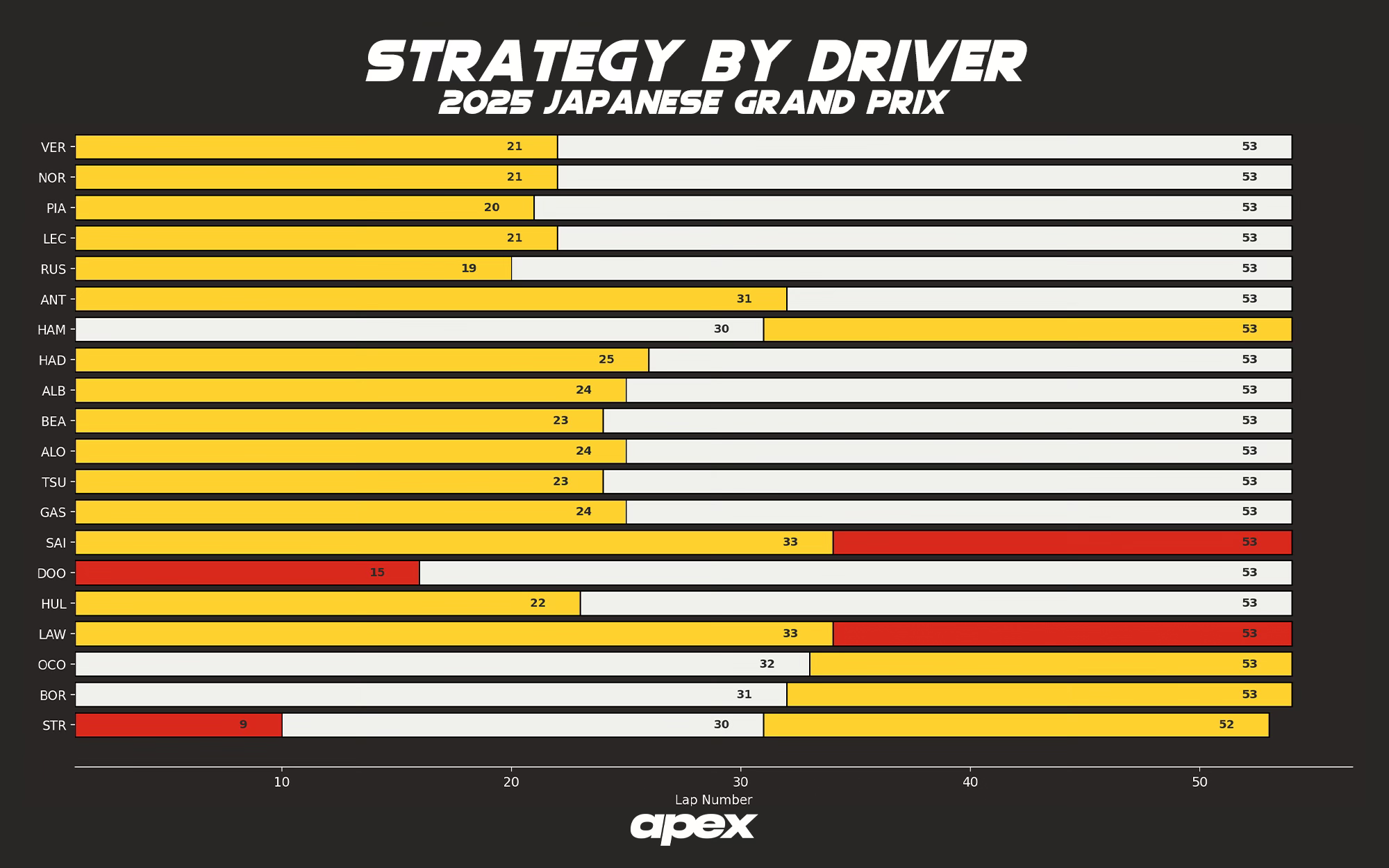
It led to very few changes of position over the field, but especially out front, as the hard tyre proved to be quick and suffer very little degradation. It also created a situation where the two-stop wasn’t even a consideration, with the laps teams pitted on also aligning to limit the potential for a tyre life offset.
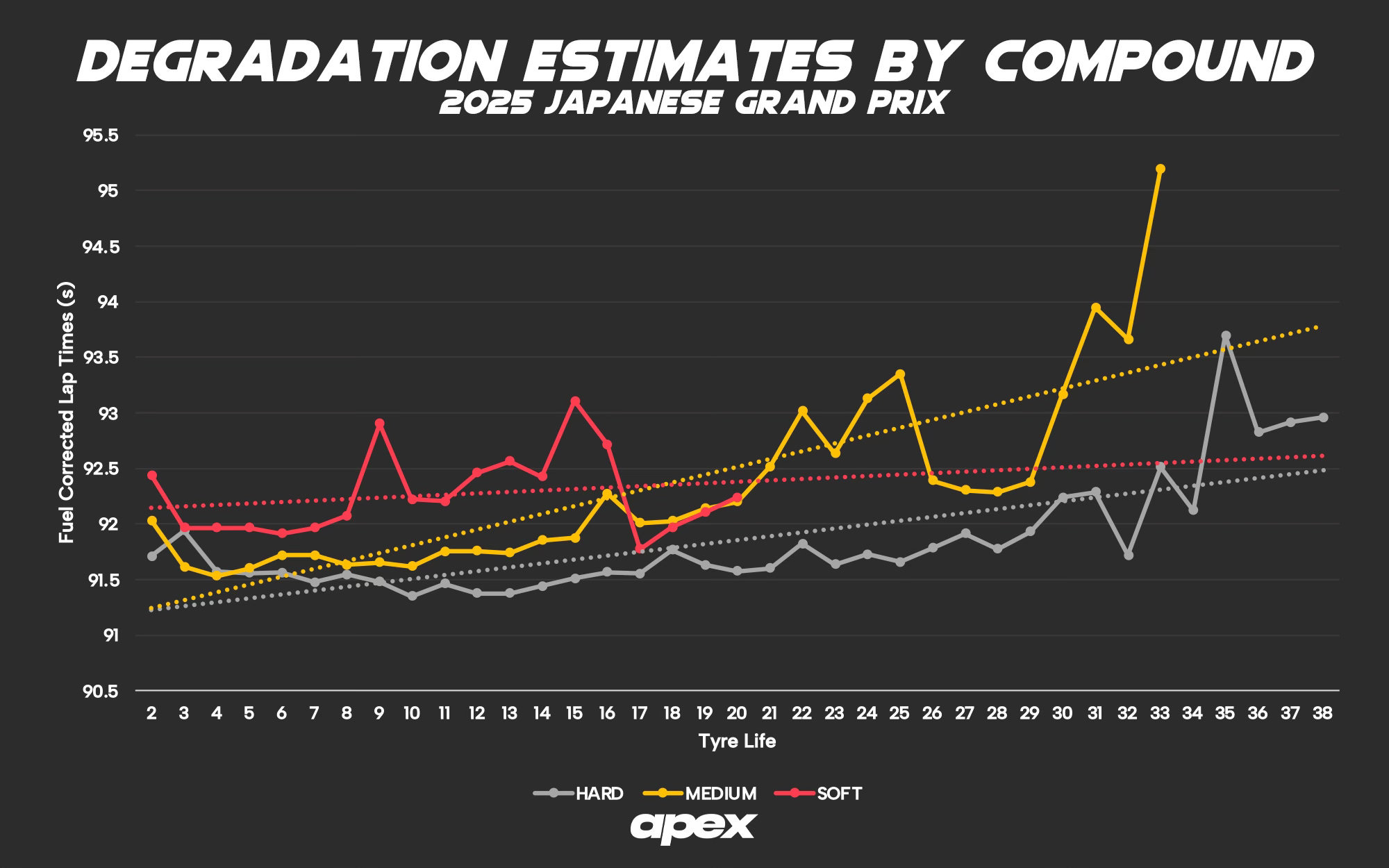
Fifteen cars started on the medium, with two opting for the soft and three choosing to go for the hard. For the majority of the medium-starters, their one and only pitstop came from lap 19-24, but others like Sainz and Lawson were able to extend it to lap 33 to finish their race with a 20-lap soft stint. The top five finishers though opted for the medium-hard one-stop, and just 0.298s separated their race pace.
Fast Facts
After winning this race last year, Max Verstappen became the only driver to have ever won four times consecutively in Japan. If he gets a fifth in a row this year, he would also become the second-winningest driver in Japan - one win behind Michael Schumacher who sits on 6.
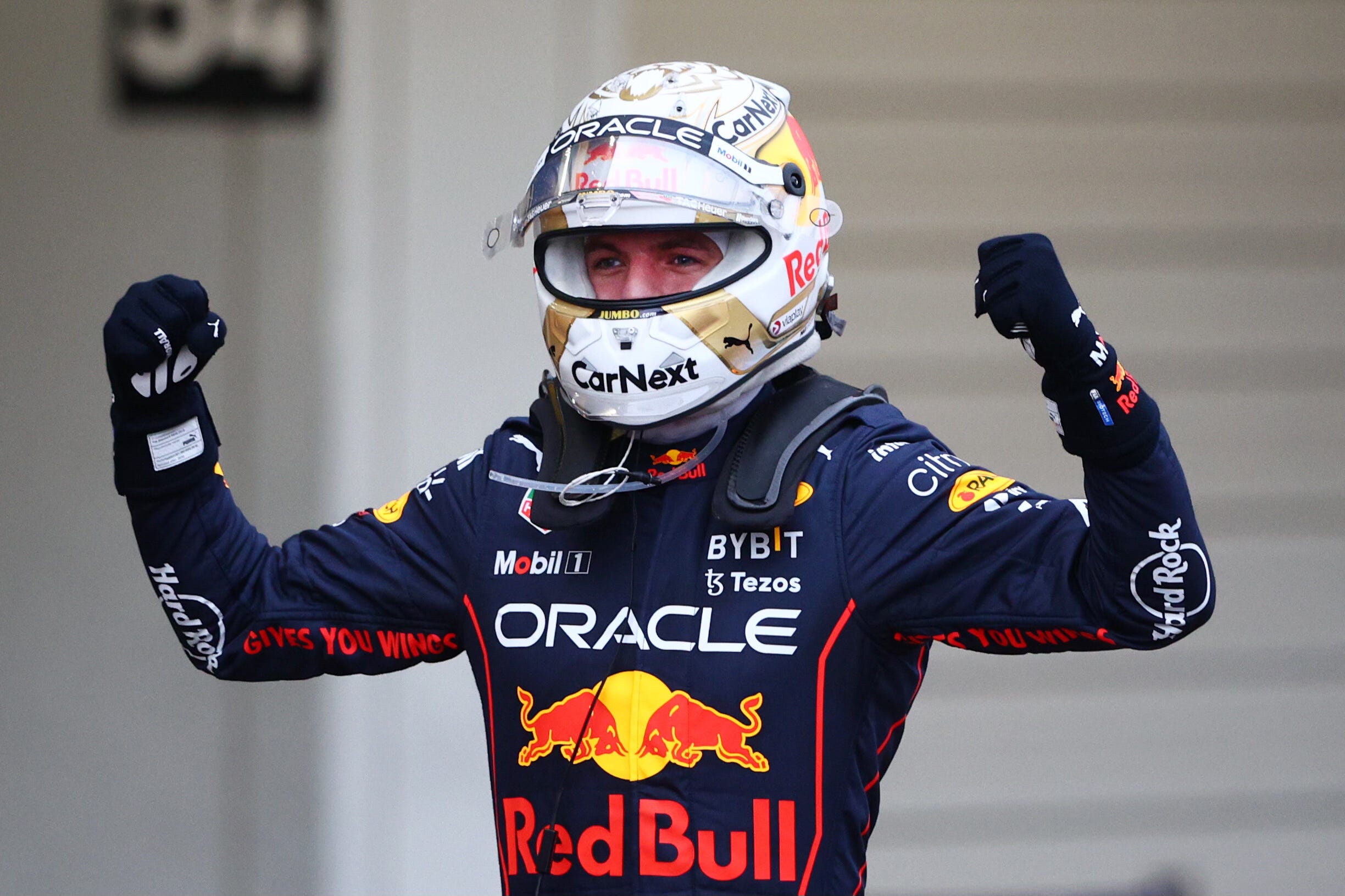
Pole position has played a vital role in Suzuka in the past, with 54.29% of race wins coming as pole conversions. The latest of these, again, was Verstappen in 2025.
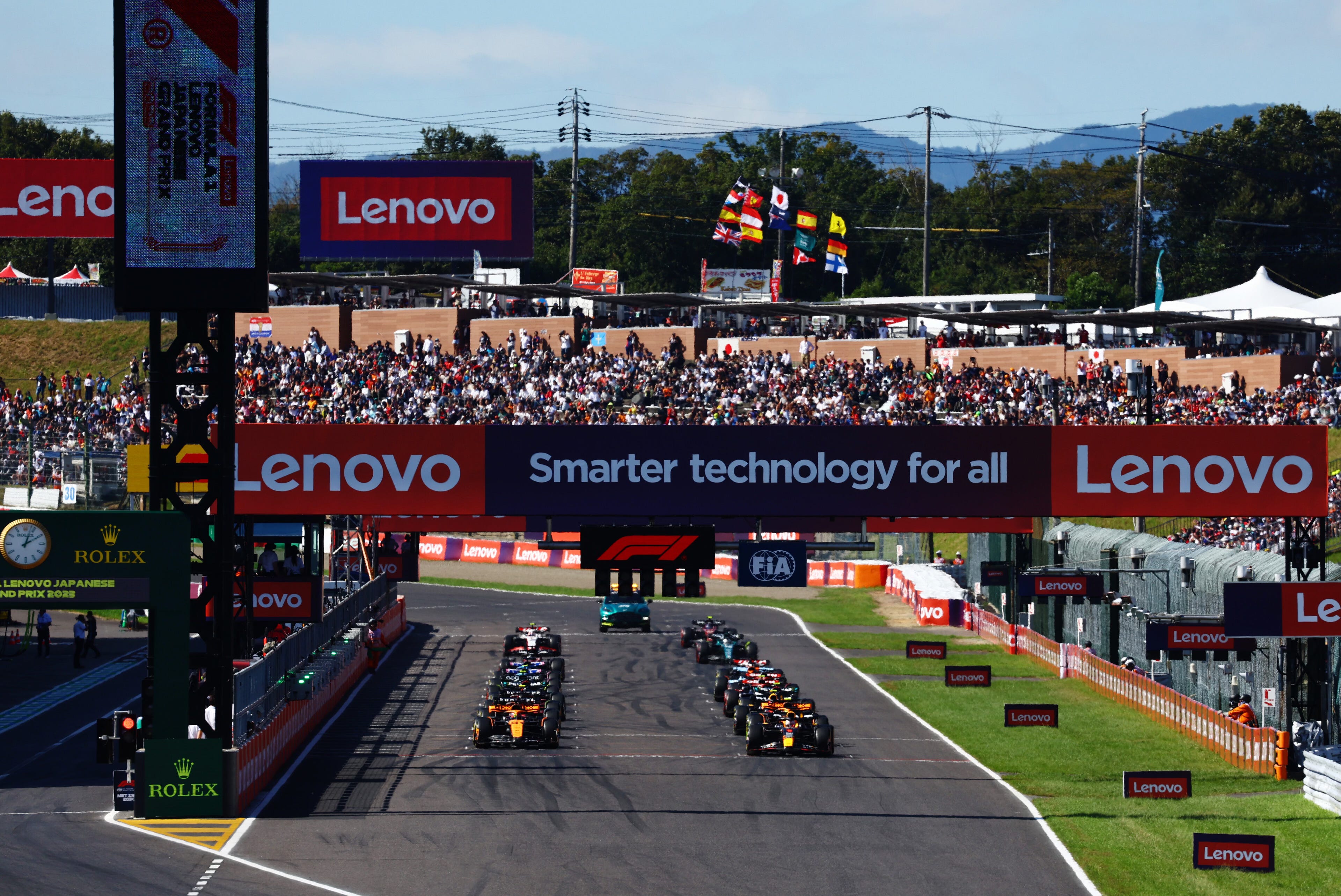
Due to its traditional late-calendar slot, Suzuka Circuit and the Japanese Grand Prix are the venue/event that have seen the most world champions crowned - with 12 coming in Suzuka, and 13 in Japan (1 at Fuji Speedway in 1976 when James Hunt won).

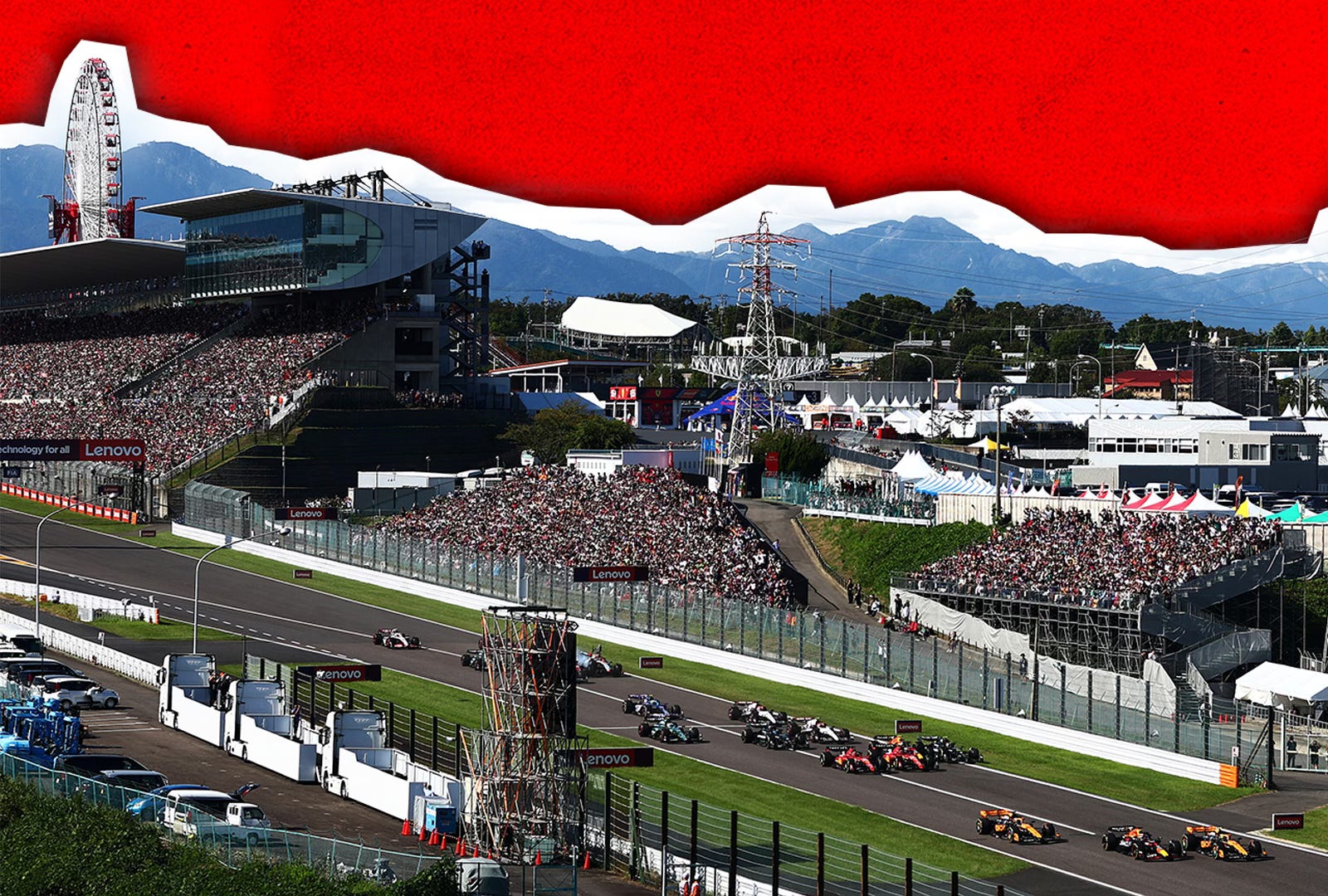
The Japanese Grand Prix kicks off with free practice one at 11:30am track time on Friday March 27th. Here’s how the rest of the weekend shapes up, with all times in local:
Practice 1 - March 27th - 11:30-12:30
Practice 2 - March 27th - 15:00-16:00
Practice 3 - March 28th - 11:30-12:30
Qualifying - March 28th - 15:00-16:00
Japanese Grand Prix - March 29th - 14:00
Fixing Suzuka’s energy‑management issue should add a bit more driver skill to qualifying. Which can only be a good thing.