


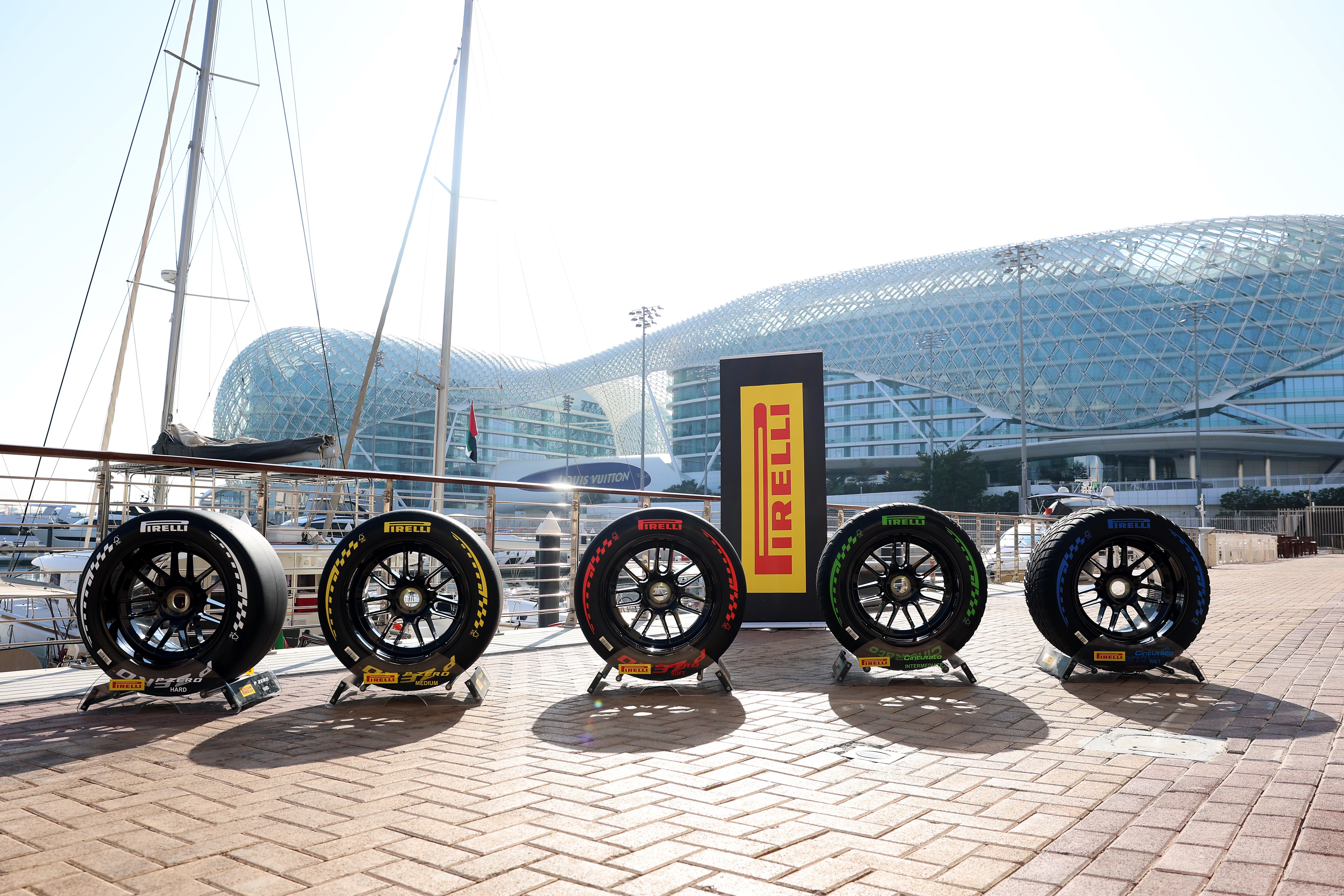
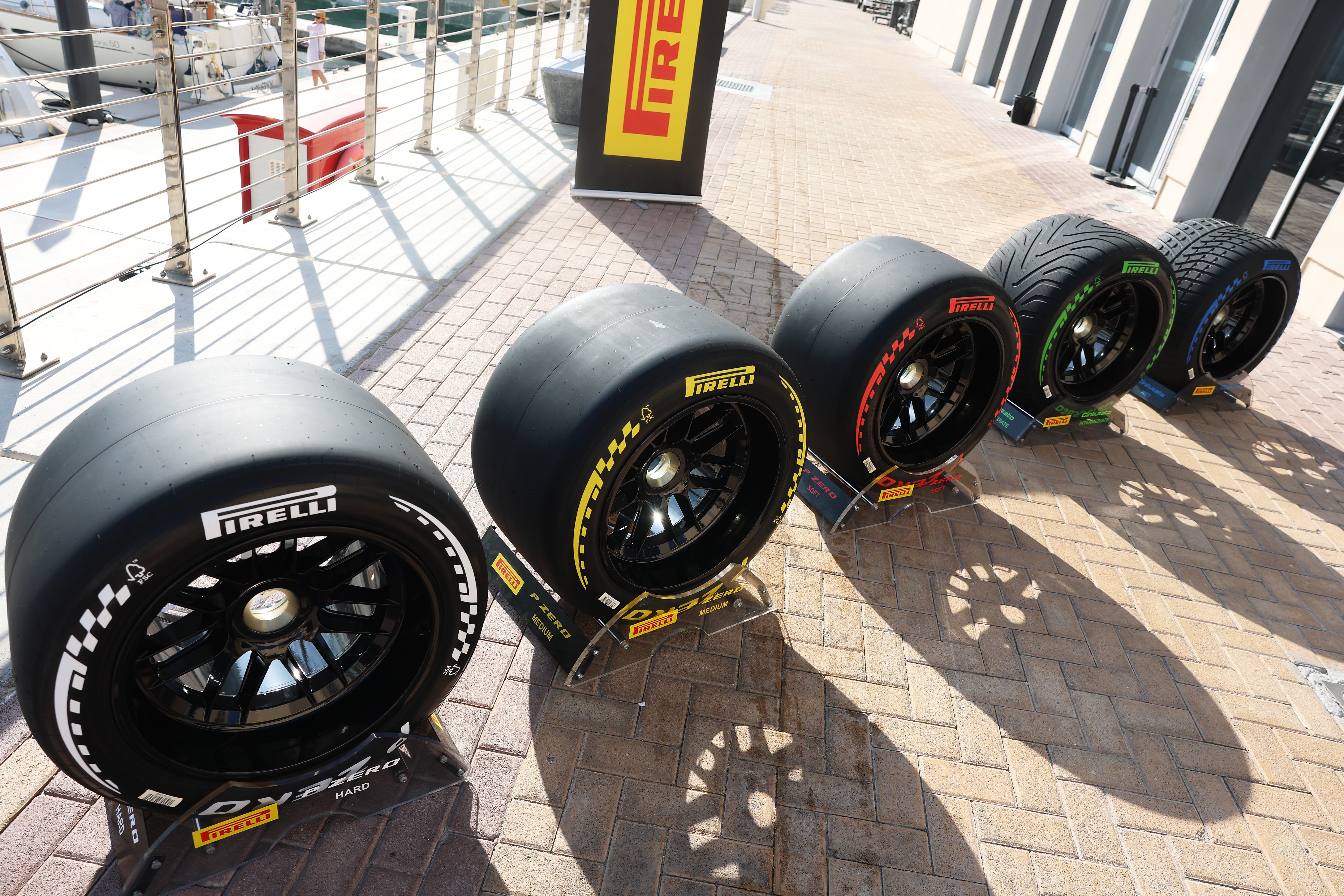
After 15 test sessions of two days each, held in seven different countries over two F1 seasons, Pirelli unveiled the homologated, definitive 2026 compound range at the end of last year in Abu Dhabi. It’s a range largely similar to that run in the past regulatory era - running from C1 at the hardest end to C5 at the softest, but with the tyres themselves being 25mm narrower at the front and 30mm narrower at the rear.
But up until the teams ran their private shakedowns or filming, and more broadly until today in Barcelona, those tyres hadn't run on the cars they were intended for. Although every team was involved in Pirelli’s extensive testing program, they ran using mule cars.
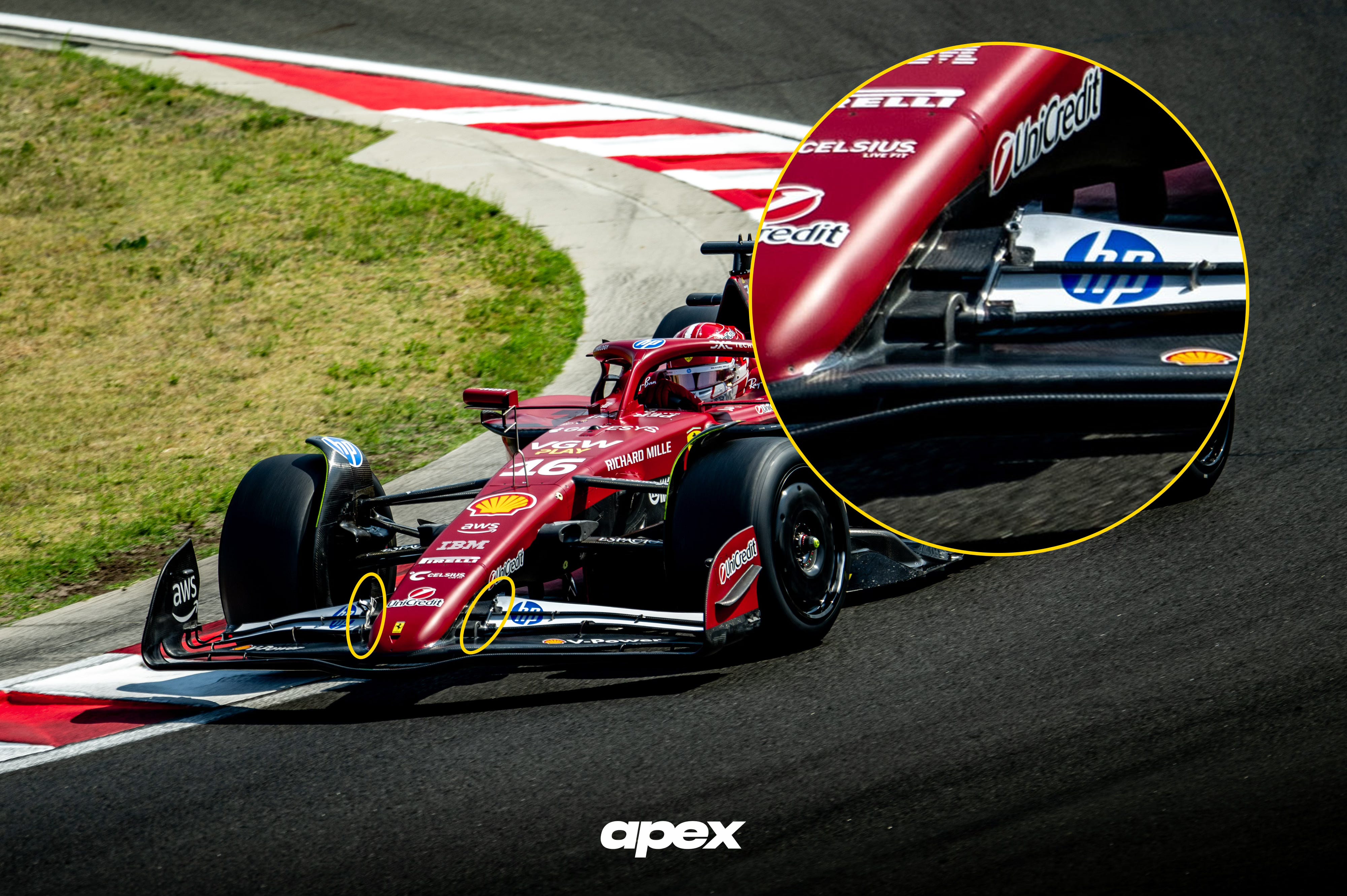
These were made from previous years’ chassis (mostly from 2023/2024) and ran with significantly smaller rear and front wings to simulate the ~15-30% reduction in downforce compared to the ground effect era cars. On occasion, for instance with Ferrari in Hungary, these adaptations also included prototype active aerodynamics systems on the front wing.
It may sound like a less than ideal solution but in the absence of the cars of a new regulatory era themselves it has been the standard one, not only this time around, but in the past too. Although the on track running was of course most representative of, as you’d imagine, the on track conditions and forces that these tyres will be subjected to, it also served to corroborate a significant amount of simulation work by Pirelli.
On announcing the homologation of the range for 2026, Pirelli themselves spoke to how data from those environments interacted to influence their development:
“Tyre development was carried out on the basis of forecast data as supplied by the teams, using simulations referring to loads and speeds predicted for the end of the 2026 season, while pursuing objectives similar to those of this year.
The models were validated based on the results of development track testing with mule cars modified to reproduce the characteristics of the next generation of cars.”
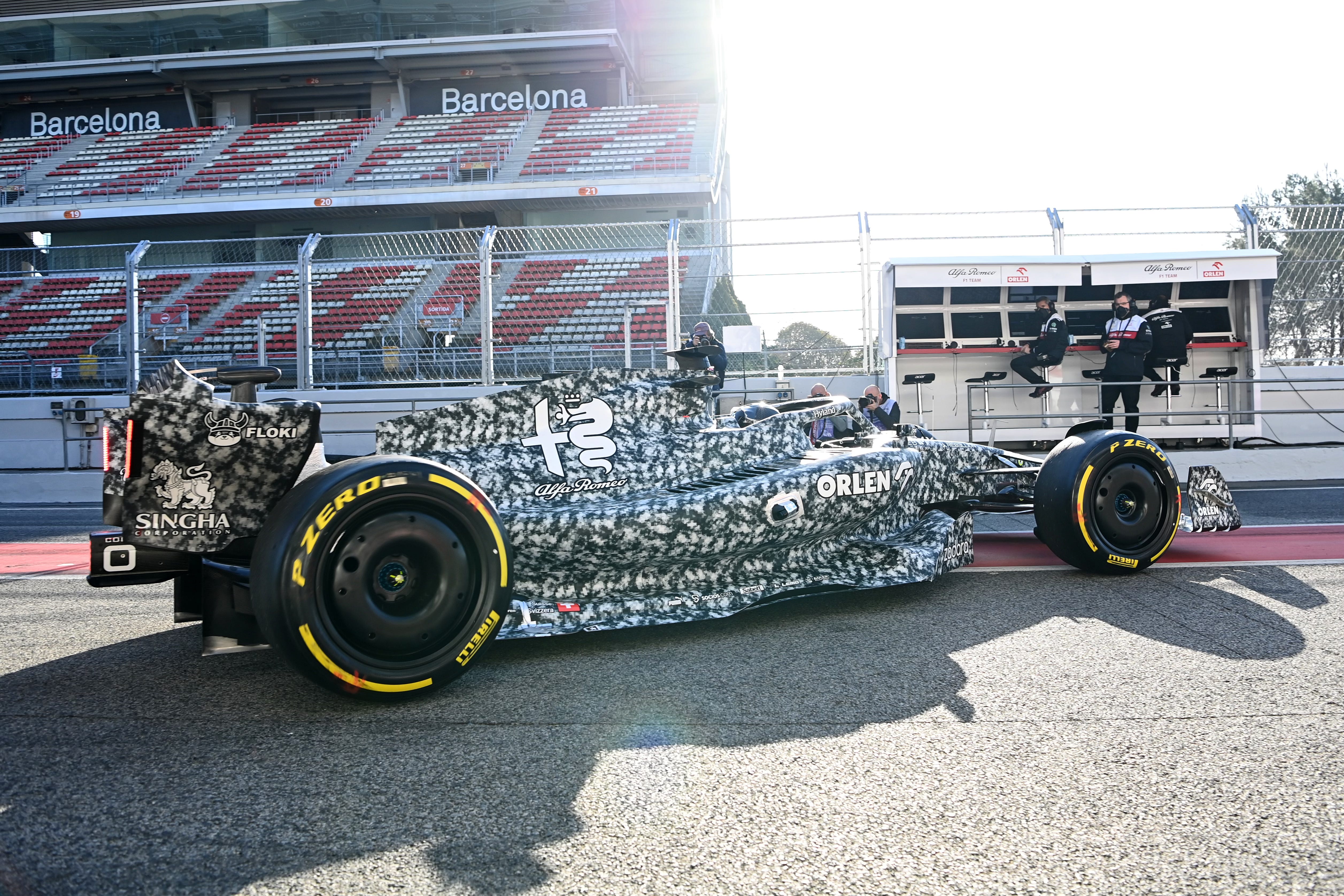
But there is no substitute for the real thing. While Cadillac, Alpine, Mercedes, Racing Bulls and Ferrari had run their 2026 cars for installation laps in the last couple of weeks on these tyres, for Pirelli this Barcelona shakedown will be the first true test.
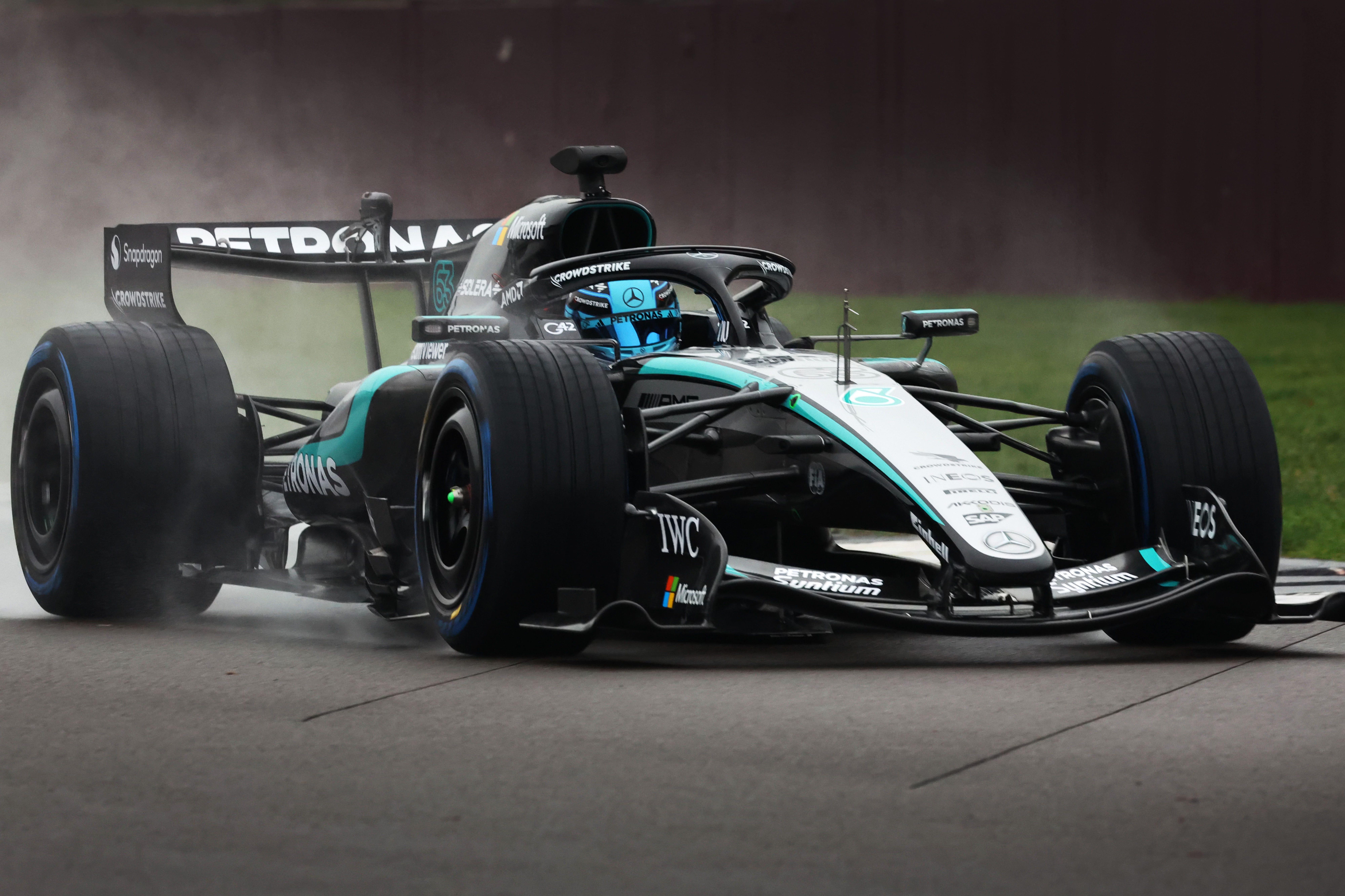
Ten of the eleven teams will be there (Williams will miss the shakedown due to “delays in the FW48 programme”) putting a real emphasis, as we’ve heard from them repeatedly in launch materials, on mileage and establishing reliability.
That mileage will perhaps make this week the largest, longest running test of the 2026 compounds yet, finally on the cars they were developed for.
What tyres will the teams have in Barcelona?
That test will be run with slick tyres from the hardest side of the 2026 range, given the demanding nature of the Circuit de Barcelona Catalunya even in much cooler temperatures than we typically see for the grand prix held there in June. Its surface is highly abrasive and it features high speed corners, like turns 3, 13 and 14, with a particular demand placed on the front left. But it’s these features that make it such a popular testing circuit, and most teams (except Cadillac) will have past data from grands prix and their own filming days or previous winter tests there as a, albeit less relevant than usual, baseline.
While the shakedown is running on all five days from Monday to Friday this week, each team is only allowed to get on track for three of those, with a single car per day and that car classed as having run for a day once it leaves the pit lane for the first time. For those three days, the teams have been allowed to choose 25 sets of tyres each (including a mandatory single set of extreme wets and intermediates), and their choices do vary significantly...
On the slick side, the hard tyre will be the C1, the medium will be the C2 and the soft will be the C3 and a few teams, namely Audi, Cadillac and Alpine, have opted to step up the number of sets as the compound steps up in softness - running with between 2-4 of the hards, 6-9 of the mediums and 9-10 of the softs.
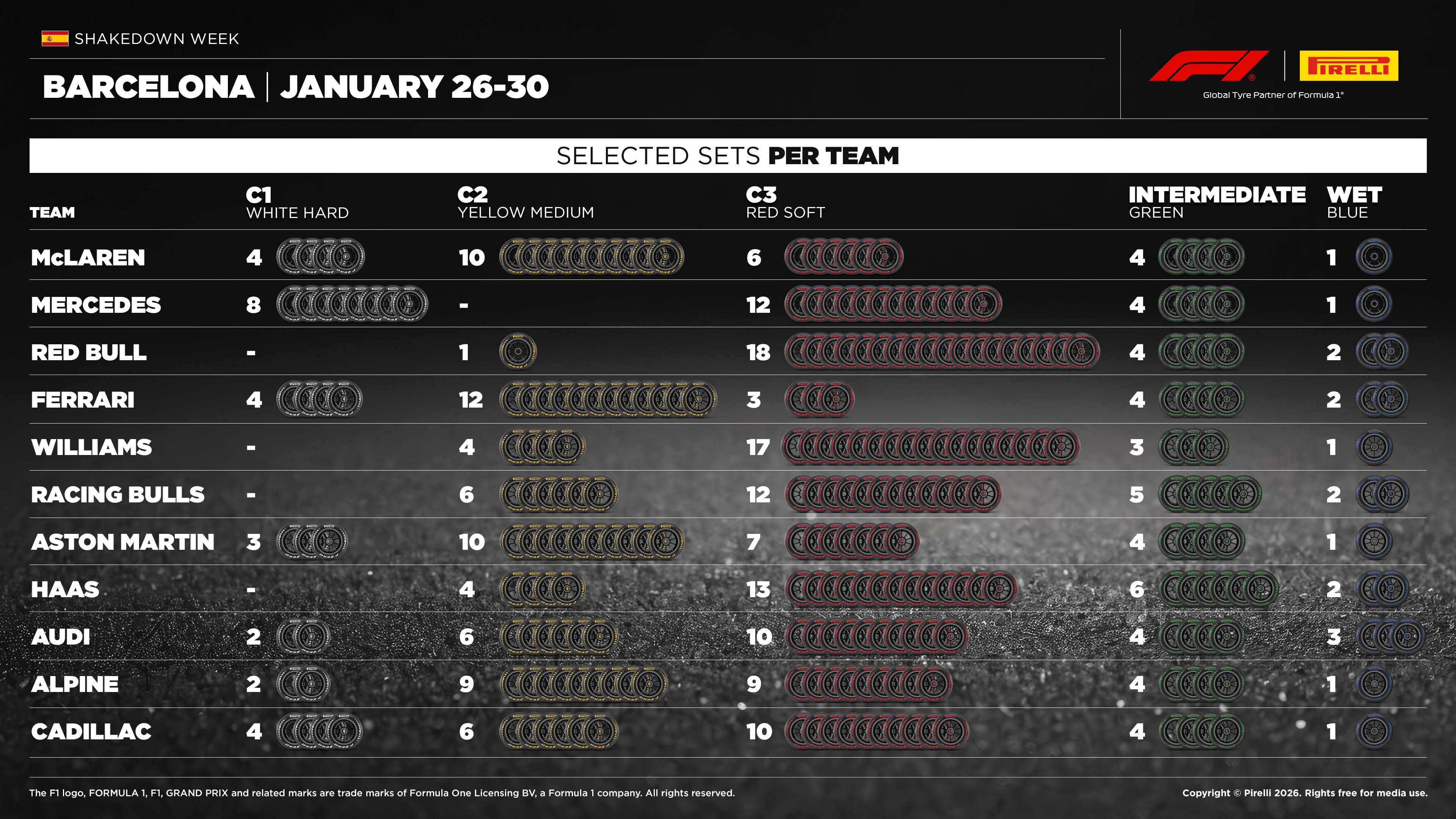
Then there are others who’ve biased their selection in favour of a particular compound. Red Bull have elected to be one of three teams, alongside Racing Bulls and Haas, not to run a single hard tyre this week. But unlike Racing Bulls or Haas, this has pushed Red Bull into an almost entirely soft slick tyre selection (except for a single set of mediums).
It’s an intriguing choice, but perhaps one aimed at combatting the colder (15/16°C temperatures) and potentially damp track that they’ll find in Barcelona this week which should make thermal degradation less of a concern than it is at the Spanish Grand Prix race weekend, which runs in temperatures close to 30°C. Had Williams been present at the shakedown, Red Bull also wouldn’t have been alone in that decision as they’d elected to bring only 4 sets of mediums and 17 softs.
At the opposite end is Mercedes who’ve opted to put a greater focus on the hard tyre (8 sets), run no mediums at all, and bolster that with 12 sets of softs.
Looking to the wet weather tyres, there are showers in the forecast but the extent to which the teams each feel they could impact running seems to vary, based on their selections at least. The standard number of intermediates over the field appears to be 4, but some teams, like Racing Bulls or Haas, have chosen to exceed this - bringing an extra one and two sets respectively.
Five of the eleven teams have elected to bring extra sets of the extreme wets too, with Audi standing out for having chosen to bring three in total. It’s perhaps a cautious approach, but one clearly aimed at maximising their running whatever the conditions turn out to be.
With logging mileage being the main goal of this week, the tyres that’s done on and their own performance and reliability will directly impact the teams’ abilities to gather the early data they need. The significance of this running for Pirelli therefore shouldn’t be underestimated.