Where does being 'late' to 2026 leave Williams?
After being one of the first teams to switch their focus to 2026, Williams have become the last team to run their new car on track. So where does that leave them for the season?
For James Vowles, 2026 has been the focus: the key year for the recovery journey he put the team on back at the start of 2023. He viewed the new regulations as an opportunity, one that could provide Williams a real shot at progressing up the grid quickly, and to maximise that they "sacrificed” 2024 and 2025.
For 2024, that looked like stressing the system “to the absolute limit” according to Vowles, to allow the team not not only understand that system’s breaking points but to then address those infrastructure, design and manufacturing limits so they’re not limiting in the future.
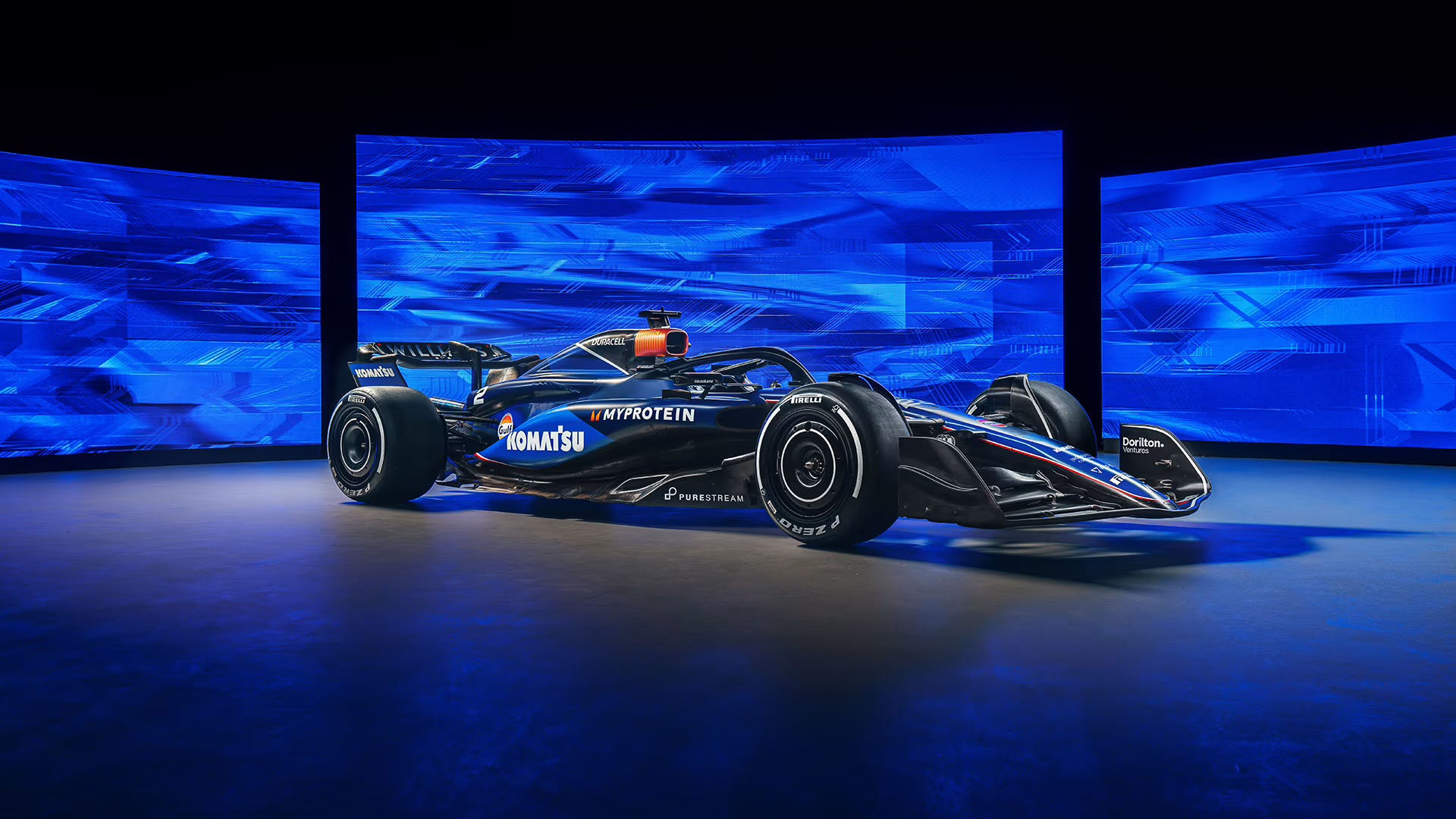
That season though, Vowles felt they pushed too far: “You can change things at a certain rate. You go too far and you break it – in hindsight, moving things a little bit further than we can really deal with in one go.”
It left the team launching to media and fans with a show car, pushing their own filming day or, in other words, the FW46’s debut later and spending at least the first portion of the season trying to cut around 15kg from its weight. As the season progressed, the amount of attrition they suffered meant old parts were fitted just to keep them in races, limiting performance but also the budget that could be assigned to 2025.
While on the face of it, based on their results, the season looked dismal for Williams, behind the scenes Vowles insisted that their factory at Grove felt like a “different world” in terms of their “infrastructure, culture, people” and commercial make up.
“I've always said the journey is 2023, ‘24, ’25 – they're just progression and the track results won't necessarily reflect the really big changes going on behind the scenes,” Vowles told Autosport.
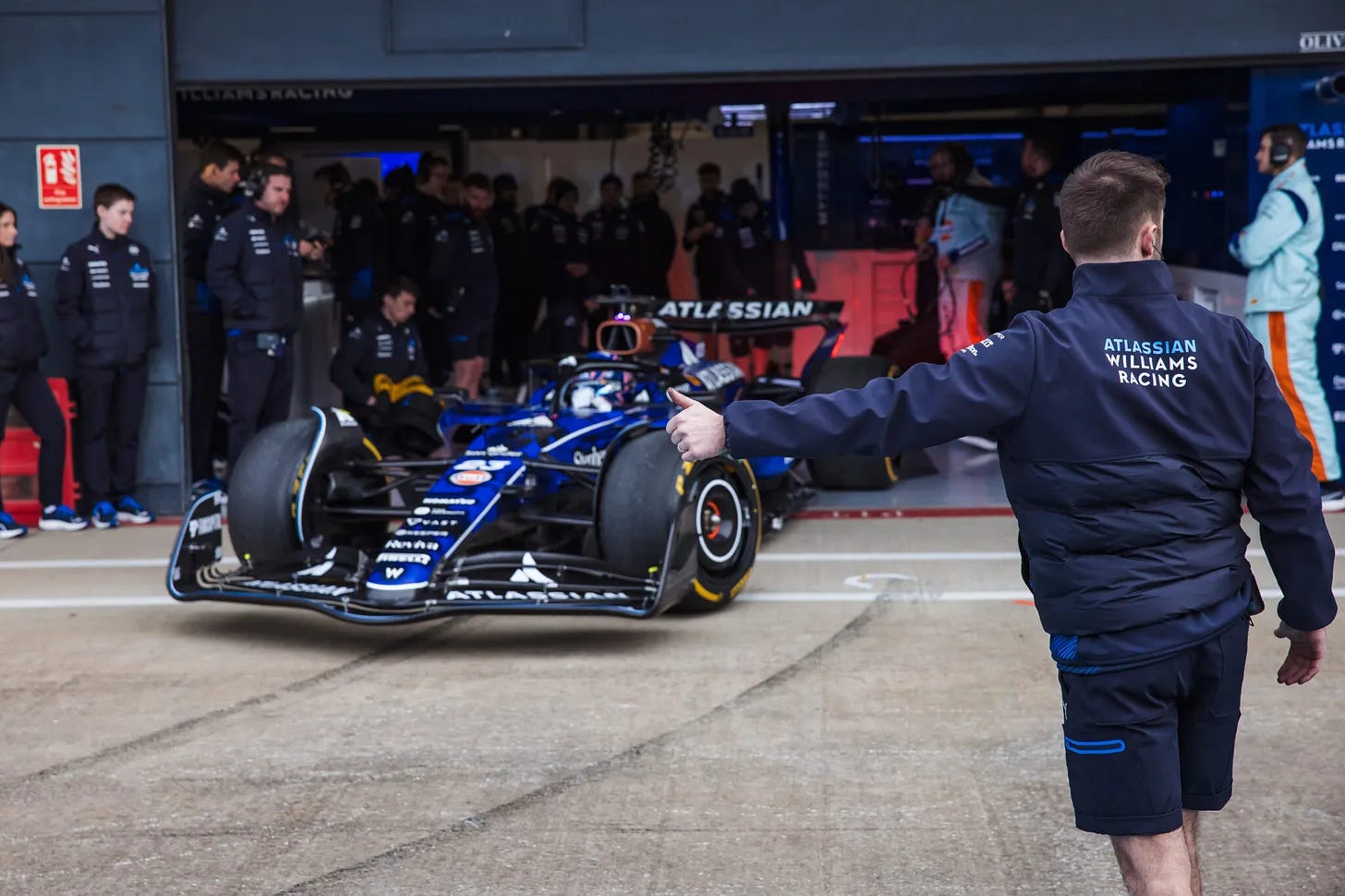
2025 may have only been projected as one of those “progression” seasons, but from the off things felt different. They now had Carlos Sainz on board, alongside Alex Albon, to jointly make up their most experienced line-up at the start of any season this century. The FW47 also was one of the first cars on the grid to break cover, doing so with a live shakedown at Silverstone in front of media, fans and a global audience virtually. It was also, unlike its predecessor, on weight from the outset - keeping development targeting performance, not simply closeness to the minimum limit.
But that development ended quite early in the season, and in fact didn’t last very long at all.
“We've only put a couple of weeks of aerodynamic development into the 2025 car during the year,” Vowles admitted to Autosport at the end of last season.
“But what we've been working on instead is: 'Do we have the right balance? Do we have the right way of working the tyres? Do we have the right way of communicating with the drivers? Do we have the right differential tools? All those are zero cost. They're just about using a product in a different way to what we had before.”
Working on those smaller, yet still hugely significant, processes clearly had an impact - unlocking performance and moving the team and their results forwards as the season progressed, even if the car itself was not developing aerodynamically. They ended the year P5 in the constructors’, their highest finish since 2017, and with two podiums for Sainz in Baku and Qatar as well.

They’re results that represented the work done off track over a year that Vowles felt saw them change more than they had done in 2023 and 2024; making the business “more agile and more accommodating” to that change, and creating a culture that he feels “is ready for more”.
He’s always been cautious though - yes 2026 is an opportunity, but heading in too boldly is also a risk for a team that he admits still has work to do despite their recent progress. In that sense, Vowles hasn’t framed it as “an acid test” but rather “just a continuation of the journey”.
“We know we're not at a championship level yet, but that scrutiny we apply to ourselves allows us to be stronger."
But perhaps it’s that scrutiny that has put Williams in the position of being the last team to put a car on track during this pre-season phase, as a result of them missing the Barcelona Shakedown.
The 2025-26 winter saw them, in Vowles’ words, push the business and the decisions they were making to “breaking point”, which revealed a number of pain points and issues that needed resolving. Although the work over previous years’ was essential in setting the business up to handle the workload of preparing for this entirely new regulation set, they’re regulations that mean the car is one that he says is “about three times more complicated than anything we have put through our business beforehand.”
“…it means the amount of load going through our system is about three times what it used to be. And we started falling a little bit behind and late on parts.”
And part of that is the consequence of Vowles not being willing to create one that’s too conservative, as he’s emphasised repeatedly that he’s “not here to produce a car that is well and truly within the tolerances”.
While the previous seasons’ cars’ aerodynamic development, including 2025’s, were sacrificed for the aerodynamic development of the 2026 car, if the team take that design to manufacturing too early they risk leaving performance on the table. “What you’re seeing is an outcome for making sure we’re making aggressive decisions to keep as much performance on the car as possible,” he told The Race.
It wasn’t until the second week of January, or around two before the shakedown, that Vowles realised the team would either have to put Bahrain testing and the first race in Melbourne at risk or accept that they couldn’t get to Barcelona, with Vowles opting for the latter because there’s “no points” for making it there.
“It’s there to shake the cars down and really more than anything else, help Mercedes [their power unit manufacturer], and I feel we haven’t in that regard.”
Instead, Williams have contributed to Mercedes’ understanding and data gathering, and their own, through a Virtual Track Test (or VTT). Effectively, VTT is a full car dyno - testing the power unit, gearbox, suspension, brakes and even aerodynamic parts. Vowles concluded that the testing was “successful” and “flushed out a lot of the demons that are buried in the car,” but it is far from a substitute for getting out on track or for the data that that allows for in terms of correlation or understanding vehicle dynamics.
Importantly though, it’s testing that means they remain “in a good place” and has potentially protected them from the ripple effects pushing to get to Barcelona at all costs could have had for the rest of the season.
And, as of two days ago, the team have now put the FW48 on track as part of their revised timeline ahead of the two official pre-season tests in Bahrain. Alex Albon and Carlos Sainz both got behind the wheel at Silverstone, with a focus on “getting in our first few laps and completing our shakedown plan”, according to Sainz.

Vowles called it a “milestone day”.
“The team has absolutely pulled together under the pressure of the situation and delivered a car today for a planned promotional filming day here at Silverstone.
“We were able to understand more about our package in preparation for Bahrain next week, and Carlos and Alex were able to provide some positive feedback to direct us, while also identifying some minor issues for us to clean up between now and then.
“The push isn’t over yet – this is just the beginning and there is more in front of us.”
We didn’t get much insight into the FW48 that made it to track, but Williams provided one photo as a first look that warrants some, very early, analysis.
A first look at the FW48
At first glance, and from this very limited angle, the FW48 doesn’t appear to have any features that we haven’t seen before from the other ten teams.
The front wing is running with three elements, the two rearmost of which are likely to move under the active aerodynamics given that Williams have mounted the nose to the mainplane. That’s a solution we’ve seen from the majority of teams at this point, with the exception of Mercedes and Aston Martin who are mounting at the second element, leaving just the rearmost to move.
The nose itself is a squared off, wider shape like a flattened off version of Mercedes’, and a more similar shape to Audi or Cadillac’s.
What stands out as perhaps most distinct features of the Williams are its inlets - which are incredibly wide and deep - a shape that, at least from this image, looks to limit the undercut at the front.
While other teams like Audi, Alpine or Haas are running with bigger inlets than the majority, if Williams stick with these they would comfortably be the most expansive. They’re accompanied by an airbox that is fairly large too, perhaps indicating that the team have decided to maximise their cooling capacity to protect them if they find themselves running in dirty air/traffic often. Whether that is worth it for the potential aerodynamic performance sacrifices is something we’ll have to wait to see.
At either side of the airbox, similarly to Aston Martin although much smaller in size, Williams are running two ‘horns’ presumably to manage the airflow coming rearwards from the cockpit/driver’s helmet.
Then there’s the suspension, something James Vowles said earlier this week was “different”. At the rear, the FW48 is running a push-rod configuration (not visible in the image here but specified by the team in the technical information), whereas at the front, it’s pull-rod.
The pull-rod itself is highlighted here in yellow, with the upper wishbone legs in orange (forward) and blue (rear). What’s apparent from this image is how highly mounted that forward leg is, versus a much lower inboard mounting point for the rear one. Together, that creates a shape not unlike the Aston Martin’s, though the AMR26 is a push-push configuration front to rear.
There’s undoubtedly more to come from Williams as this pre-season continues, with Bahrain offering them a valuable learning opportunity, not only about themselves but also about how they begin to compare design- and performance-wise relative to other teams.
Only from there to the first race in Melbourne will we, and they, get a more complete view of whether these sacrifices and over-winter pushes have been worth it, and whether they leave a lasting impact on their season, for better or worse.


I don’t think there lack of running at Barcelona will place Williams in a worse position than say half the teams that did attend but got very limited running. Bahrain should allow them to get back on track. The extra time the team had to prepare for Bahrain instead of pushing to get to Barcelona was the far more sensible decision once they knew they had suffered production delays.