


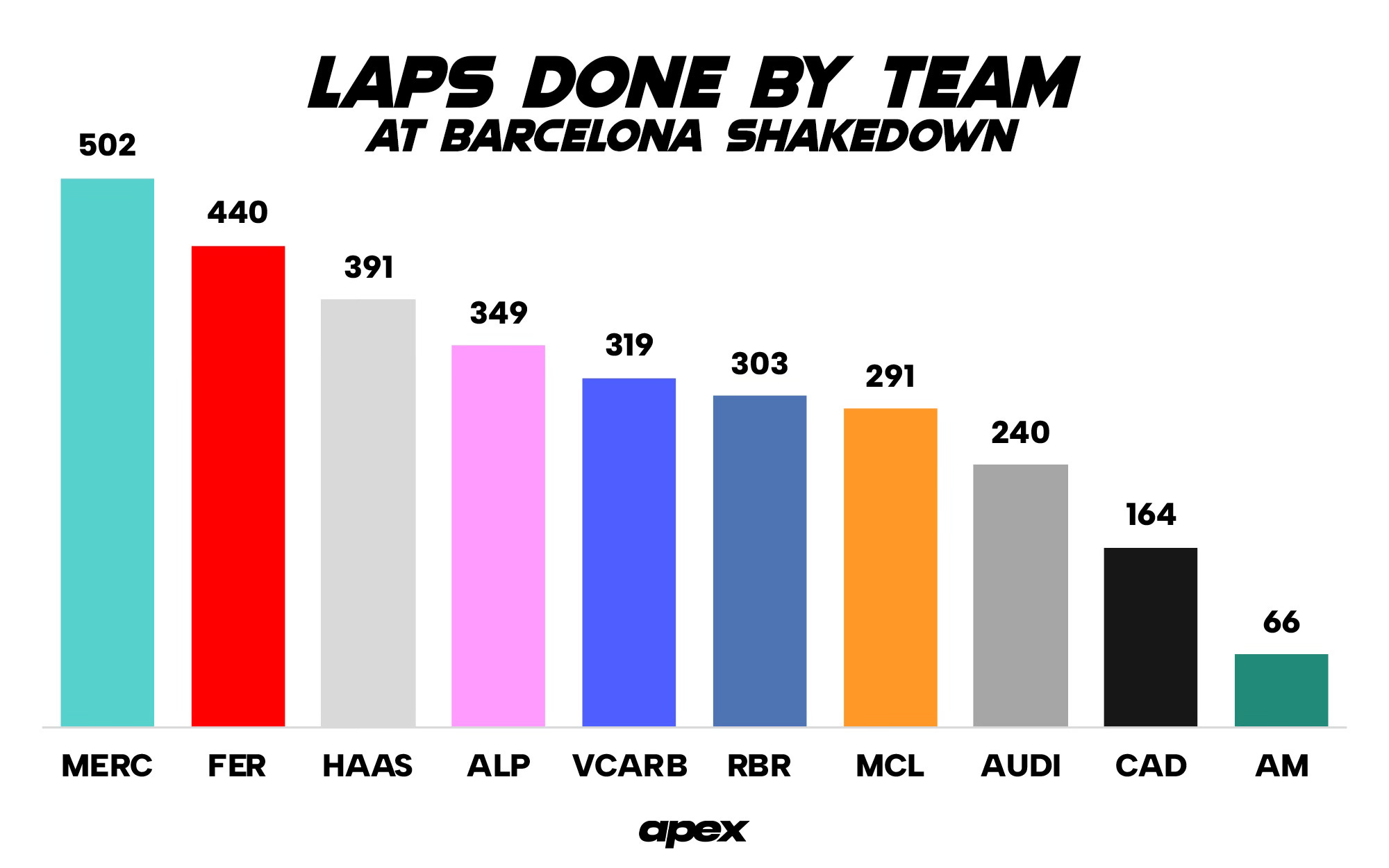
With lap times unrepresentative and unofficial, the laps done or mileage by each team over the Barcelona Shakedown week is perhaps the best measure we have of where each of them are at and how reliable their packages were at this early stage.
So where did each team get to over the week and how have they reflected on the debuts for their 2026 cars?
Mercedes out front
There’s one team who led the way - Mercedes. The team logged 502 laps, or just over 2,338km, over their near uninterrupted, full three days of running. In fact, their Trackside Engineering Director, Andrew Shovlin, commented that they’d “been losing more track time from other people breaking down and causing red flags than for anything on our side” as their W17 had “worked faultlessly”.
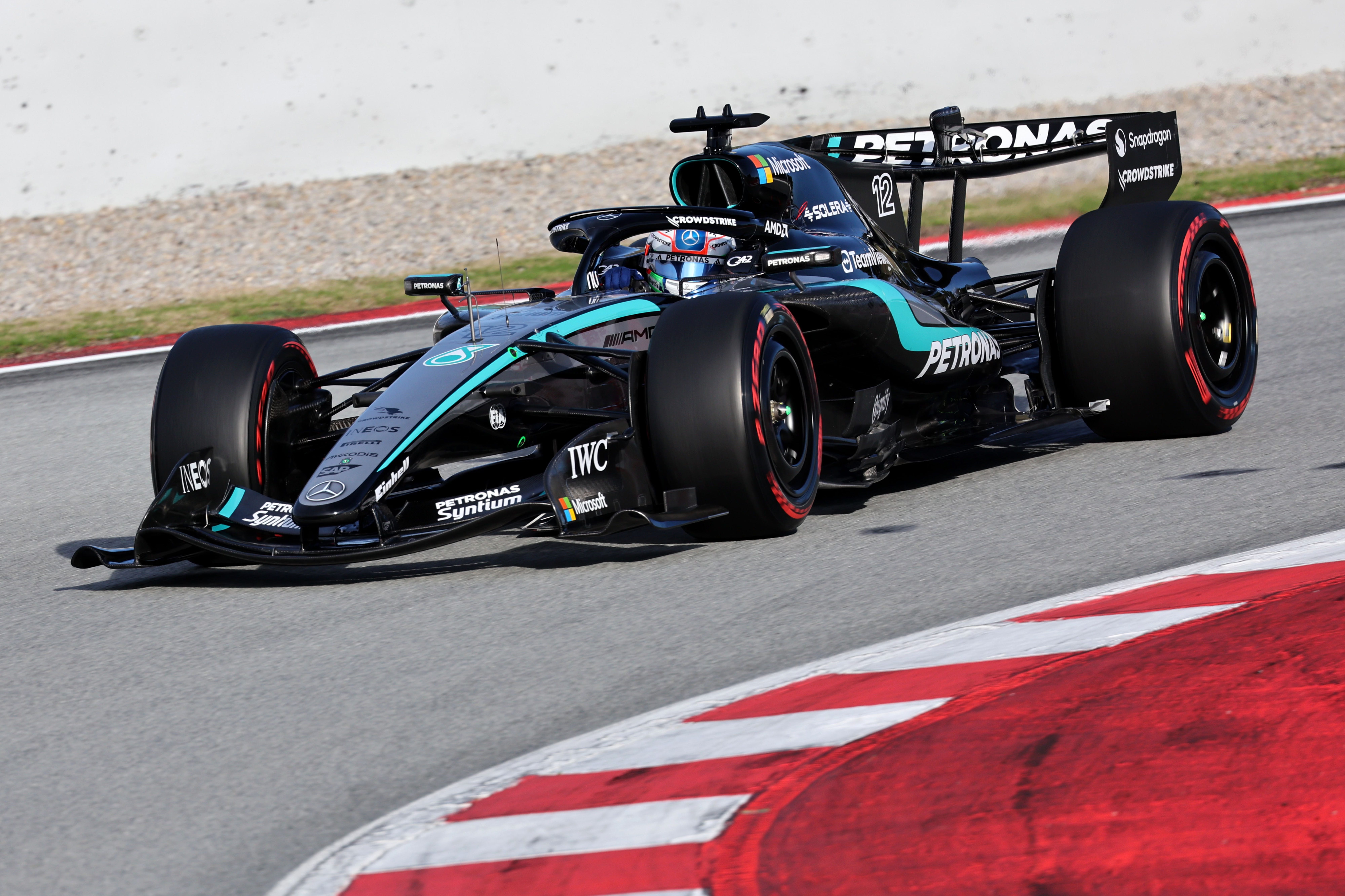
It’s a confident conclusion, but their reliability enabled the team to have “more or less ticked off all of the objectives” for the shakedown by the end of their second day on track, which had seen them not only ‘prove out’ the car and power unit to establish a baseline but then progress into completing multiple race distances on the hard C1 and soft C3 tyres.
While their initial intention for day 3 had been to work on setups and begin to find out what can be done with the new tools, the cold, damp conditions meant that exploration will move to be done in Bahrain.
The mileage and the comments from the team and drivers are very encouraging signs but, as George Russell emphasised, for them “it is not about the car working well, it’s about how fast it can go. We don’t have any indication of that yet so we will have to wait until Bahrain until we get any indications of the relative pecking order.”
“It’s very early days but we can be pleased with this initial foundation we have put in place.”
Ferrari log “productive” week
Laying a similarly promising initial foundation were Ferrari, who ran 440 laps over their three days on track - leading Fred Vasseur, Charles Leclerc and Lewis Hamilton all to describe their week as “productive”.
Unlike the rest of the teams, Ferrari ran their first day in Barcelona in the wet which Leclerc said was “tricky” but Hamilton felt was “actually a valuable experience” to get laps on the extreme wets and intermediates with a brand new car, as these tyres themselves are also brand new. They still got 121 laps on the board on that first day, but for their remaining two days the focus shifted to running the slick tyres and beginning to learn and understand the new systems under this regulation set.
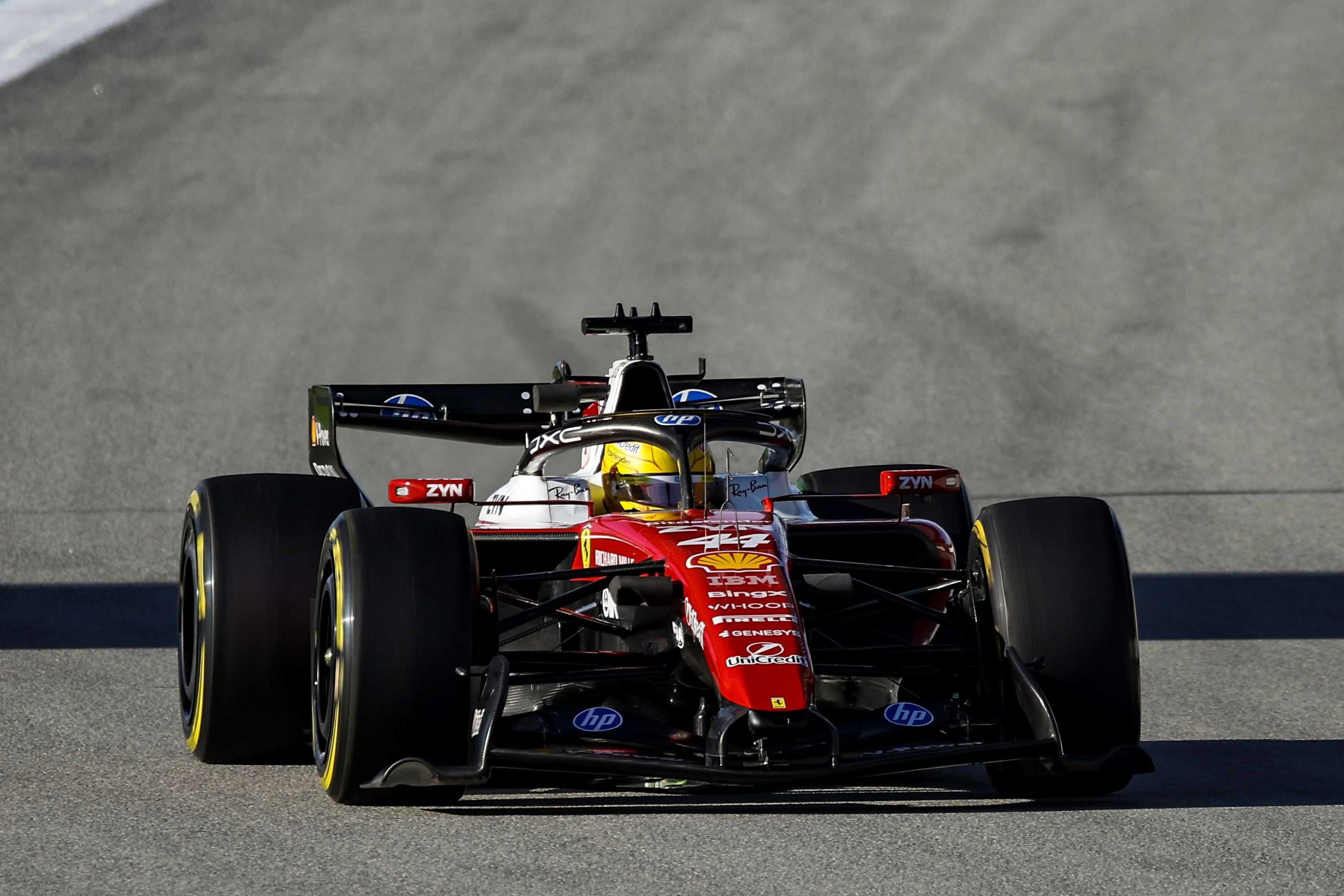
“Reliability and learning are the priorities at this stage,” said Fred Vasseur, and while they have “a long way to go”, he felt they’d made progress in achieving what these shakedown days were for - “understanding the car, analysing every area in detail and continuing to improve step by step”.
Early signs of power unit performance?
It’s perhaps not insignificant that it’s these two teams out front for mileage done as, collectively, they are the two dominant power unit manufacturers on the grid. Mercedes supply four teams this season, while Ferrari supply three (including themselves as works teams), and completing these high lap totals with no major interruptions or issues points to impressive reliability from both packages, even at this early stage of the year.
That’s especially the case because it wasn’t just the works cars that ran well, with Alpine and Haas, Mercedes and Ferrari customer teams respectively, each also logging between around 350 and 400 laps.
While there were more issues for them which limited the running on their first day in Alpine’s case and second day in Haas’, they were both able to bounce back and get into the triple digits of laps on Friday - perhaps a sign of just how well they’ve risen to the challenge posed by these regulations.
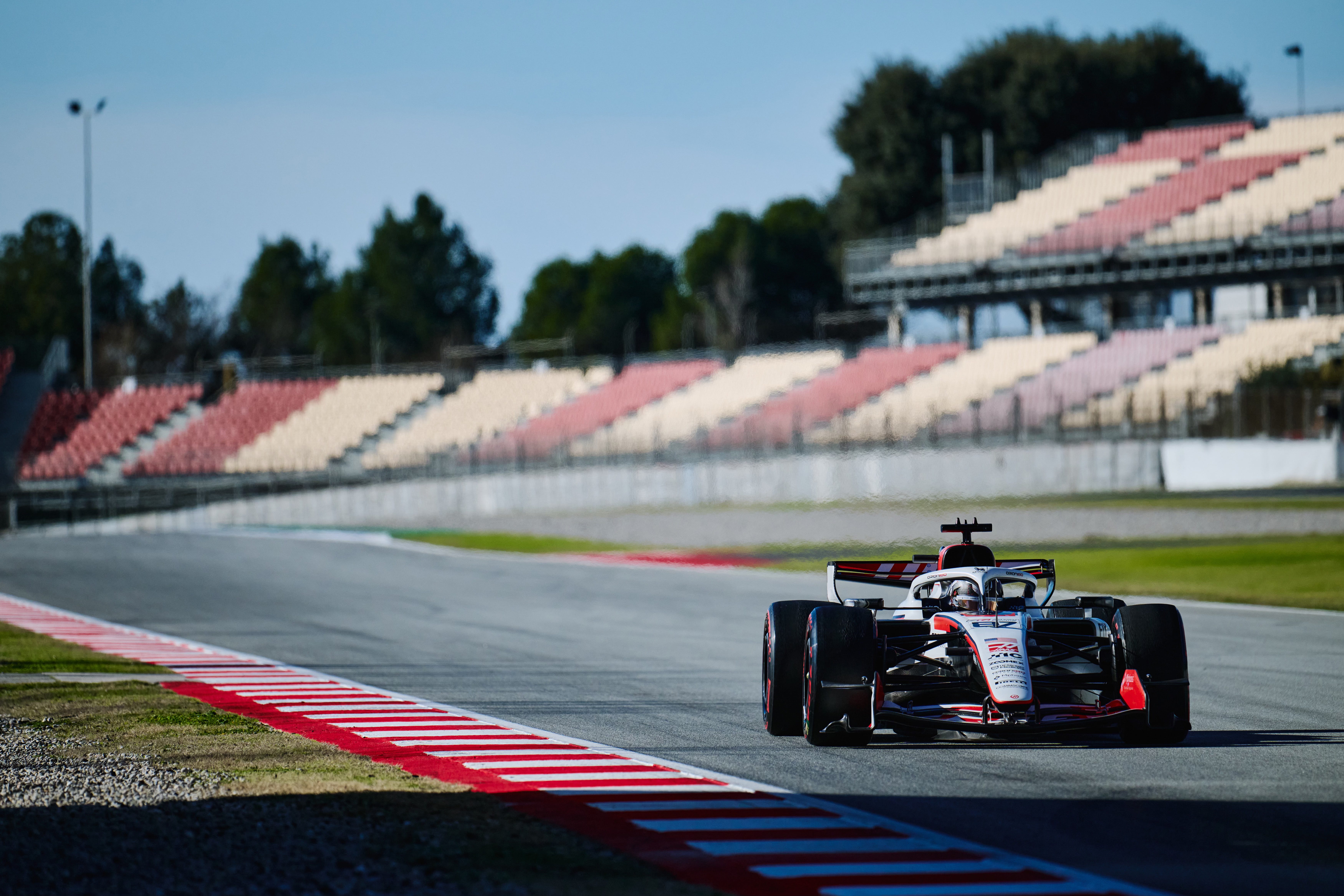
For Haas, while they understood the problems they’d encountered on Wednesday, the interruption to their running was a result of them waiting for replacement parts to arrive which took until Thursday night. Once they’d been fitted, the team were out at 9:00am the next morning allowing them to not only put in a large quantity of laps, but also “quality laps”, in Ollie Bearman’s words, giving them a huge amount of data to comb through.
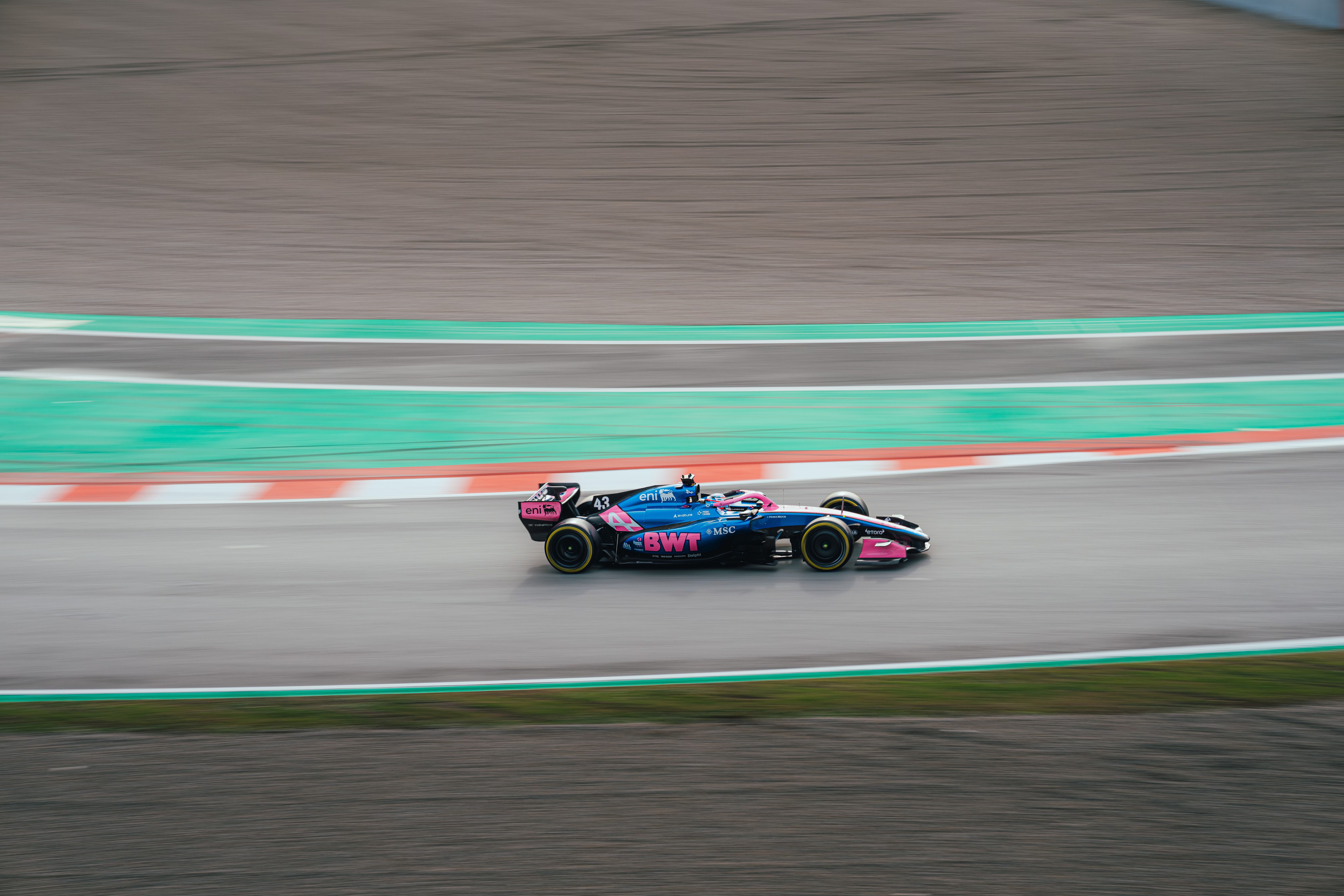
Alpine’s slower start meant they had to steadily ramp up the mileage as the week progressed, ending with a huge 764km done on the final day alone. Their Managing Director, Steve Nielsen, reflected that that had left them “with more questions than answers” walking away but it’s running that has begun their journey of finding a “sustained recovery of performance” over the season, which a reliable, performant PU will be central to.
Not just the established manufacturers
Incredibly, this theme of reliability wasn’t just constrained to the established manufacturers, with Racing Bulls also managing to complete over 300 laps with the brand new, debut power unit created by the Red Bull-Ford operation (the DM01).
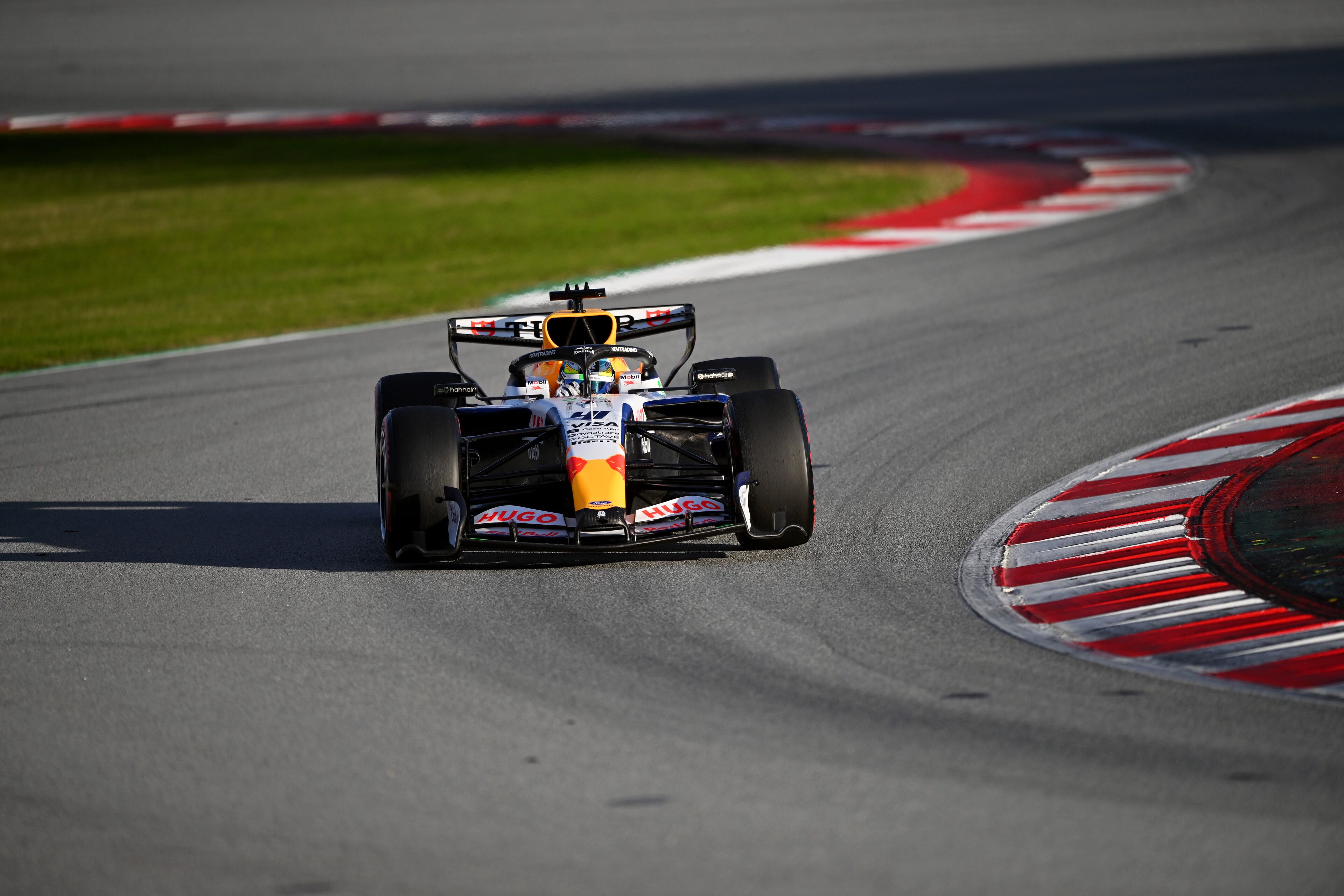
Their three days went by with “no significant stoppages” in the words of their Team Principal, Alan Permane, allowing them to start testing how to manage the energy of the new power units on “various fuel loads” and “in different modes”.
As Racing Bull’s Chief Technical Officer, Tim Goss, said, the scale of that achievement from a completely new operation shouldn’t be taken for granted, “can’t be underestimated” and is “really impressive”.
While Racing Bulls did pip the Red Bull top team for laps done, Red Bull Racing themselves also put over 300 on the board and likely would have done more had the weather and a crash by Hadjar not hampered their second day on track.
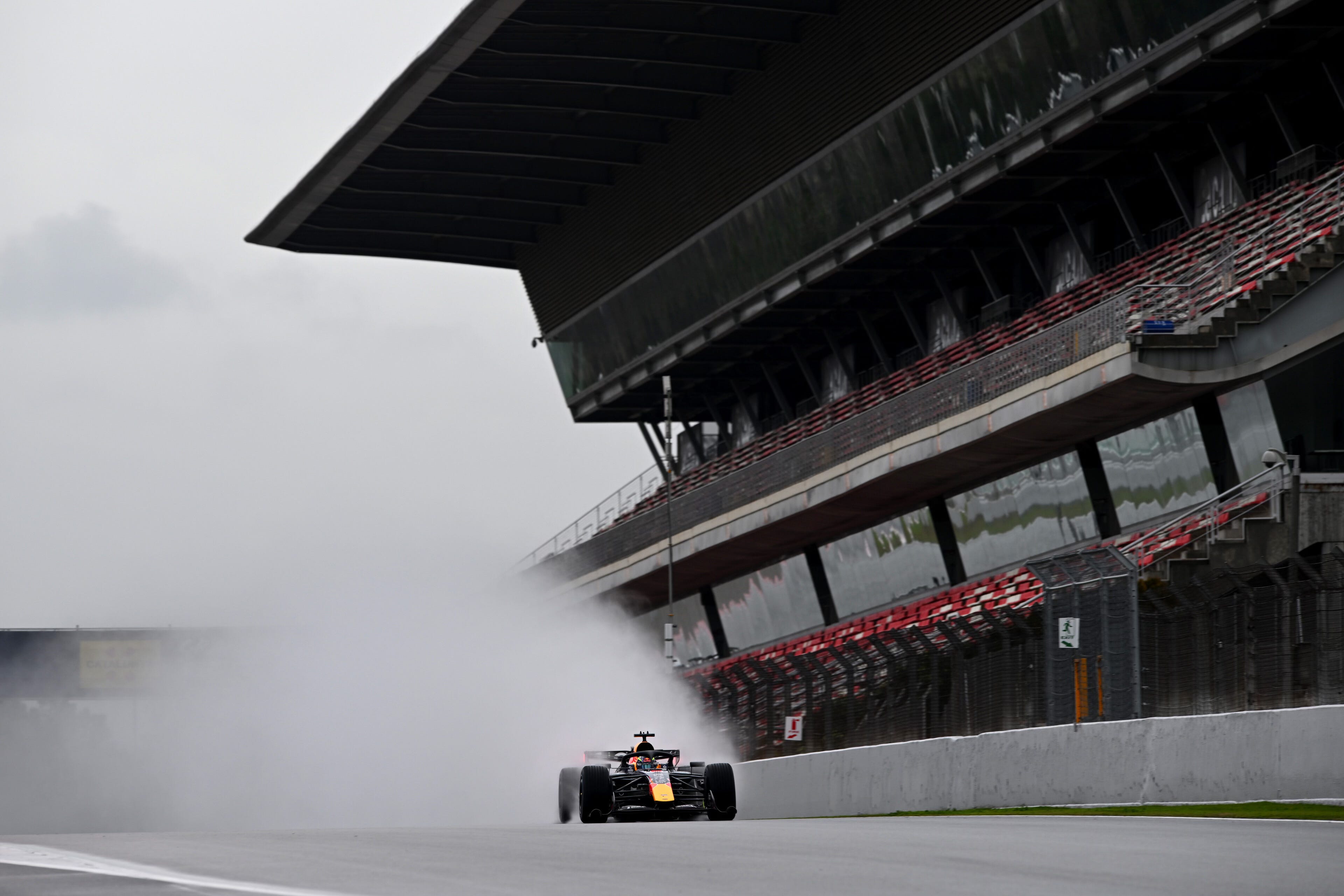
Laurent Mekies, their Team Principal, reflected on the week as “very special” in light of it being their first time running not just the RB22 but also their own power unit.
“I have to say, in terms of what we were expecting from the power unit on these first couple of days, I can only repeat how proud we are of everybody back at base to have managed to give us something that we can actually run with.
“Of course it’s very early days and of course nothing is perfect, but we could run and we could start to learn - work as one team.
“It doesn’t change the size of the journey in front of us but certainly it’s a first moment everyone in [Milton Keynes] should be proud of.”
What of the reigning champions?
McLaren’s late arrival to the shakedown pushed them into having to run Wednesday, Thursday and Friday back-to-back to ensure they could achieve the maximum of three days on track, but it was running that was compromised by a few issues.
In fact, it took until their final day for the reigning constructors’ champions to log over 100 laps in a single day.
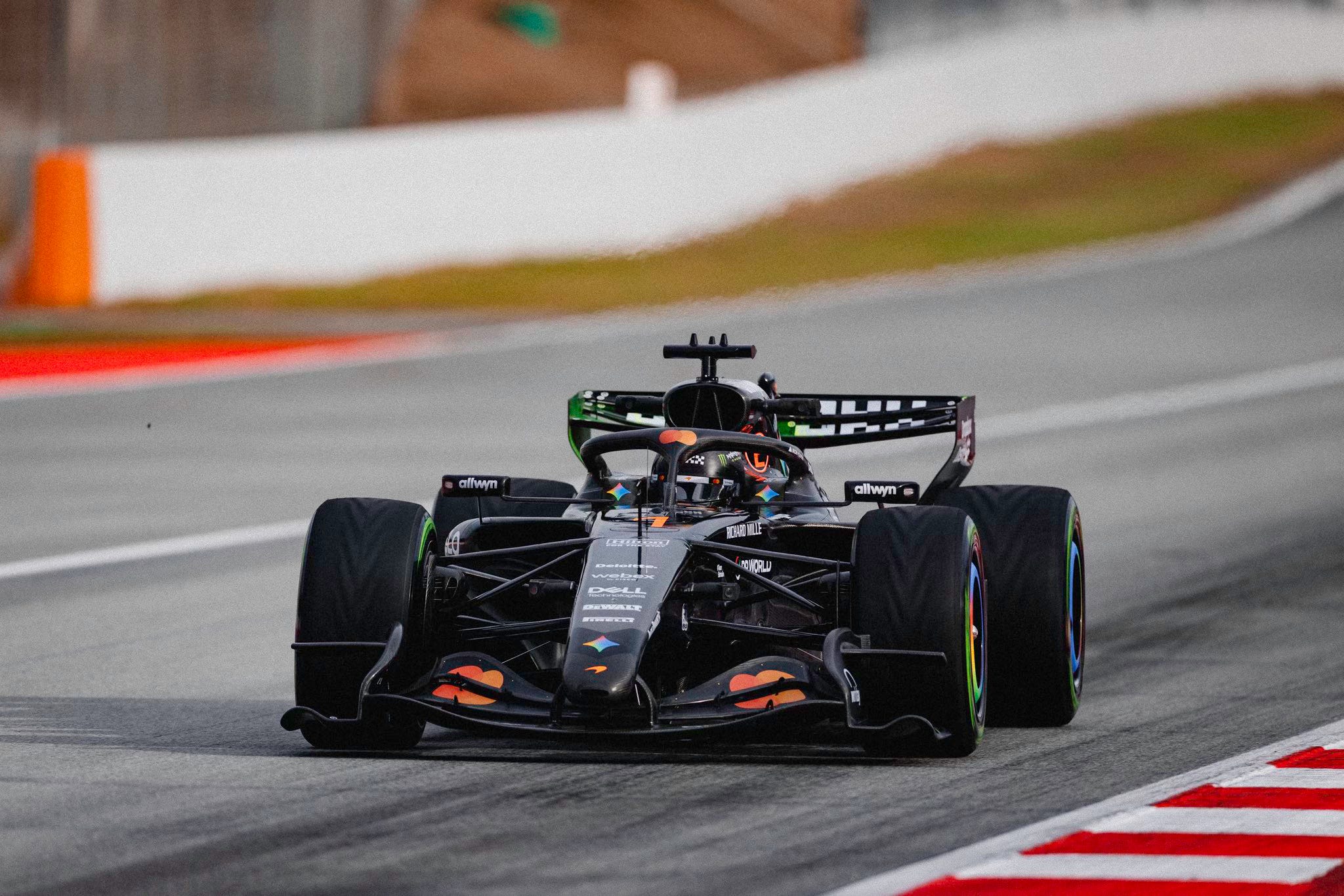
“First day, second day, we didn’t quite get the miles we wanted,” said Neil Houldey, McLaren’s Technical Director of Engineering. “Small, niggly little issues that seemed to cost quite a bit of downtime.”
“But the final day we got both drivers in, both drivers completed a lot of laps without any issue whatsoever so we’ve come away from it, after long, long hours, long, long days, pleased with the outcome.”
The new teams in the paddock
Audi and Cadillac, though facing a similar challenge posed by this new regulation set as the two new operations in the paddock, are ultimately approaching it from slightly different places.
Audi are able to benefit from the knowledge from personnel who worked with the team in its Sauber form last season or before, and the structure left behind by that team, yet are running with a completely new power unit and the first built at their Neuberg base. On the other hand, Cadillac are joining the grid as customers of Ferrari (at least until 2028) yet have built the team itself completely from a blank sheet of paper.
It means just getting a car out on track in the first place was a milestone in itself for Cadillac, and they completed the fewest laps of the teams who ran on their full three allowed days. “We’ve steadily worked through all the usual niggles and the like that you find with a brand new car,” said Graeme Lowdon, Cadillac Team Principal.
“But also you have to remember that it’s only the fourth day of this team running a Formula 1 car.”
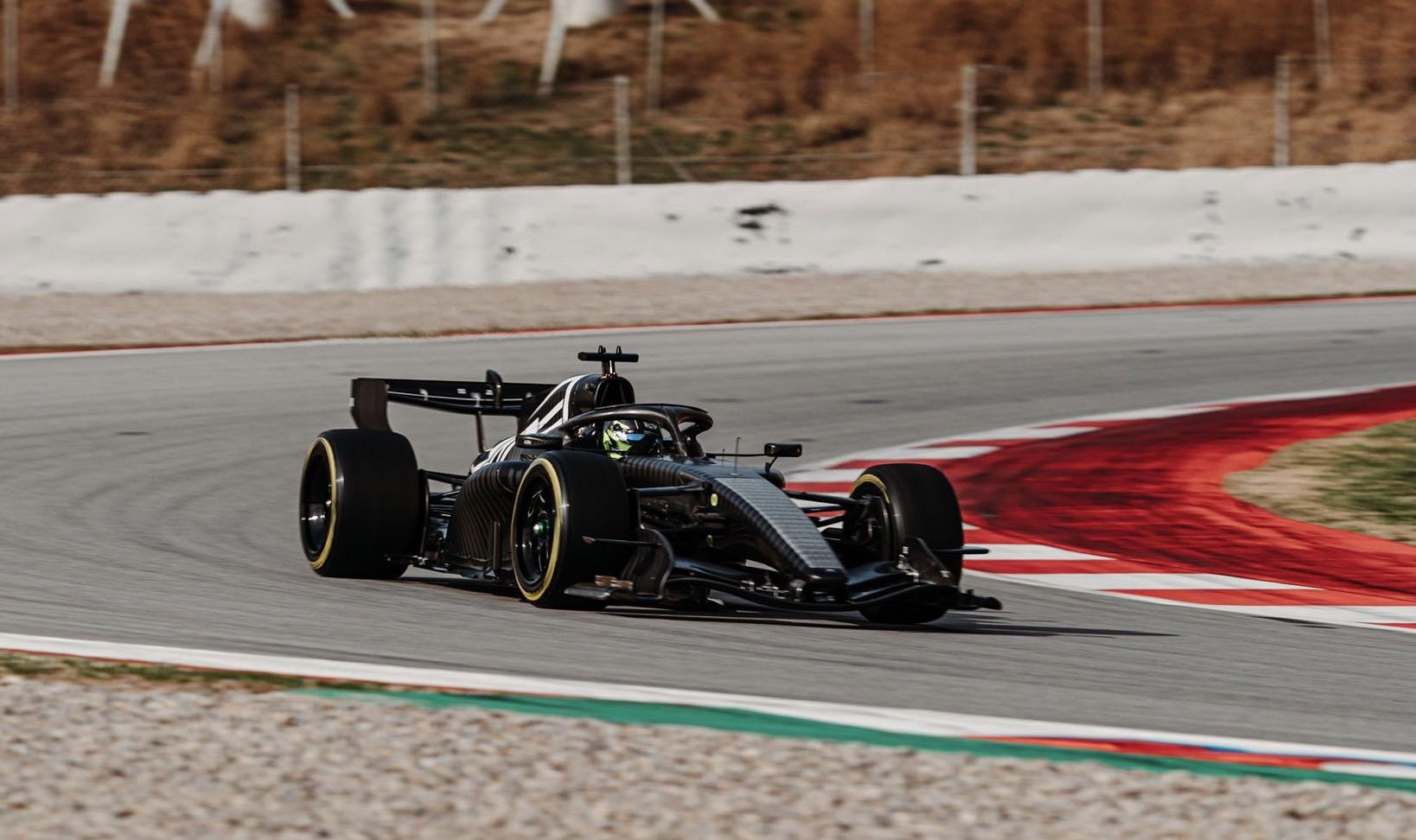
While this mileage will give them data to begin to assess where they sit, technically and as a team, and the work needed before they head to Bahrain, it will have also given them insight into the scale of the challenges they face as a completely new operation.
Their veteran driver, Valtteri Bottas spoke to this: “We still have lots of problems to solve, and a bit of a mountain to climb, but we are getting there step by step.”
For Audi the shakedown focus was more on proving out the power unit and establishing how the team itself operates around that and reacts to any issues.
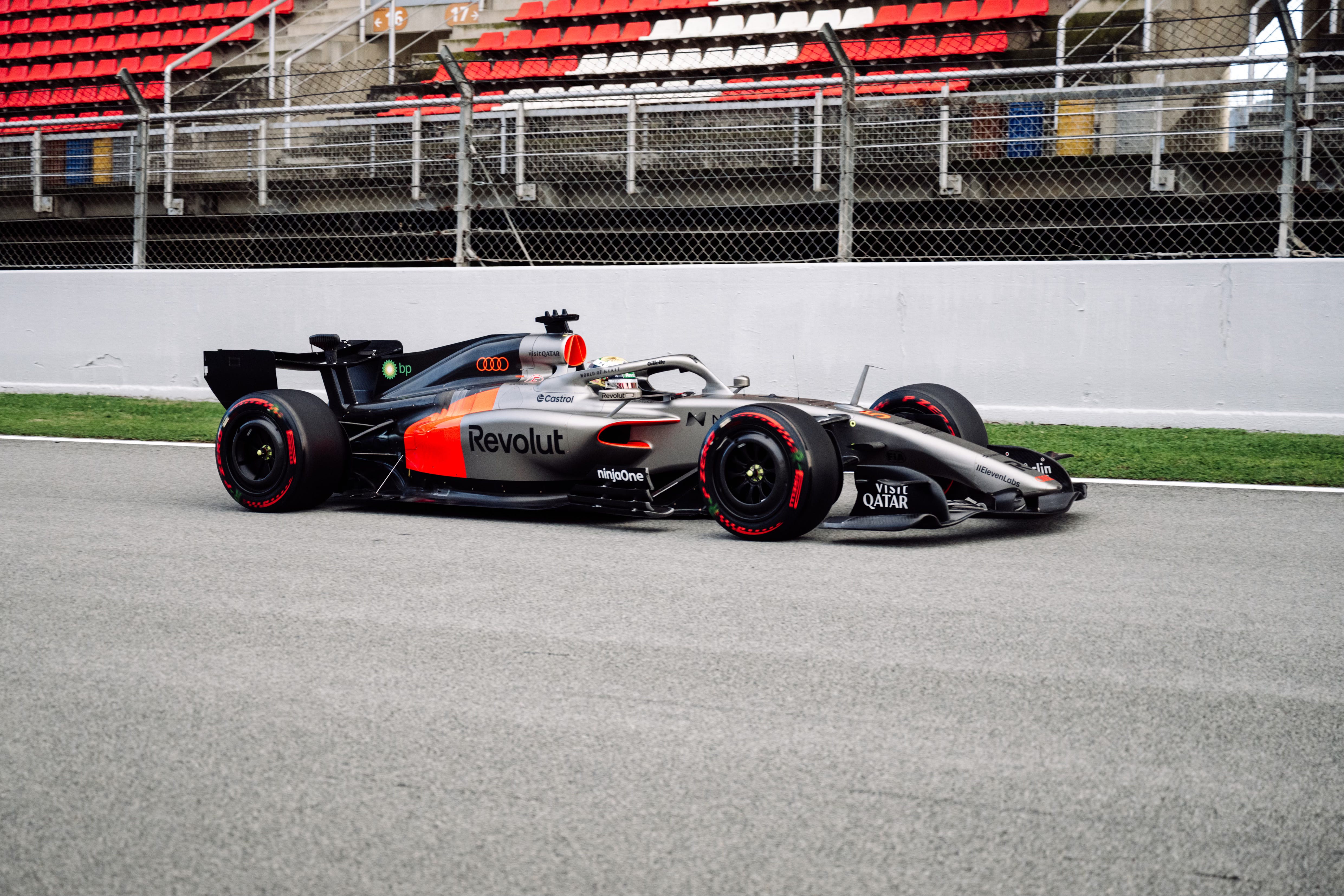
And there were a “couple of problems”, as Gabriel Bortoleto said after he stopped on track on day one, bringing an early end to their running. But he also spoke to that being the aim of this shakedown - finding the issues now, so they can be rectified and not encountered later, when it matters more.
Importantly, they recovered well and ramped up their mileage to log over 140 laps on the final day to leave Audi’s Team Principal, Jonathan Wheatley, “pleased with the level of progress we‘ve made this week as a team.”
“This shakedown wasn’t just about running the car - it was also about putting our entire trackside operation to the test and integrating our chassis and powertrain personnel into one cohesive team,” he said.
“We've encountered a few early challenges, but the way the team came together to find solutions has been impressive.”
A new challenge for Newey
Getting to Barcelona for the shakedown in the first place took a “big effort” from the Aston Martin team, according to their Chief Trackside Officer, Mike Krack.
The AMR26 made its debut in the final hour of the penultimate day and while that running was cut short, Friday saw Alonso put an estimated 61 laps on the new car and gain, in his words, a “sense of the direction the car is taking”.
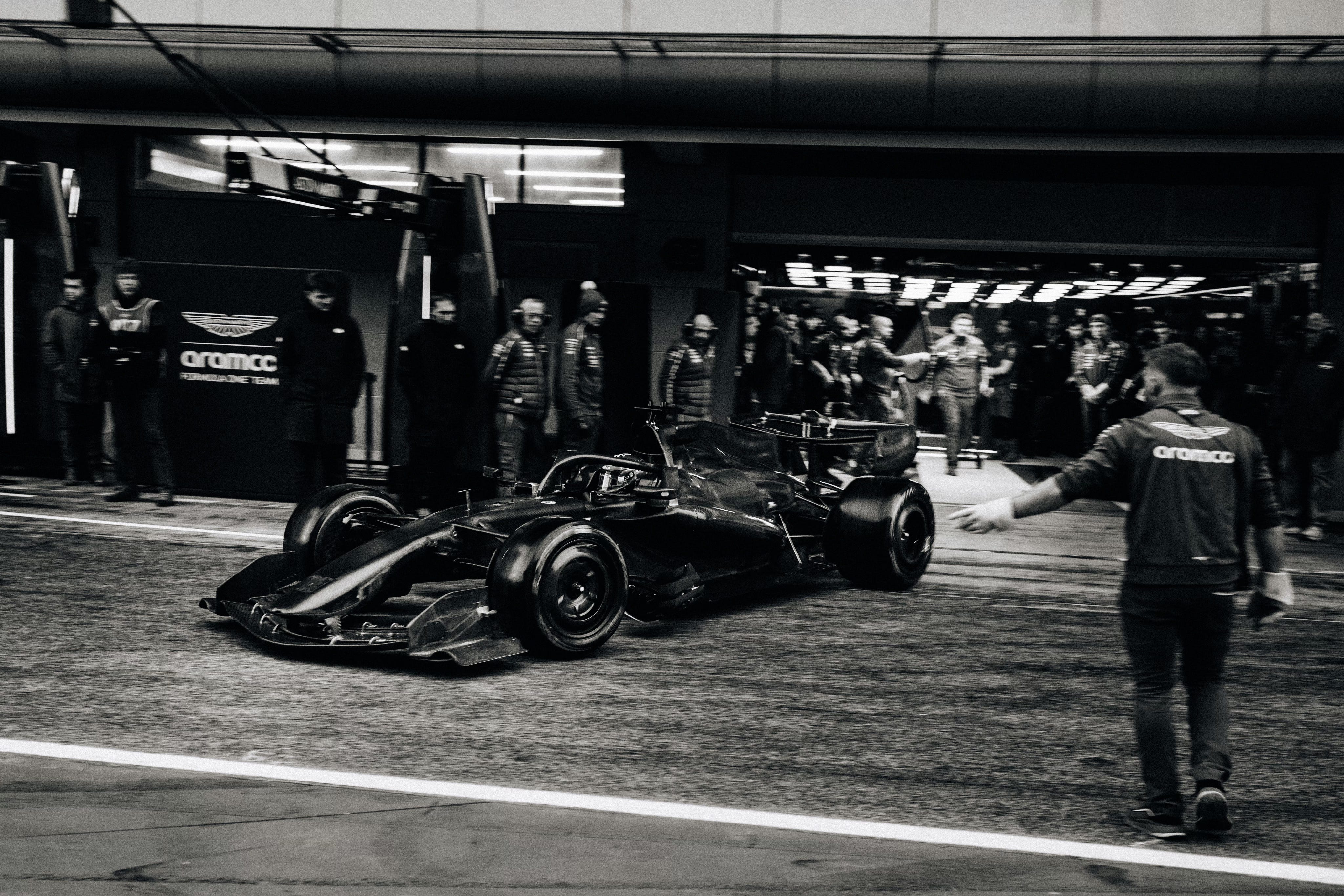
It’s the team’s first from a design team led by design extraordinaire, and now their Team Principal, Adrian Newey. But it’s also the first running their brand new Honda power unit and a brand new gearbox, the first the team has produced “in many years” according to Krack.
The mileage put on these systems may have lacked, but Krack was pleased with the work the team had put in just to get to Barcelona: “A lot of hard work has gone in to get to this point, and there's a lot of work still to come, but we can take a breath and be happy that we rolled the car out this week.”
“We'll now take what we’ve learned and keep developing the AMR26 ahead of Bahrain testing."
The unknowns heading to Bahrain…
This week might have been the teams’, and our, first chance to see the 2026 cars on track for their first significant running but its left them, and us, with a number of questions remaining for when they return to the circuit in Bahrain.
The major one actually comes from a team who put no laps on the board after missing the shakedown completely: Williams.
Their attribution of them missing it due to “delays in the FW48 programme” gave rise to a number of rumours over failed crash tests, chassis issues, and the car being overweight. But mid-week, James Vowles released a statement and shut those down, instead pointing to it being more about the team taking a logical, cautious approach to the pre-season.
“For the avoidance of doubt, there has never been a problem with our chassis tests, which were passed many weeks ago,” he said.
While their original plan and intention had been to be on track in Barcelona, Vowles said their car development process for this new regulation set had pushed the business to “breaking point”, revealing a number of “pain points” and giving rise to a “number of issues” which “are now resolved”.
Even so, it was his feeling that making it to Barcelona would have compromised the rest of their pre-season and the bigger picture too, and instead the team have opted to complete Virtual Track Testing in the UK to gather “valuable engineering data” before they’ll run a filming day and then at the official test in Bahrain.
“Trust that we are working diligently and incredibly hard”, he said, but what the product of that work looks like, especially in light of the “issues” Vowles said they’ve faced, is a big question to be answered over the rest of the pre-season.
Another key question mark hangs over how the teams will use the data gathered this week to inform where they go from here, and we’ll likely start to see the first signs of a development trajectory for these cars as they run in Bahrain in ten days’ time.
The Mercedes lap numbers are quite ominous. It reminds me of their peak dominance years when they would show up to testing and just put in lap after lap with no issue.