Reimagining F1's birthplace: Technical Preview for the British Grand Prix
The lap of Silverstone could look and feel different this year, as the birthplace of the F1 championship is set to welcome its most modern cars.


Welcome to your technical preview ahead of the British Grand Prix!
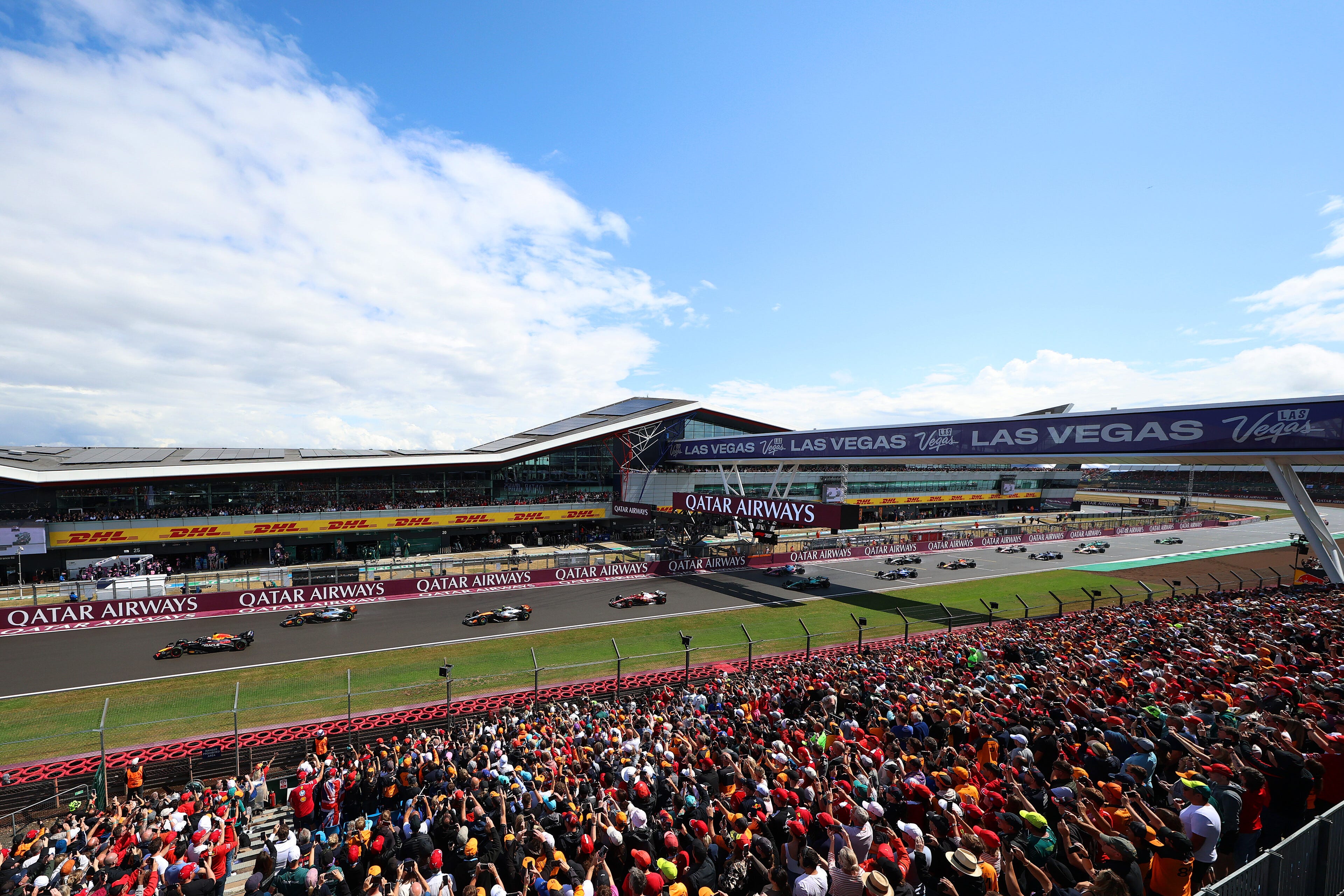
The British Grand Prix is a genuine classic, taking place where the F1 championship was born in 1950 - Silverstone Circuit. That storied history seeps through every part of the lap, but this year could be paired with a very new feeling as we get ready to witness how these most modern cars take on one of F1’s oldest venues.
Already we’ve had a warning from last year’s pole sitter here, Max Verstappen, about what that might look like. He said in the post-Austria press conference that he “just started laughing” when he tried Silverstone on the simulator in the 2026 car because “it just felt like a different track"!
And that change in track feel down to the intrinsic characteristics interacting with the systems of these new cars is something we’ve discussed over and over this season so far, practically at every venue. But, as Max says, it could be the most stark yet at this classic.

High Speed and High Loads Clipped?
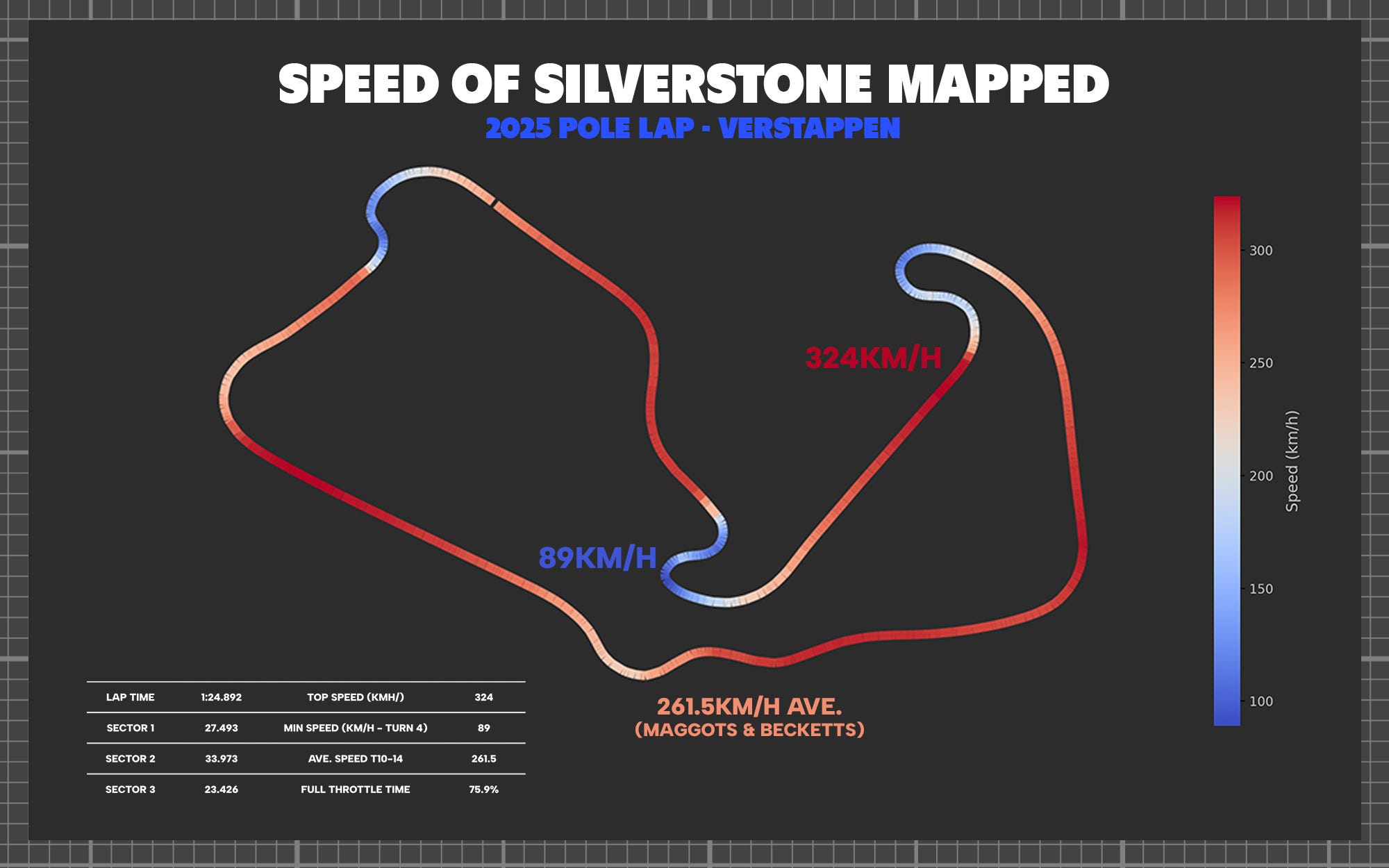
The lap of Silverstone lacks heavy braking zones (the brake is only hit 7 times over the layout) and is instead known for its sweeping, flowing, high speed, high lateral load corners - some of which are infamous for their challenge and reputation. Maggots-Becketts-Chapel, for example, the left-right-left-right-left sequence that concludes the middle sector, is a true driver favourite - one that over last year’s pole lap was taken at an average speed of 261.5km/h with just two lifts off the throttle and a dab of the brake.
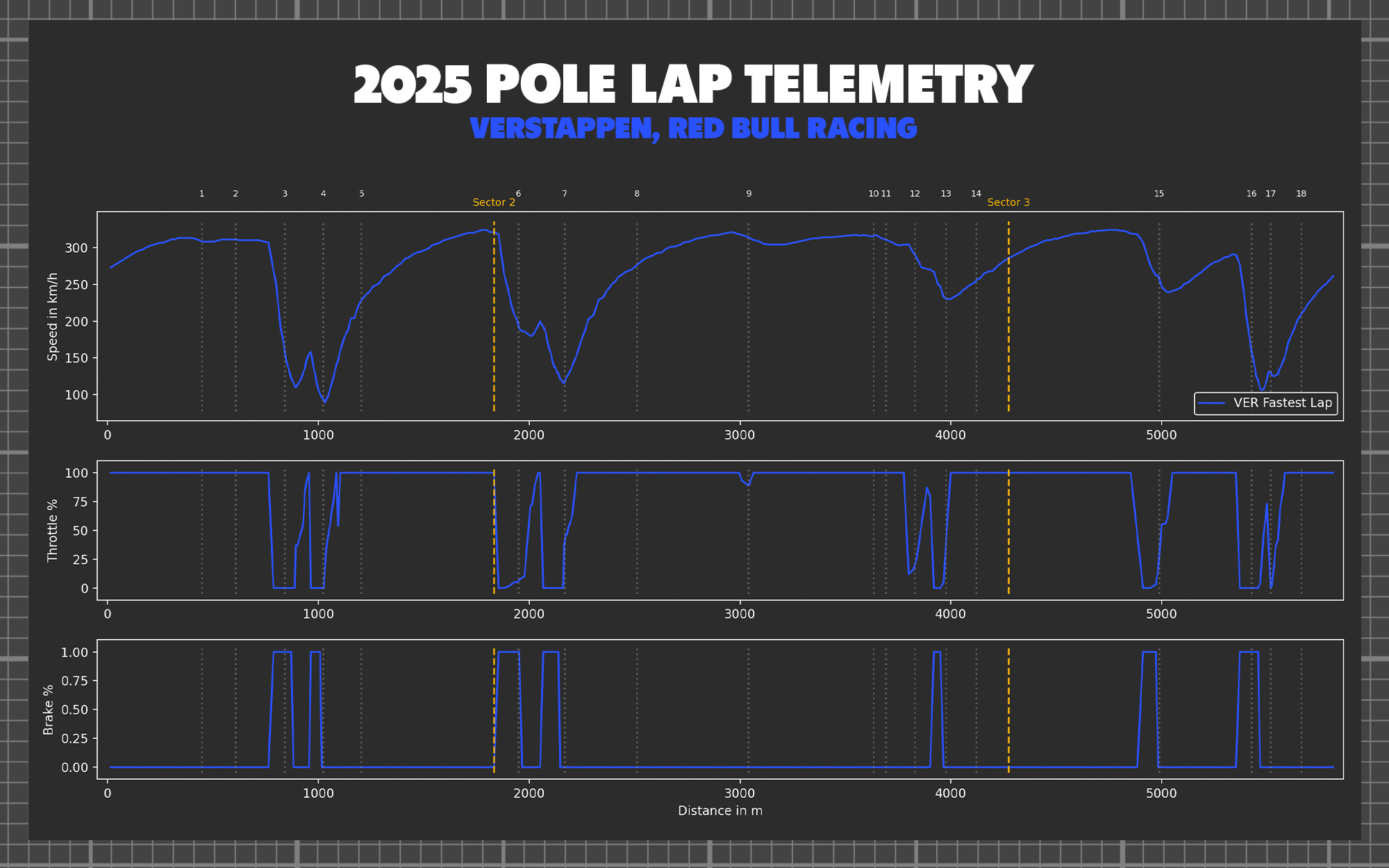
But that speed is likely to come down quite a bit this year. The reduced downforce of these cars versus their predecessors is one potential reason for that, especially compared to the ground effect era cars that were renowned for their high-speed cornering performance, but the power units and energy management requirements will be another.
While regeneration can be done under braking, equally it can be done on full throttle via ‘superclipping’ which will now, unlike the start of the season, harvest at 350kW rather than the 250kW it was set at. We’ve become used to discussing that phenomenon appearing and the end of long straights, which on the telemetry appears as the the vMax (peak velocity) consequently coming more in the middle of a flat-out run and the speed trace tapering off as the driver reaches the end.
But it also functions in high speed corners, as we first saw at turn 12 in Bahrain testing which saw a 20+ km/h speed reduction from the way it was approached in 2025.
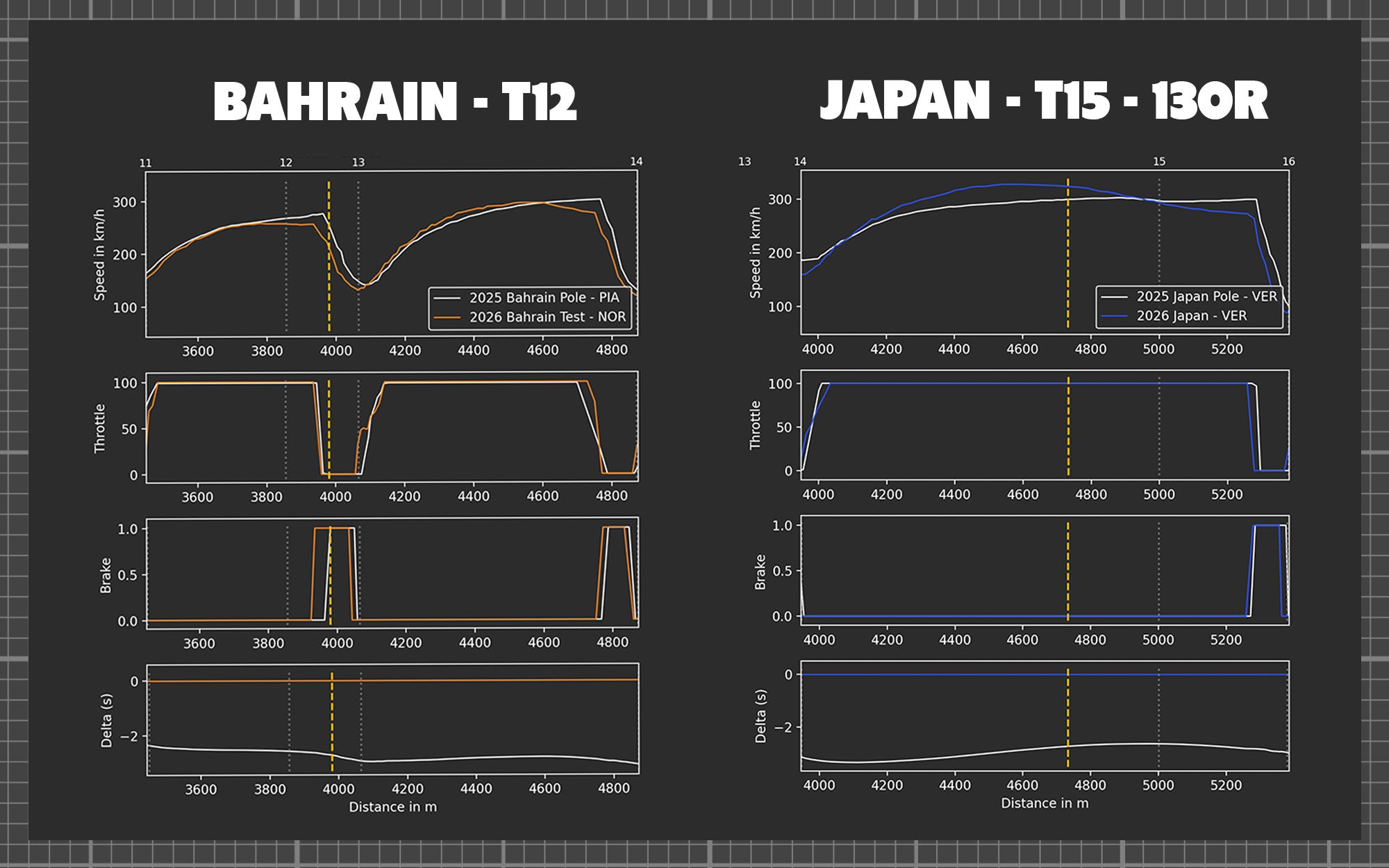
Maybe most controversially so far though, it impacted the high speed, left-handed kink of 130R in Suzuka - a truly iconic corner. Instead of the drivers sustaining speeds of ~300km/h through, the clipping this year meant that while the apex speed was fairly similar, the run towards the final chicane out of 130R was taken at ever reducing speeds. Eventually, by the braking zone, the drivers were ~30km/h down compared to their entry speed in 2025.
The sheer lack of heavy braking zones for regeneration over the latter part of the Silverstone lap, effectively from turn 8 and beyond, means superclipping is going to have to come into play in a way that could make Maggots and Becketts the latest corner sequence to be impacted. Equally though, to feed the run into it, the apex speed of Copse corner that comes before could change too as could the approach into Stowe that comes after.
The FIA have reduced the harvesting limits for the weekend in an effort to prevent the impact of these techniques being excessive through such sections, and to aid with driver workload, but we won’t know what that lower limit is nor its impact until we get into the weekend. The result though will be not only a lowered harvesting limit, but consequently a lower level of energy available for deployment - increasing overall energy sensitivity, and potentially increasing lap time.
Maintaining and Maximising Speed
With superclipping set to come back to the fore after a few weekends out of the spotlight, maximising and maintaining speed through these sequences but also to the very end of the straights is going to be critical.
Straight mode vs. corner mode will be key to that: minimising drag during the flat, straight runs but maximising stability through these aforementioned sequences. There will be four straight mode zones over the lap, in some pretty interesting places and with some interesting properties to them too.
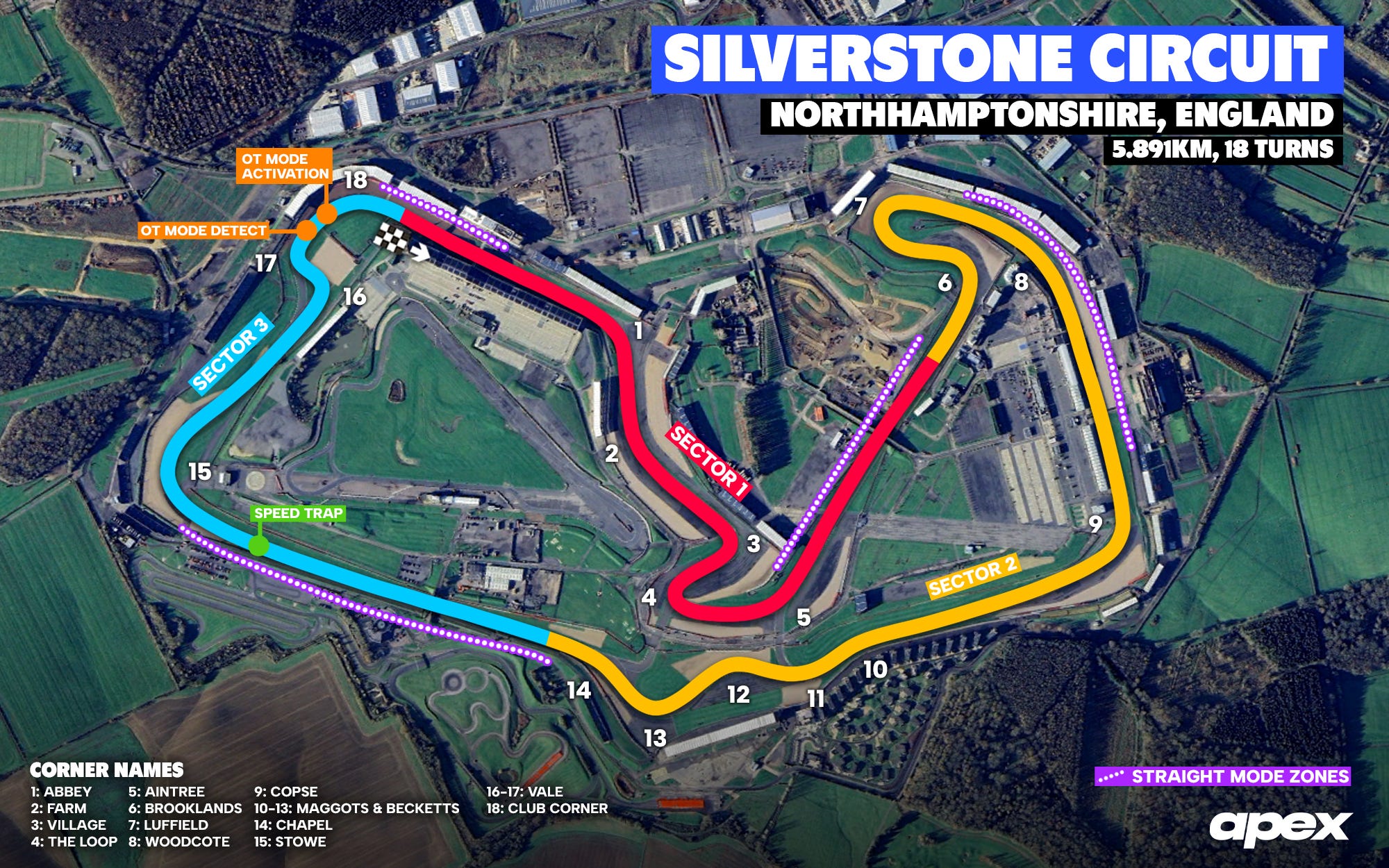
The Hamilton Straight (past the pits) will only have straight mode to cover the run to the line and slightly beyond, not all the way down to turn 1 - presumably to ensure the cars arrive at the high speed corner with enough downforce bolted on to mean they don’t go sailing off track. From there, the Wellington Straight between T5-6 is almost entirely covered by straight mode.
Woodcote corner, or T8, is then also set to be taken with the wings open and down in dry conditions which may change it from being a corner that’s run flat out on the throttle to one where the drivers have a chance to lift slightly and recover some energy to take into Maggots and Becketts. It’s a similar story then on the run out of that sequence and down the straight towards Stowe (T15).
While it perhaps won’t help the spectacle of these corners and how they’re taken in a pure sense, it should help even out the average speed over the full lap to bring it more in line with what we’re used to.

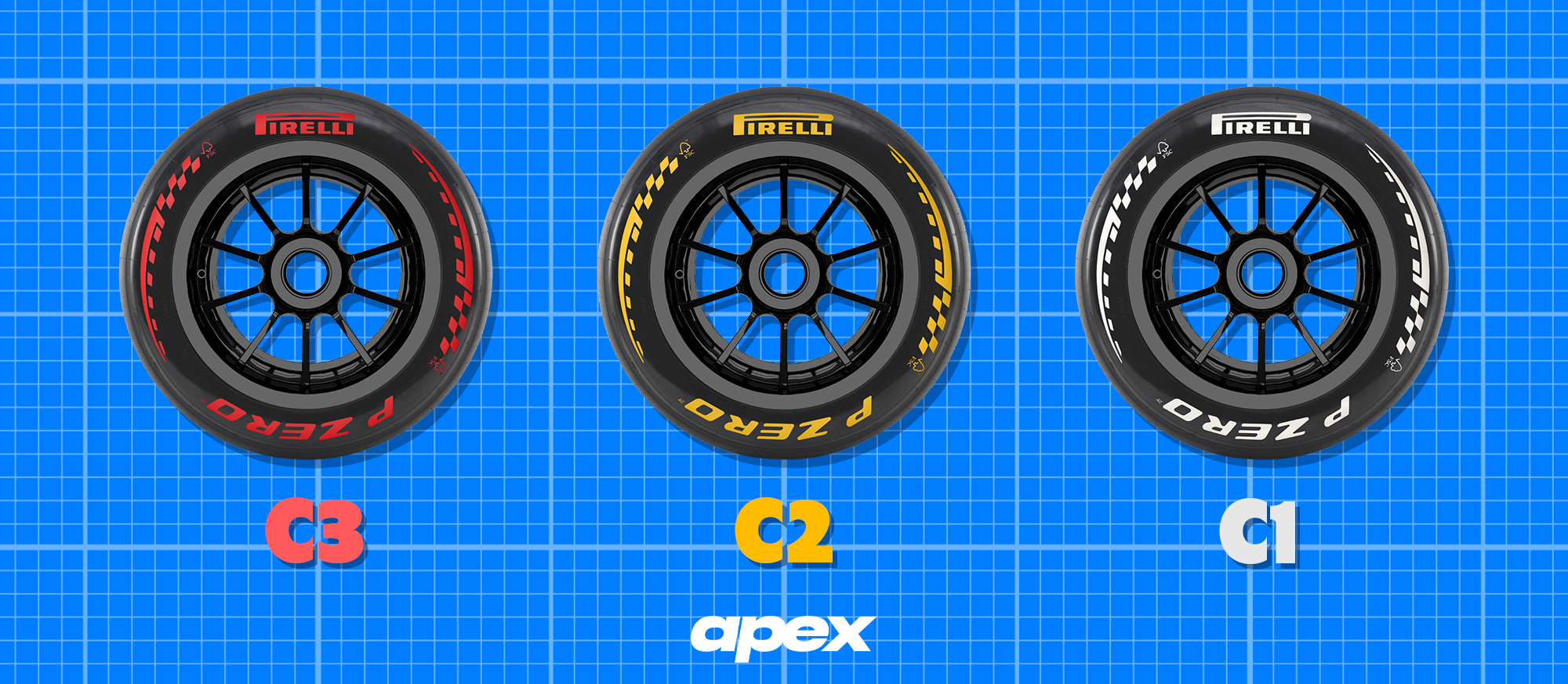
Pirelli moved the compound range a step softer here last year compared to what it had been in the past, but this year we’re back at the hardest end of the range - the C1 will be the hard, the C2 the medium, and the C3 the soft.
The softer range in 2025 was decided upon with strategic variation in mind, which really was the central theme to a number of Pirelli’s decisions last season. But come race day, the weather meant we didn’t get to see how that would have played out.
This year though, Pirelli’s decision making is driven more by meeting the track characteristics once again. Silverstone’s high speed corners generate a huge amount of lateral force that the tyres are directly subjected to, at levels similar to those seen in Suzuka, where we also saw the hardest compounds in play, and Spa, where we head next. It’s the front axle that’s most heavily stressed, specifically the front left given that the corners are predominantly right-handers (10 right vs. 8 left).
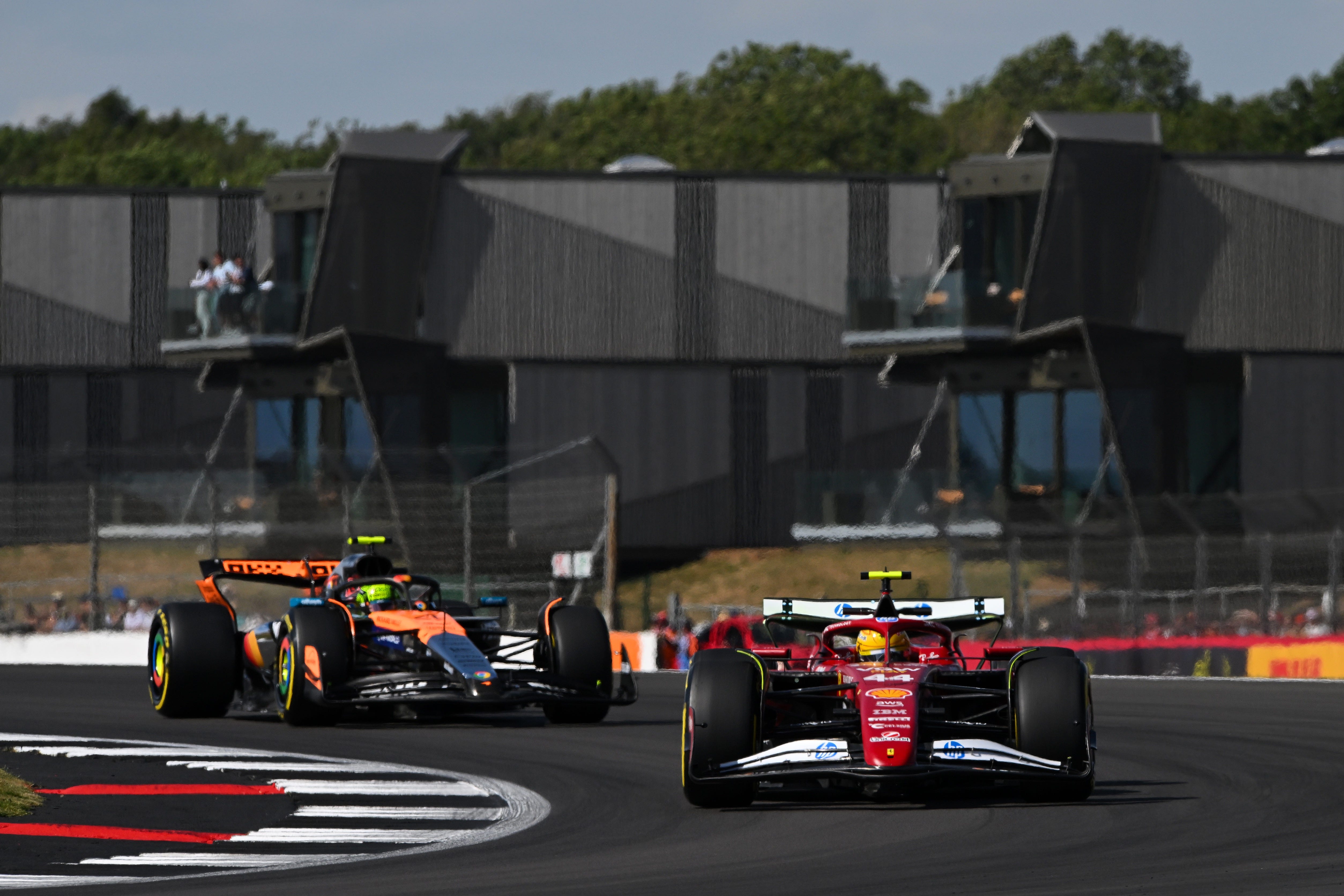
The circuit’s surface is well rubbered in, given how much it’s used both over the year and over the Grand Prix weekend itself by the several support series, and it’s also rated medium-low in abrasiveness by Pirelli. Degradation here is therefore typically driven more by the lateral forces and the thermal loads those put through the tyres lap-after-lap come the Grand Prix, however we’re also anticipating fairly high ambient temperatures this weekend (25-27°C) which may exacerbate that. Wear can also play a role, as can graining, though Pirelli have noted that their more graining-resistant constructions have so far performed well this year in reducing the impact of the phenomenon on tyre life and performance.
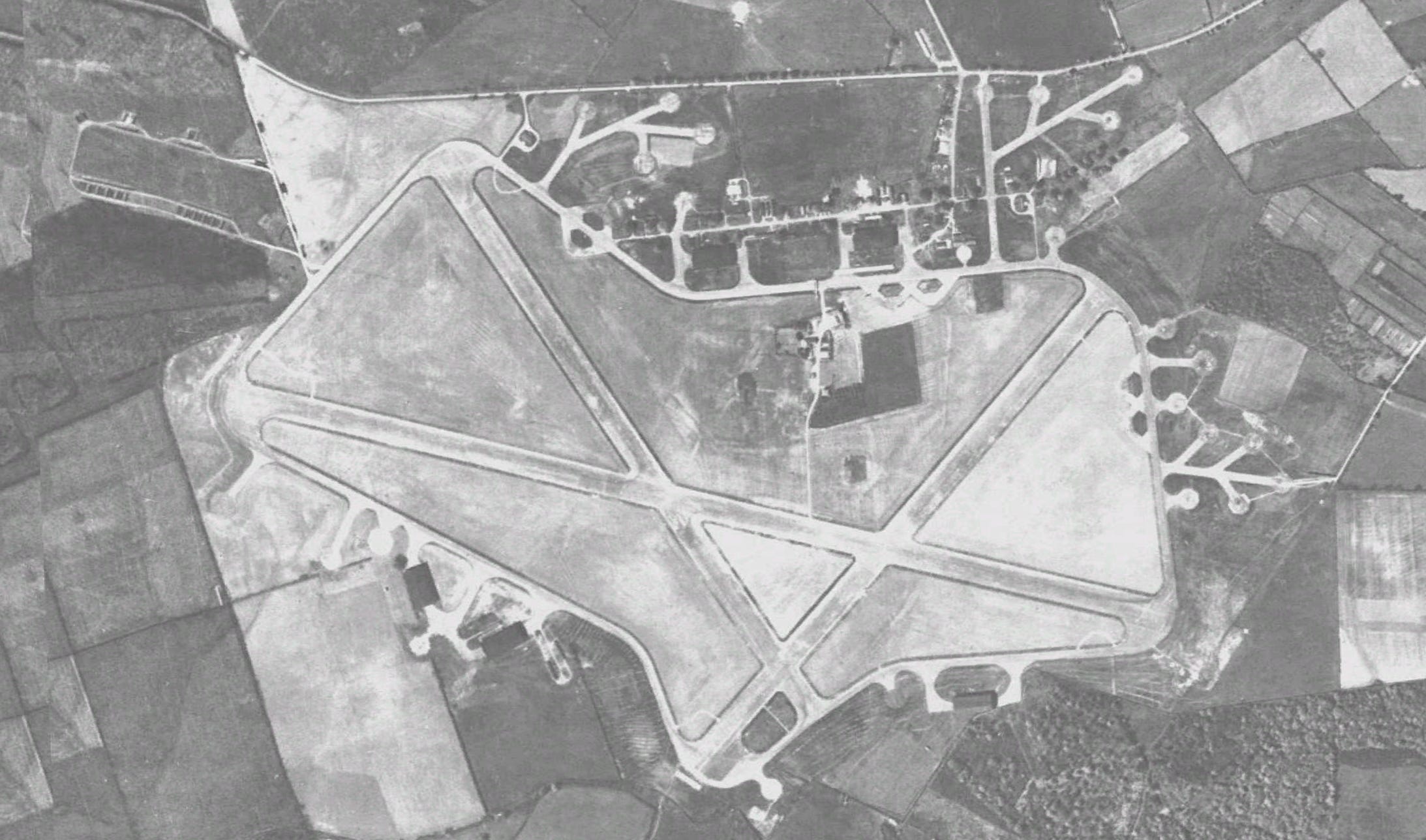
It should be said too that weather is tough to predict here, because the circuit being on an old airfield means it tends to form its own microclimate so rain, cloud and sun can appear regardless of any forecast, at any time, at any part of the lap - complicating strategy.

That unpredictability in the weather has resulted in the last two British Grands Prix being affected, in one way or another, by rain and the use of the inters as a result. But looking back to 2024, the last race here to use the same hardest compounds that will be on offer to the teams this weekend, we can get some clues about what we might expect to see if things stay dry.
Heading in, Pirelli anticipated that it a fully dry race would run as a one-stop given the relative durability of the tyres, however within that all three compounds were thought to be viable. Their director of motorsport at the time, Mario Isola, anticipated that the C3 soft would be the starting tyre for the quickest strategies, with the C2 medium as the second compound offering a marginally faster way to the line than a C1 hard stint.
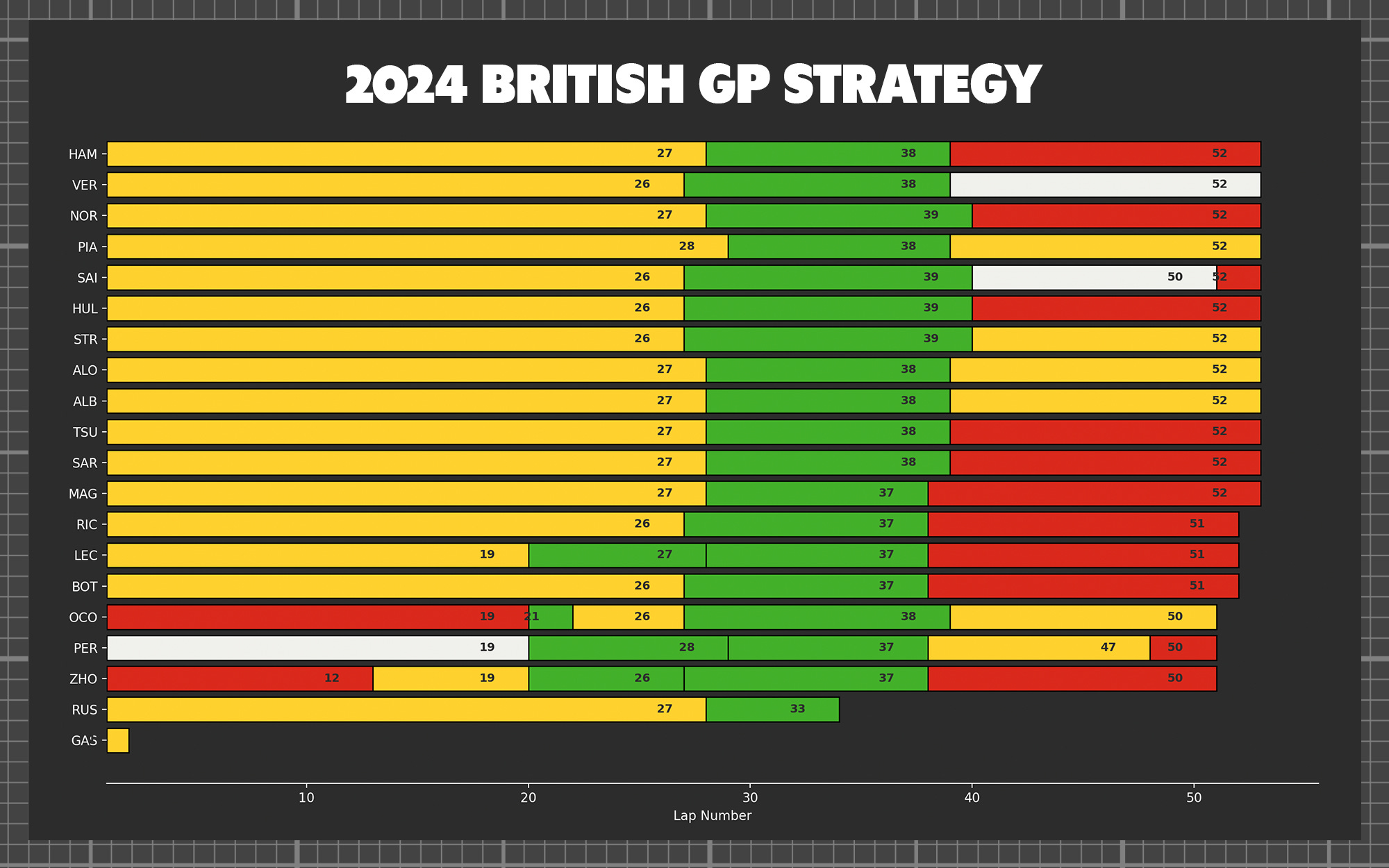
However, on Sunday, the teams opted for strategic flexibility over pure pace and all but three of the twenty drivers started on the medium which went on to show impressive durability and competitiveness. The majority ran 26-28 lap stints on it, only boxing off it and onto an inter as the rain hit mid-race.
Once the track had dried around 10 laps later, the majority opted to fit the soft to the end despite the unknowns surrounding its durability, which is what prompted Red Bull to put Verstappen on the hard as he tried to chase down Hamilton for the victory. Ultimately though the soft held up even on a track that was green from the rain, which the teams may see as evidence for its use for a closing stint this year too in the event of a late neutralisation or weather.
However without either of those factors in play, Pirelli anticipate that this year’s race will a one-stop likely featuring the medium and hard compounds - the most mechanically consistent of the three on offer, as the C3 has shown graining here in the past.
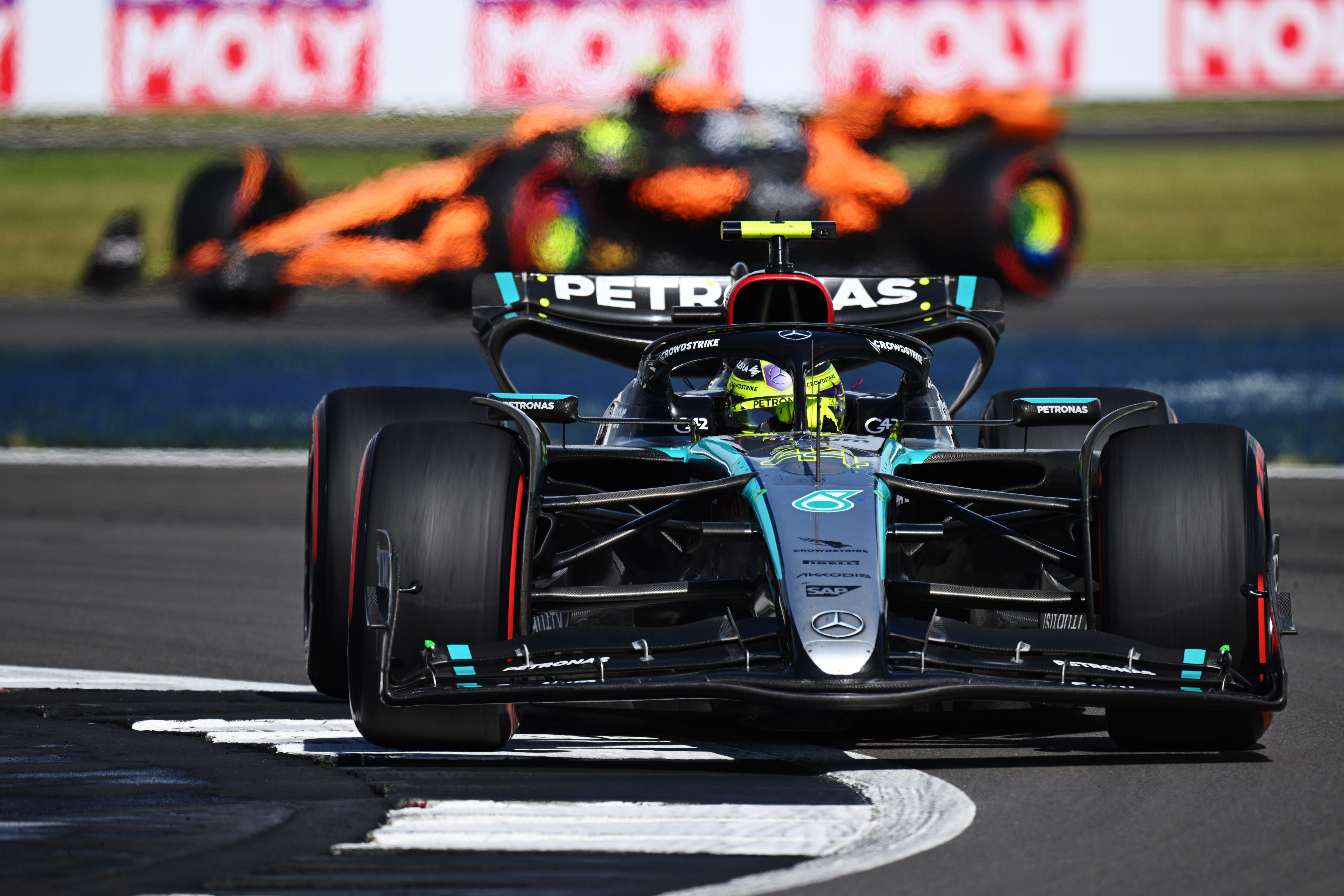
Complicating their weekends though will be the teams’ allocation management given that the Sprint format reduces the total slick tyre sets per car from 13 to 12 via them having access to two fewer softs, yet one more medium. Pirelli have said that will likely push the teams into using the C1 hard in FP1 to try and retain as many softs and mediums as possible for the two qualifying sessions, and two races we have.

In the past, Silverstone has been a true test of a team’s aerodynamics through how well they can tackle its numerous, tough, high speed corners. But now, that test is set to shift to one of how they can best engineer their drivers around the lap, taking the harvesting vs. deployment balance into account.
And we head here with one team who’ve shown that one of their real advantages over the competition thus far has been in that area - Mercedes. Consistently, venue-to-venue they’ve been better at optimising the deployment strategy over a lap and managing to find higher top speed and maintaining it for longer down a straight as a result. Silverstone’s layout could well work to expose that disparity between the teams again.
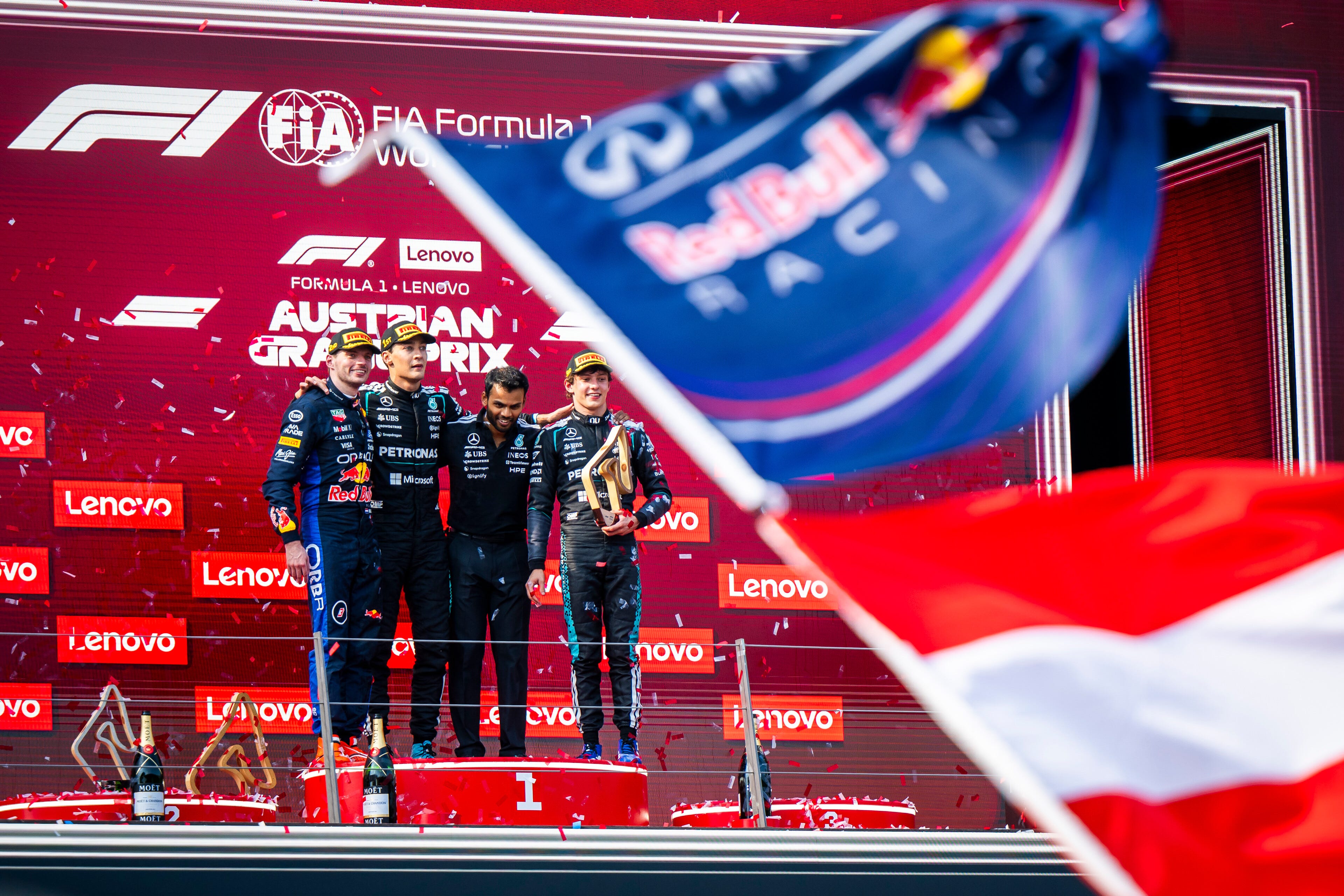
However, we also saw others make clear steps last time out in Austria, namely Red Bull Racing and Max Verstappen. The sizeable upgrade package they brought worked in closing down their average 0.9s race pace delta to the benchmark from Melbourne to Barcelona to sit at around 0.2s away (combined average between Verstappen and Hadjar), and put Verstappen alone as the quickest driver in the field (albeit by just 0.013s over Russell). It also looked to allow Verstappen an advantage over Austria’s higher speed corners in sector 2 of the lap, specifically the turns 6, 7, 8 sequence where he was consistently quicker than Russell on race day.
If that strength can come through again this weekend it could stand them in good stead, and potentially balance out more with the Mercedes’ straight line speed advantage, while also adding to the evidence of the package working to further their performance outside the specific context of the Red Bull Ring.
Those specifics - the high temperature, potentially the altitude, and the long straights - left another team, Ferrari, out of the mix last time out. The dip they suffered compared to the performance seen from the team, and especially Hamilton, in Barcelona to enable their first race win since 2024 was staggering.
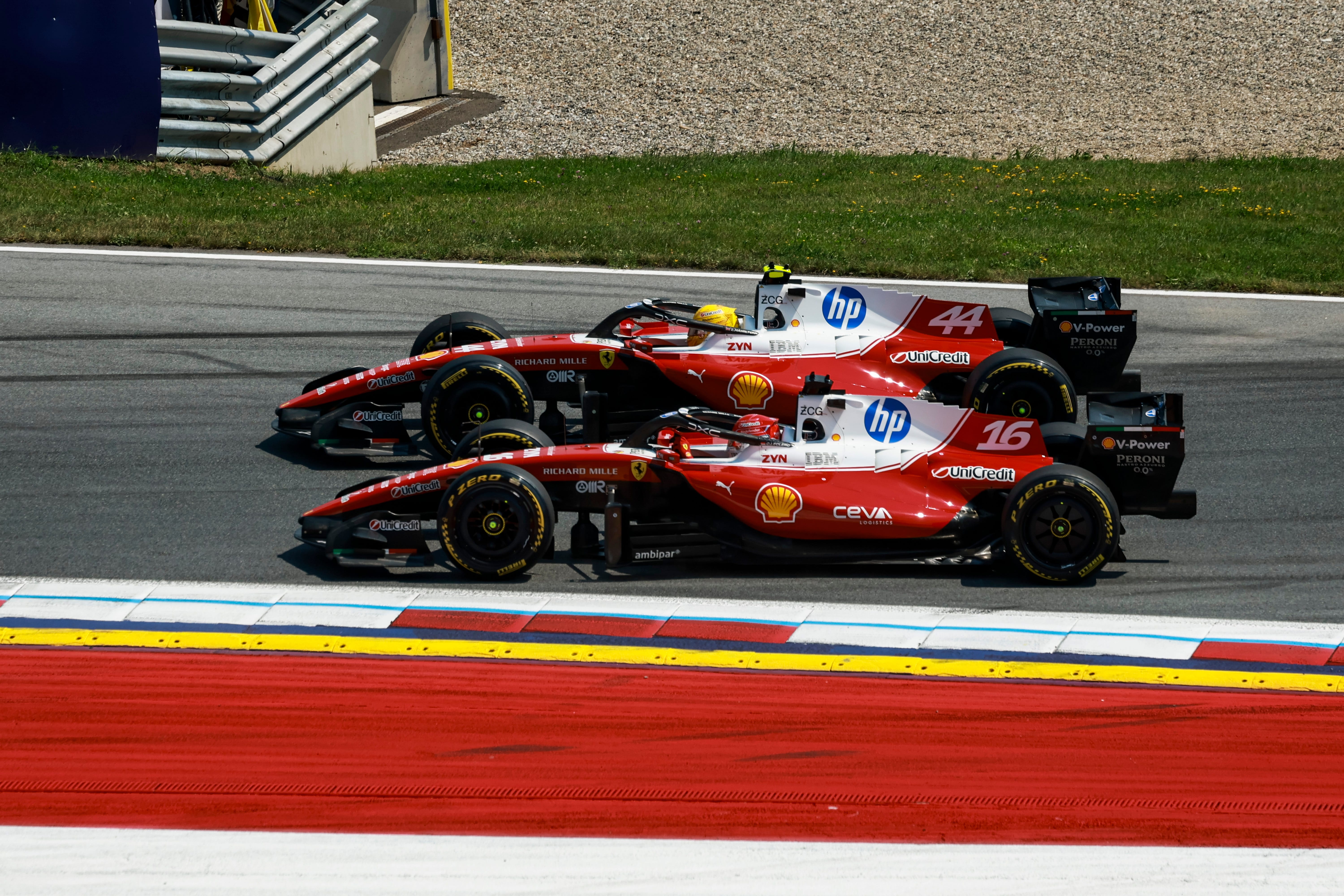
Simply, it came down to degradation catching Ferrari out as they suffered at a level that couldn’t be combatted with a switch to the three-stop for either driver, unlike Barcelona. Silverstone may therefore be kinder to them with cooler temperatures predicted, but if they struggle here too it doesn’t bode well for their hopes of Hamilton or Leclerc battling Mercedes, or potentially Red Bull too, over a race distance at a few further tracks we have coming up.
In many ways then, Silverstone may be a litmus test of the performance profile we’ve seen emerge in recent weeks as the teams begin developing these cars with real pace.

Silverstone stands as the fifth longest circuit on the current F1 calendar. At 5.891km it sits behind Spa (7.004km), Las Vegas (6.201km), Jeddah (6.174km) and Baku (6.003km).
Lewis Hamilton is set to contest his 21st Grand Prix at Silverstone this weekend. He holds the record for the most wins here (9), the most podiums (15), the most poles (7) and the most points (345). But it’s Fernando Alonso who’s raced the most laps here of any current driver - 111 more than Lewis.
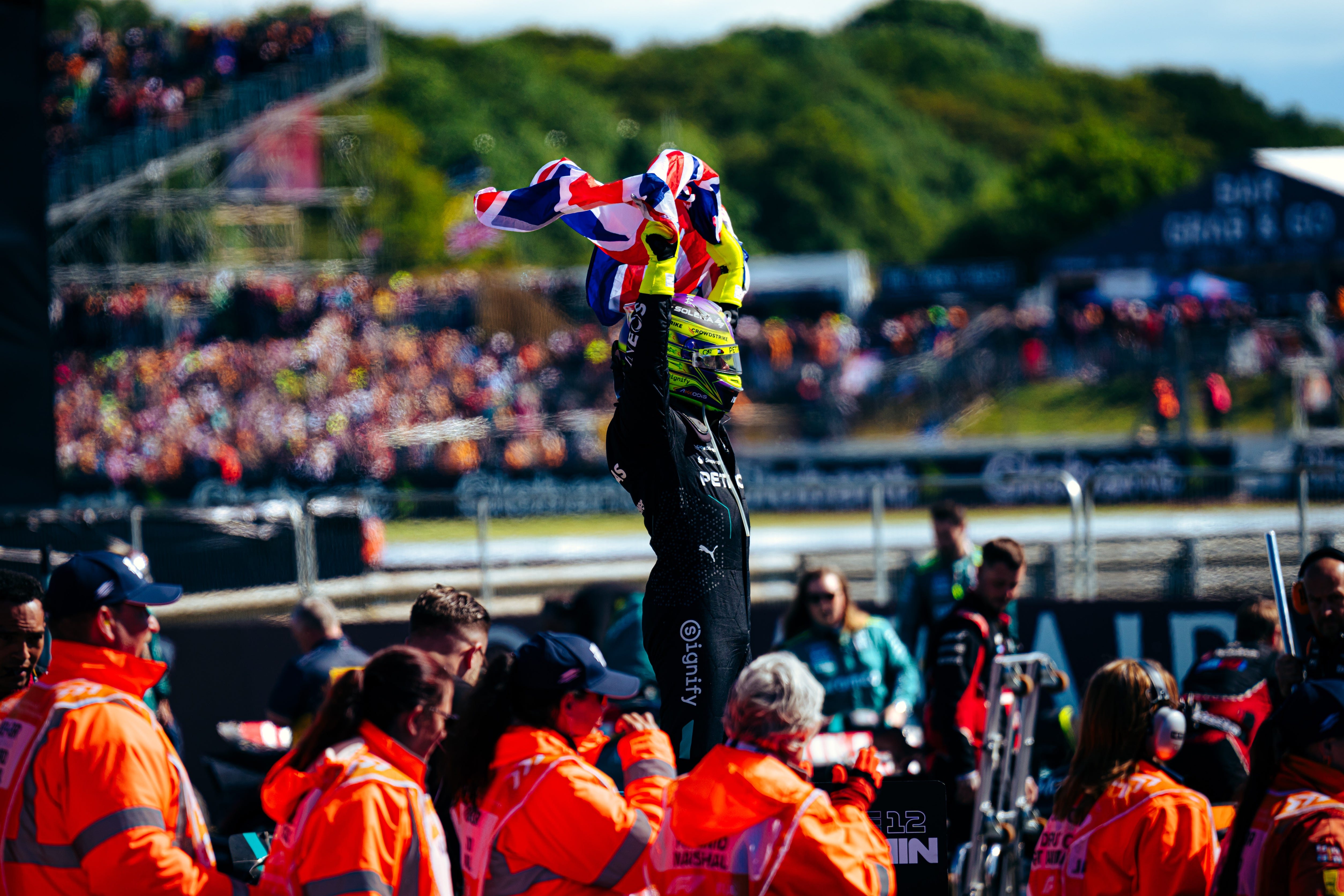
Five drivers will race under the British flag for their home race this weekend - the most Brits in the field at a British Grand Prix since 1996. That year, the race wasn’t won by a British driver, though three finished inside the top 10.