

How Russell found 0.236s under a yellow flag: Qualifying Analysis
Qualifying in Austria started off typically yet ended controversially, as Russell set the fastest lap of the day despite running through yellow flags for Verstappen's crash.

You could argue that pole position today wasn’t fought for through raw driving performance, but instead through an intense knowledge of the rulebook and incredible application of that knowledge.
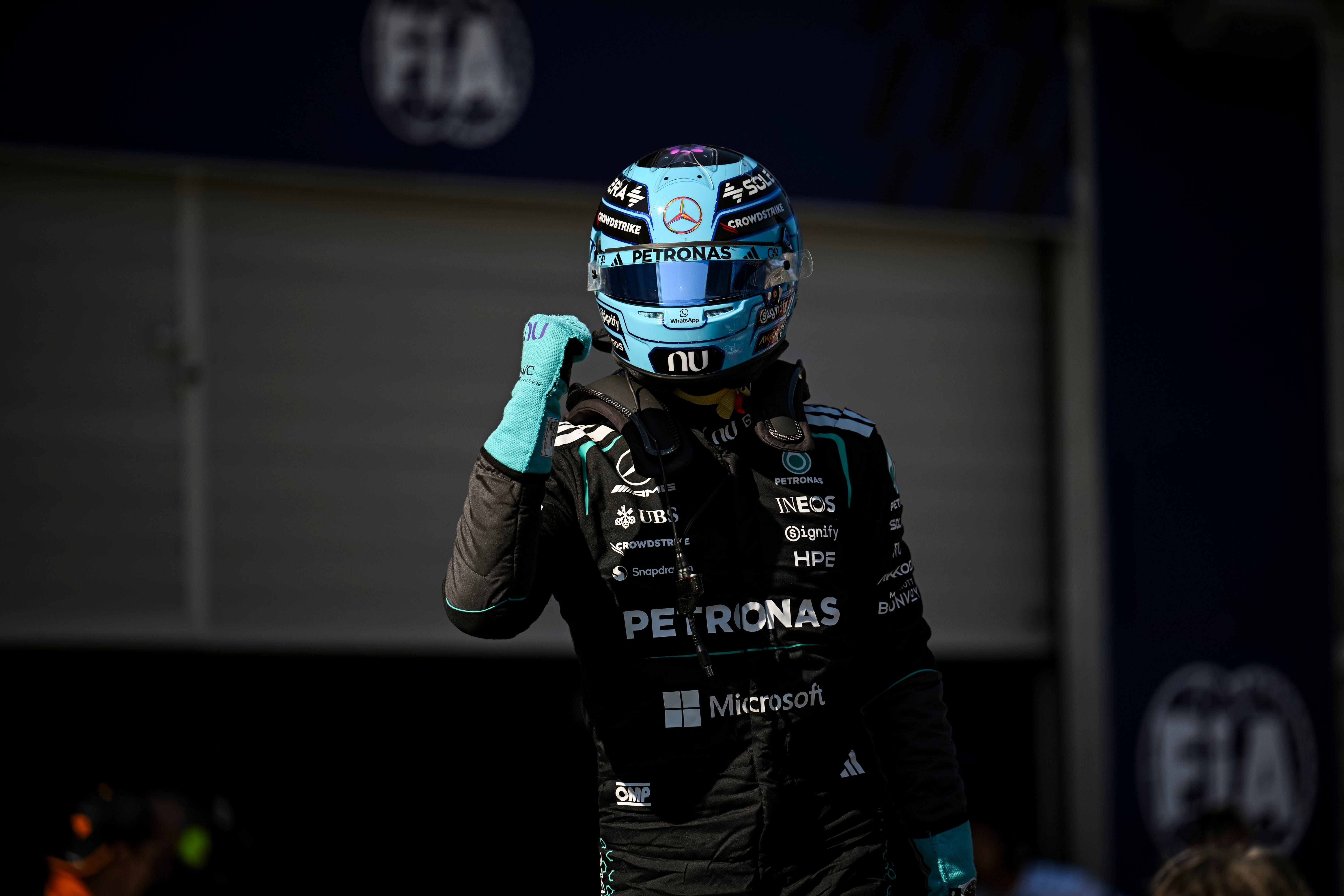
Now that wouldn’t be entirely fair, because George Russell set up his run to pole with the best sector 1 of the session, a personal best sector 2, and he was setting purple mini sectors before he hit what made said run so controversial…
Just as George was about to conclude the final two mini sectors of sector 2, at the other side of the lap, Max Verstappen lost the rear of his RB22 into turn 9 and consequently went spinning off sideways through the gravel and into the barrier. It meant that as George arrived at the end of the straight that leads into the penultimate corner, the LED panels on the side of the track were flashing yellow, but what kind of yellow is what matters.
As Russell opened sector 3, the live timing says there was only a single waved yellow active over the mini sector Verstappen had crashed in and just 22 seconds later, again according to the live race control feed, that upgraded to a double yellow, but by that point Russell was past Verstappen and into the 19th mini sector of the 21 that make up the lap (Verstappen’s crash was in sector 15).
Out on track though, the drivers don’t see this timing and instead rely on the LED panels and the marshals’ flags to tell them this information, alongside communication with their engineer, and these two distinct yellow flag types do display differently. A single waved yellow is shown on the LED panels as a full yellow rectangle that flashes whereas a double waved yellow is shown as a split diagonal yellow panel, where the top and bottom diagonal halves alternate as they flash.
(Warning: Flashing in the above video)
And knowledge of that distinction, and importantly noticing it while actively lapping, is what made the difference because they require very different reactions too.
Double vs. Single Waved Yellows
Article B1.8.4 of the F1 Sporting Regulations, but also Article 2.5.5b of Appendix H of the International Sporting Code, says that a driver passing through a single waved yellow marshalling sector must “reduce their speed and be prepared to change direction”. However, under a double waved yellow that elevates to the driver needing to “reduce speed significantly and be prepared to change direction or stop.”
And for the stewards to be satisfied that that requirement has been met, they want to see different things:
Single Waved Yellow Flag: the driver is expected to have “braked earlier and/or discernibly reduced speed in the relevant marshalling sector”.
Double Waved Yellow Flag: it must be clear that the driver “has not attempted to set a meaningful lap time on the relevant lap”.
So how did George manage to still find 0.163s on Leclerc in sector 3 alone, and satisfy that requirement to avoid a penalty?
George’s reaction - according to the telemetry
To visualise how George’s approach to the final sector under the yellow flag was distinct, we can compare it to the first push lap he’d set in Q3 of 1:06.457, which was unaffected.
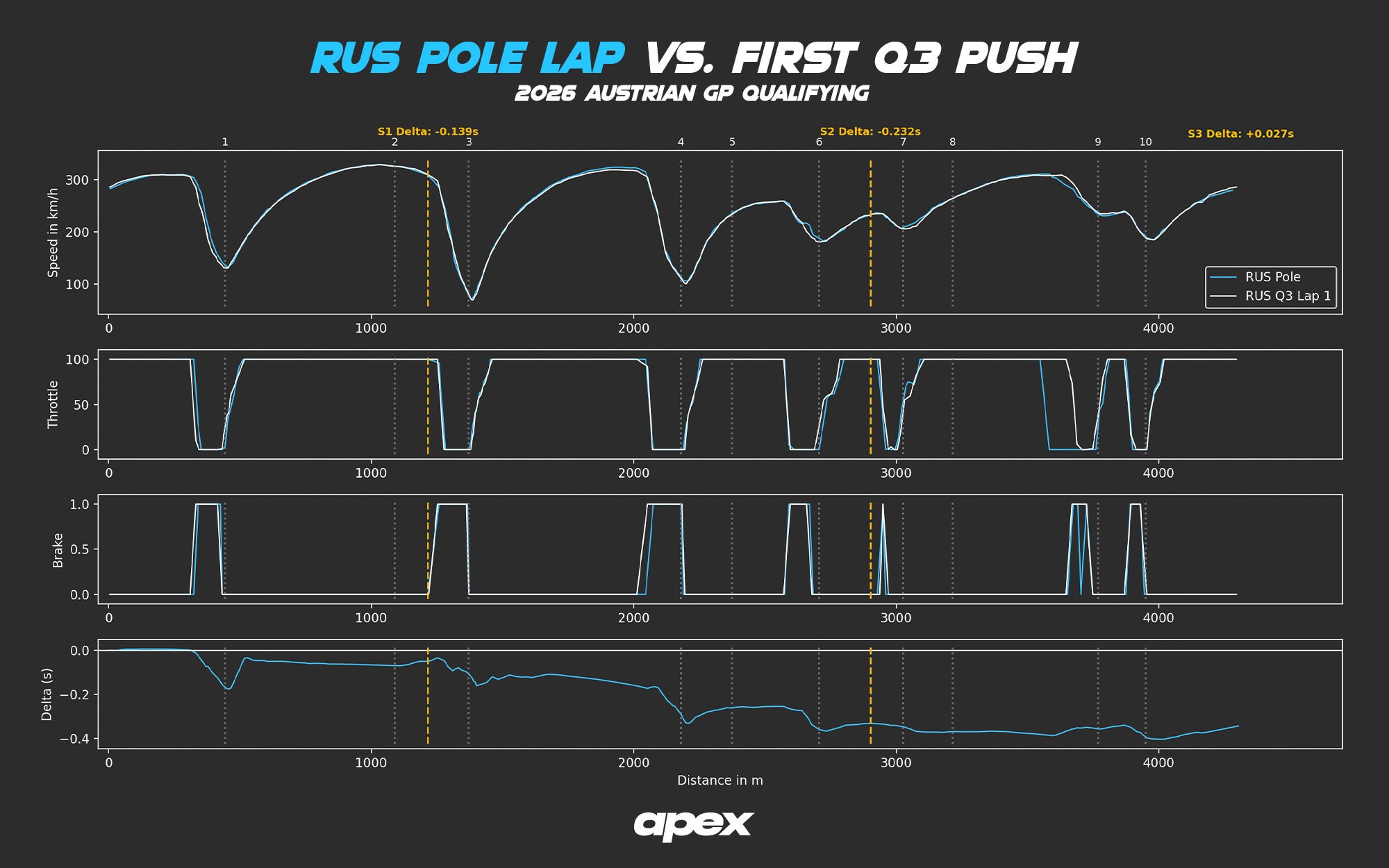
What becomes very clear very quickly is the magnitude of the lift compared to where he was lifting for turn 9 on an unaffected lap. He comes off the throttle just over 100 metres earlier than the lift point on his previous attempt and rides that through the full corner. He’s also takes longer to get back onto the throttle out of the corner.
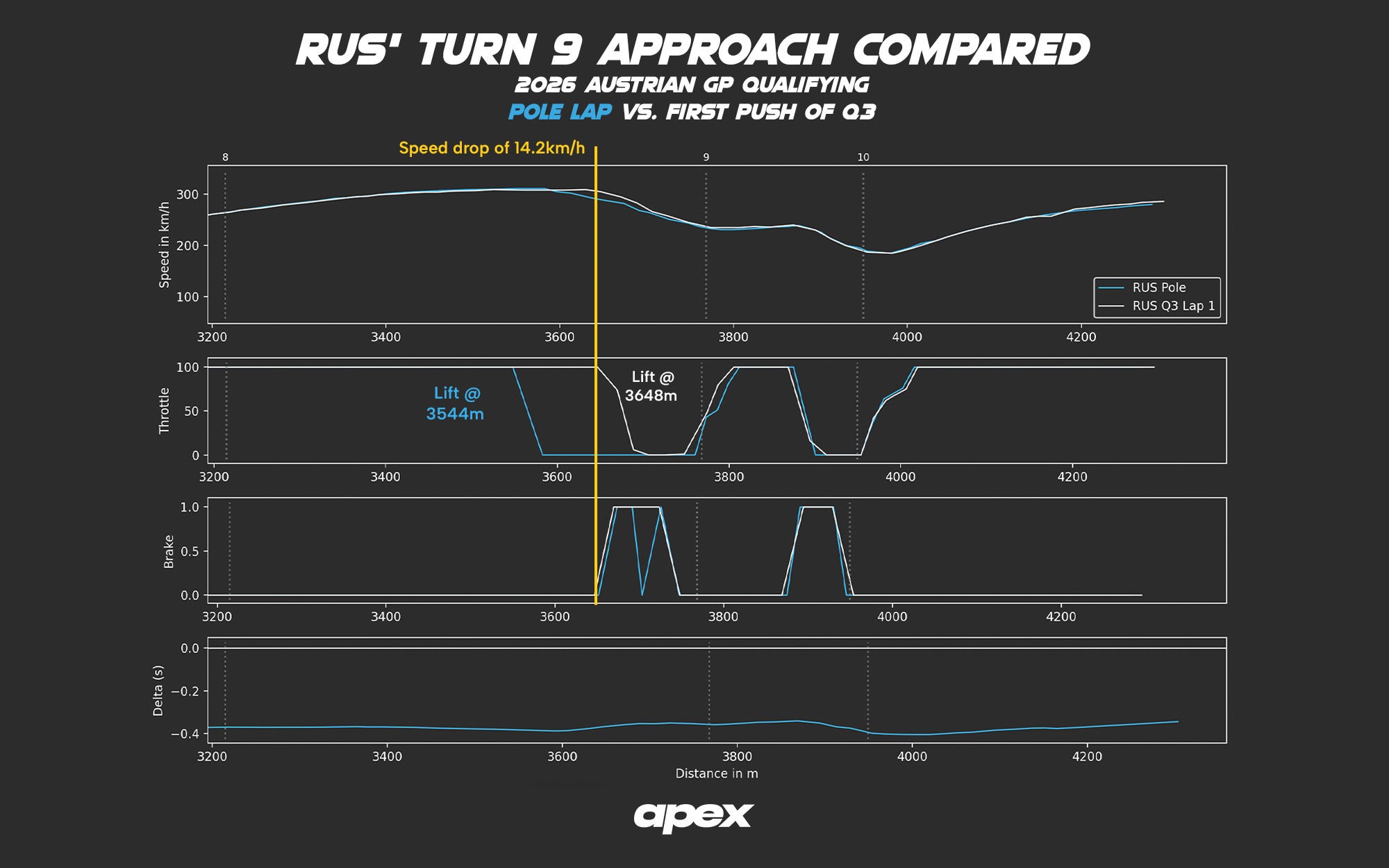
But the result is an impact on his speed that is fairly minimal. Comparing the laps at the point at which he typically lifted, his speed under the yellow flag is 14.2km/h slower - 293.1km/h versus 307.3km/h. According to the stewards’ verdict therefore of there being no further investigation over the potential infringement they noted, that constitutes a “discernible” reduction. It meant that, by the chequered flag, George had found 0.344s on his previous lap time.
What matters in a competitive sense though ultimately is how Russell’s approach and reaction differed from the driver he was fighting for a chance at taking Leclerc’s provisional pole - his teammate, Kimi Antonelli.
How Antonelli’s reaction differed
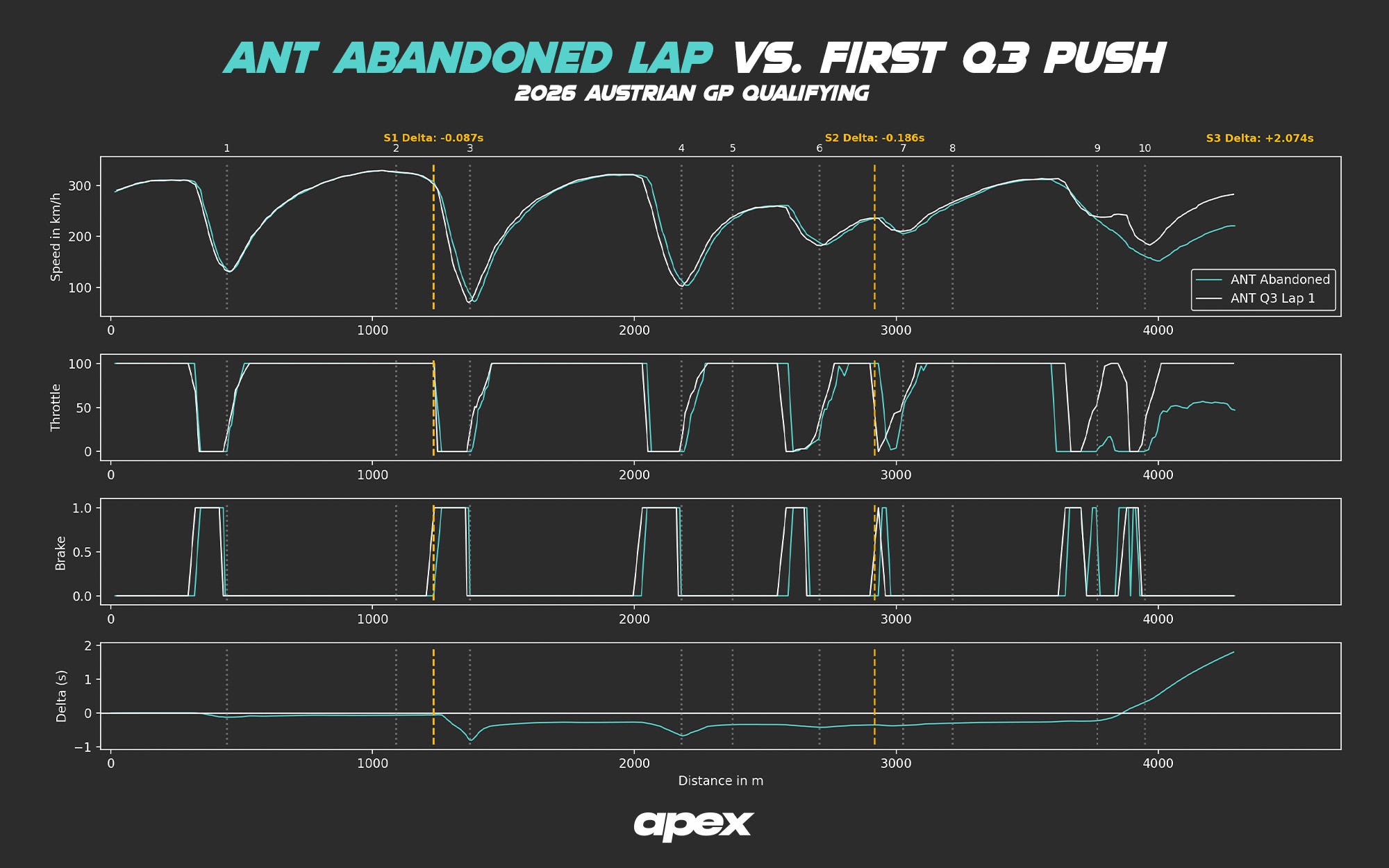
Kimi Antonelli said post-session that he made a “mistake” that cost him a chance at not only pole, but a potential front row too, and it came down to his interpretation of the signals of the yellow flag. To that point, he was slower than George but only by 0.053s in sector 1 and just 0.046s in sector 2.
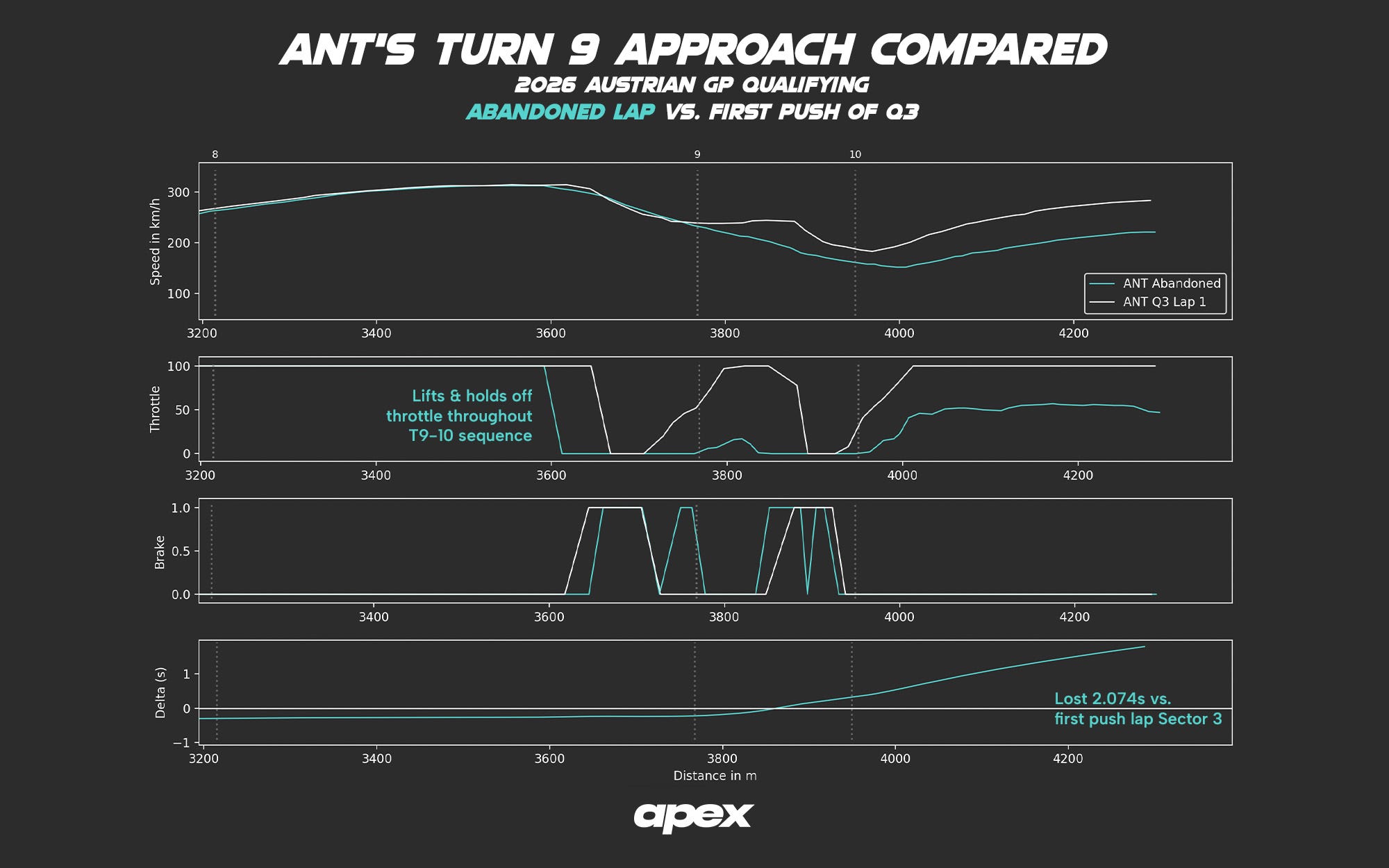
He said, “I thought I saw double yellows and instead it was a single, so I completely aborted the lap when I could have just done a lift like George did.” And that difference, and also its impact, is clear in the data.
Immediately we can see that Antonelli not only lifted, but ran through the full corner sequence of turn 9 and then turn 10 almost fully off throttle, and as a result lost 2.074s compared to his previous run through sector 3. Or, compared to his previous lap overall, 1.801s, which at the end stood as his final lap.
Toto Wolff put the difference in reaction between his drivers down to experience, praising Russell for lifting “at the right time, the necessary amount” to secure pole position. Having the awareness of the type of yellow in play at that point, putting the argument over whether that was enough aside, is what allowed him to solidify the pole position, but what really made the difference was the performance he’d put in to that point.
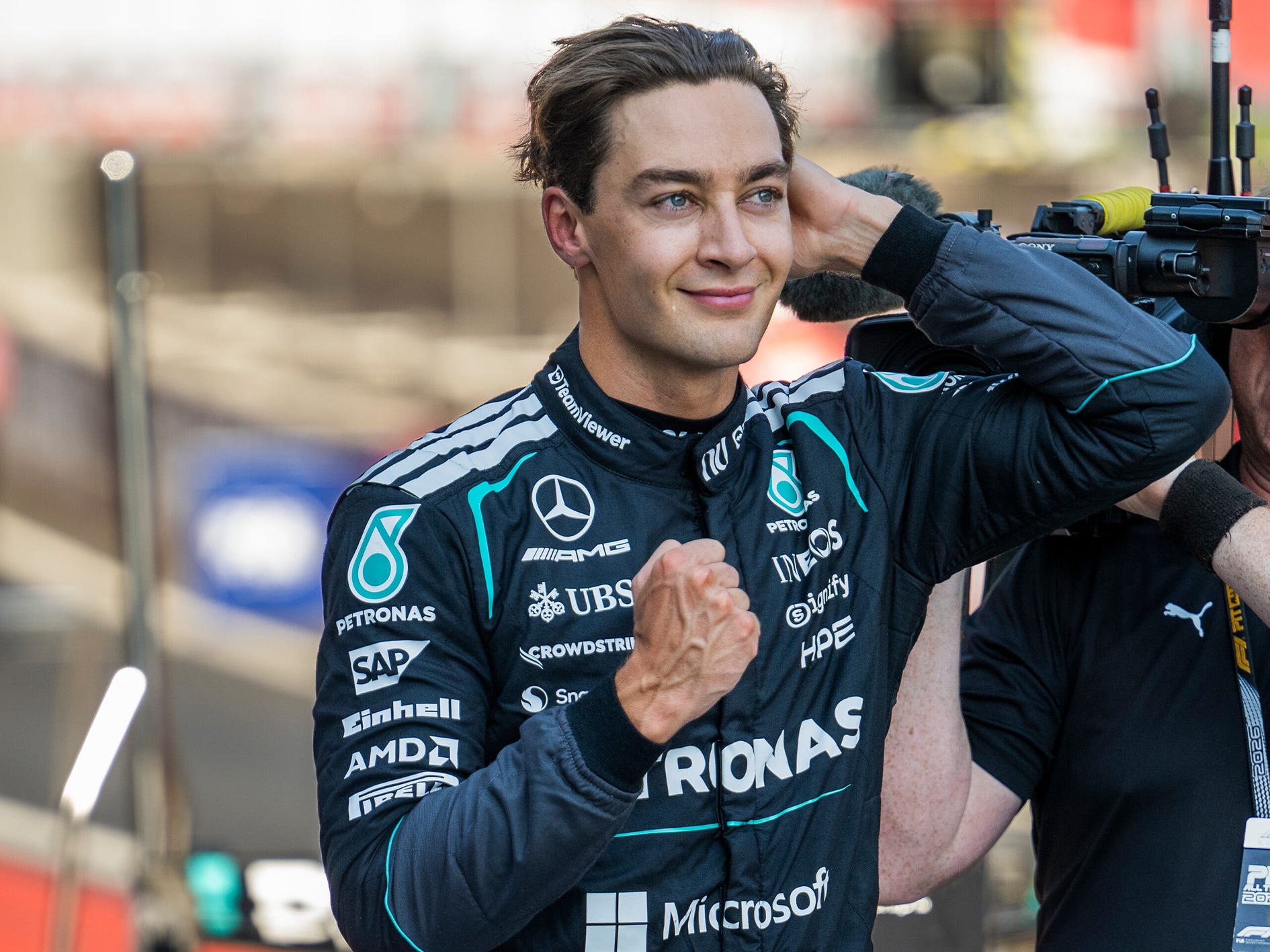
George said he shifted to “driving instinctively” today, an attitude that contrasted the one he’d been taking in recent races which he admitted had a “factor” of overdriving to it. In the end, perhaps it was that move to a more feeling-based drive come Q3 that allowed him the mental bandwidth needed to make this call.