

How playing the team game put a Red Bull on the front row: Spa qualifying analysis
Max Verstappen credited his teammate Hadjar for getting him to P2 on the grid for the Belgian GP, but just how much of an impact did the tow he provided have?

In Verstappen’s view, without the tow Isack Hadjar gave him down the flat out run through sector three on his final Q3 lap, he “would not have been standing” in parc ferme as a top three finisher and instead would have been somewhere “more like P6”.
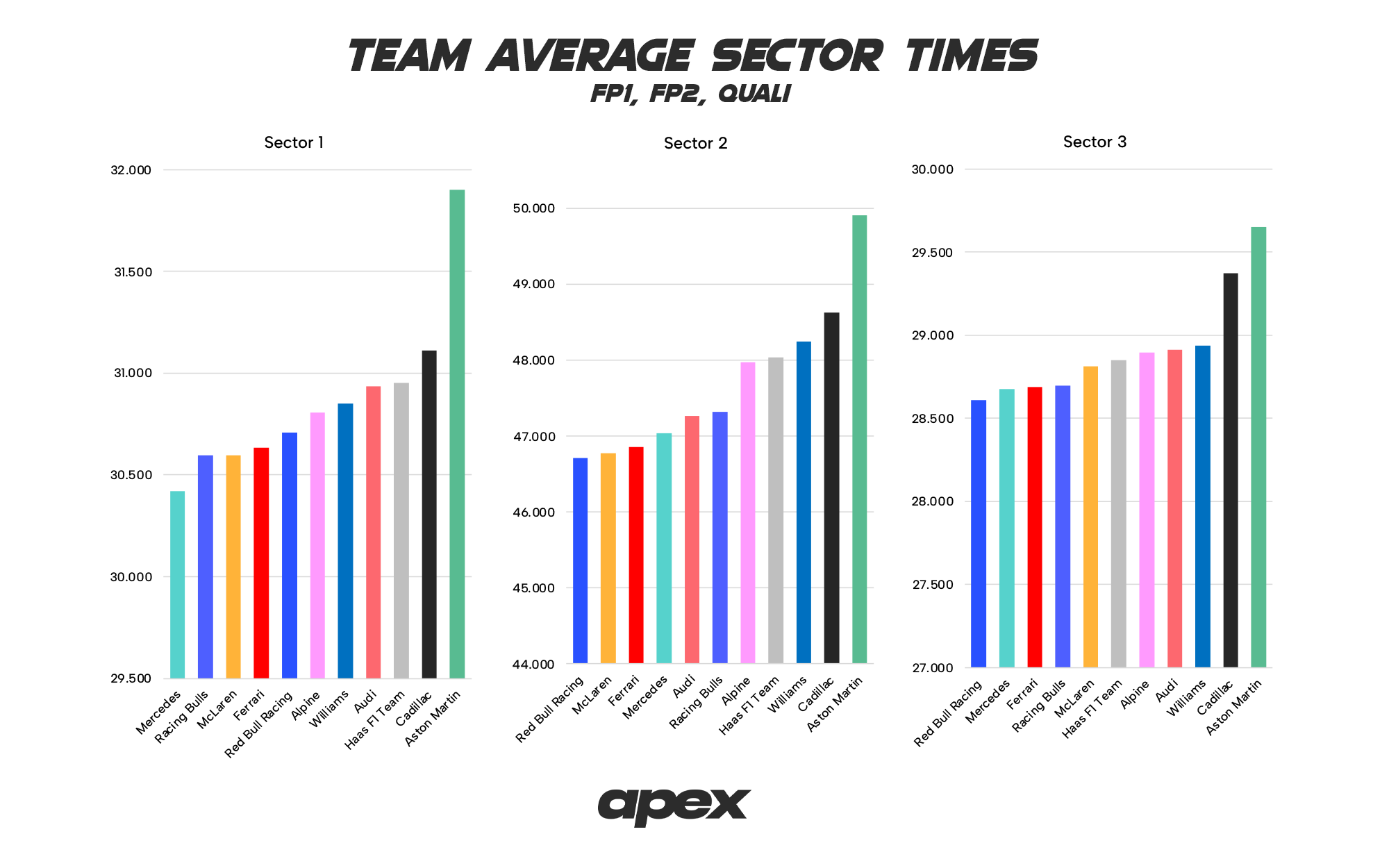
Fundamentally that’s because of where the Red Bull has been stronger versus weaker this weekend.
Reverting back to their pre-’Macarena’ concept rear wing looks to have left them down on straight line speed and efficiency - to their detriment in sector one especially, but to their strength in sector two. In fact, over all sessions so far this weekend, the Red Bull has averaged as quickest in the middle phase of the lap and alongside this potential aerodynamic reasoning, their deployment strategy has been markedly different, than Mercedes’ especially, through there too.
But given that Hadjar has been hit with a 30-place grid drop penalty as a result of the team fitting his car with a new ICE, new turbocharger and new exhaust set outside of his allowance for the season, it made sense for Red Bull to try and play the team game to overcome that efficiency deficit once Hadjar was into Q3 safely.
According to Verstappen in the post-session press conference, they decided to do that in sector three rather than sector one because there’s slightly less time spent in straight mode there, meaning it’s slightly draggier, and therefore that the impact of a tow to reduce that could be slightly more significant.
The rehearsal for it came with the first runs of Q3. They left the pit lane first of anyone and the onboards show Hadjar slowing significantly in sector 3 and waiting to pick Verstappen up from the exit of turn 15 before being told to go again as Verstappen got within around 5 seconds of him, and that resulted in quite a distant tow.
For the final lap of Q3 though, the one that really mattered, they were much, much closer. Hadjar waited at the exit of turn 15 again but seemed to make the call of when to go himself as his onboard shows him watching his right mirror for Verstappen to appear. He keeps watching his mirrors for almost the entire length of the tow, monitoring the gap to Verstappen behind for the perfect time to move aside, which came just after the board marking where straight mode deactivates before the braking zone for the bus stop chicane. But Hadjar also didn’t follow that board for where his straight mode deactivated because he looks to close it early, boosting the hole he’s punching through the air for Verstappen.
And the difference in that execution from run one to run two is apparent in the telemetry, in a measurable way.
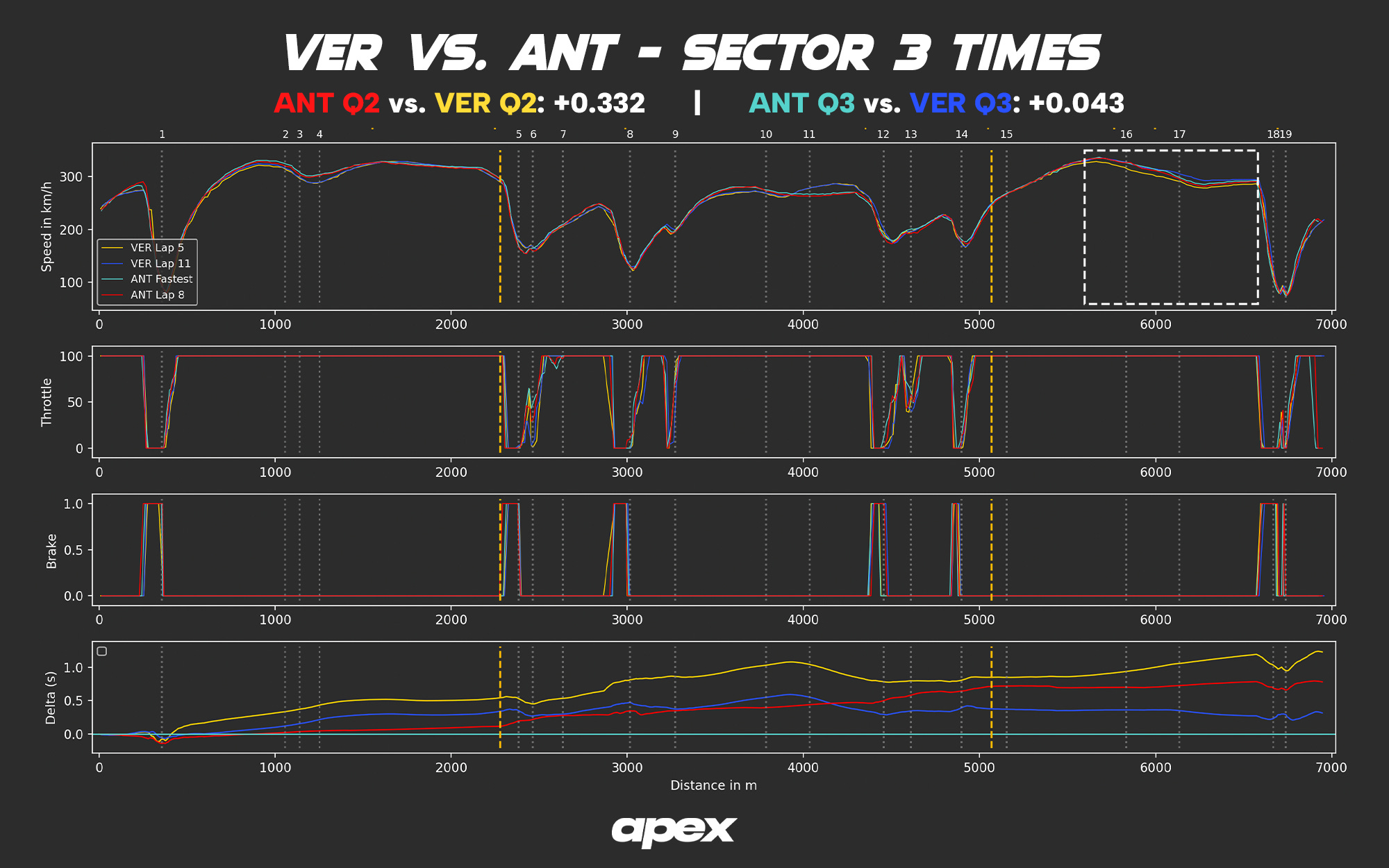
Comparing Verstappen’s final lap of Q2, with no tow, to that first run of Q3 with the distant one and the final Q3 lap with the better one shows a clear difference in the speed he was carrying around that flat out run through Blanchimont - around 13km/h from the Q2 lap to the final Q3 one.
It left his sector three time improving by 0.462s over his lap without a tow, and by 0.094s over his lap with the distant one earlier in the same part of qualifying. That meant that compared to a 0.332s deficit Verstappen had had to Antonelli in that part of the lap by the end of Q2, it shrunk to be just 0.043s.
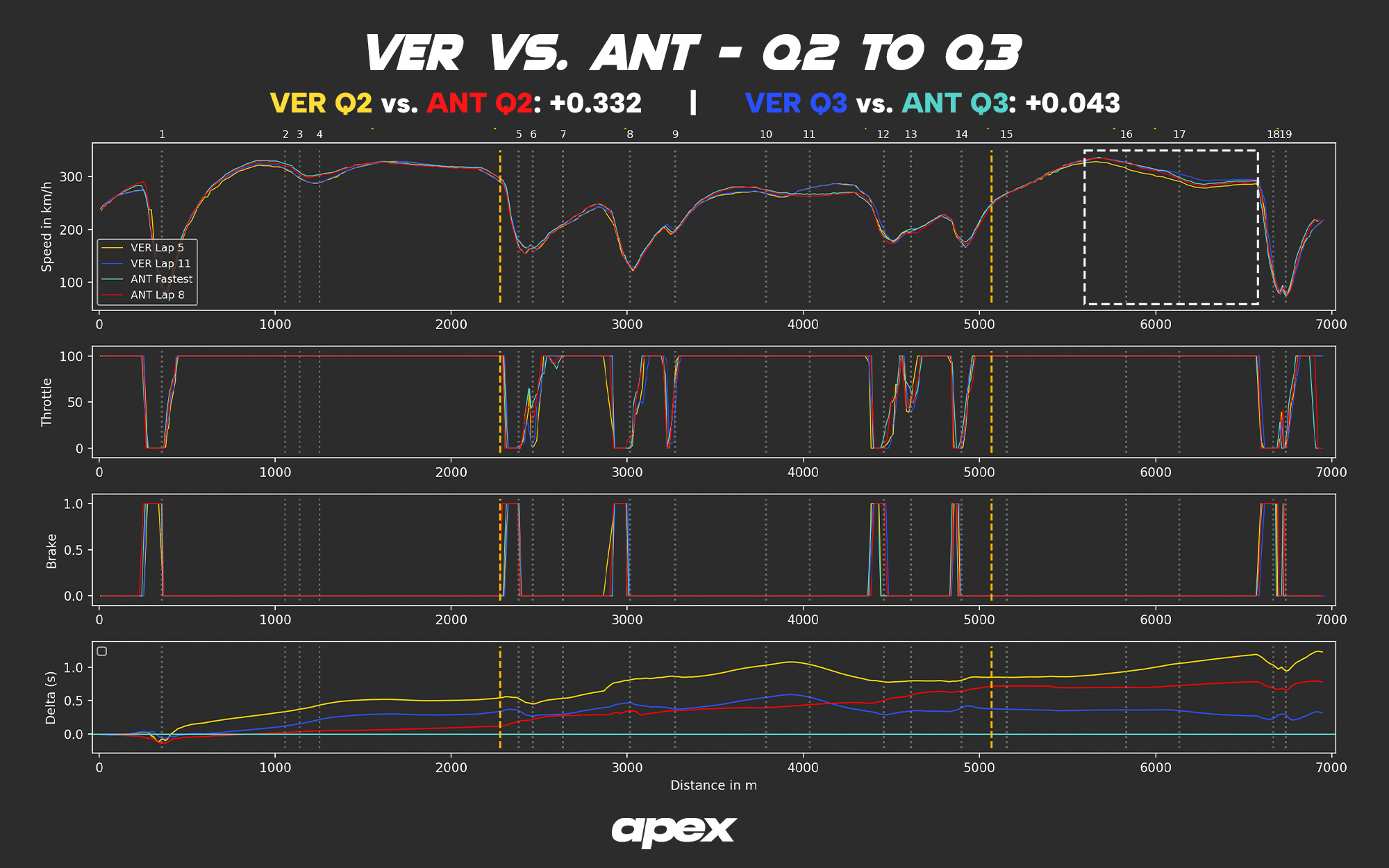
While the comparison to Kimi Antonelli is a good measure of the difference the tow made in combatting the Red Bull’s deficit there against the driver who was strongest there, for assessing how Verstappen may have done without it, given the 0.317s deficit Max still had to Kimi even so, it may be better to look at the difference it made against the drivers he was more at risk of losing out to.
That includes Lando Norris, George Russell, Charles Leclerc and Lewis Hamilton, who were all within 0.217s of Verstappen’s lap time by the end of the session.
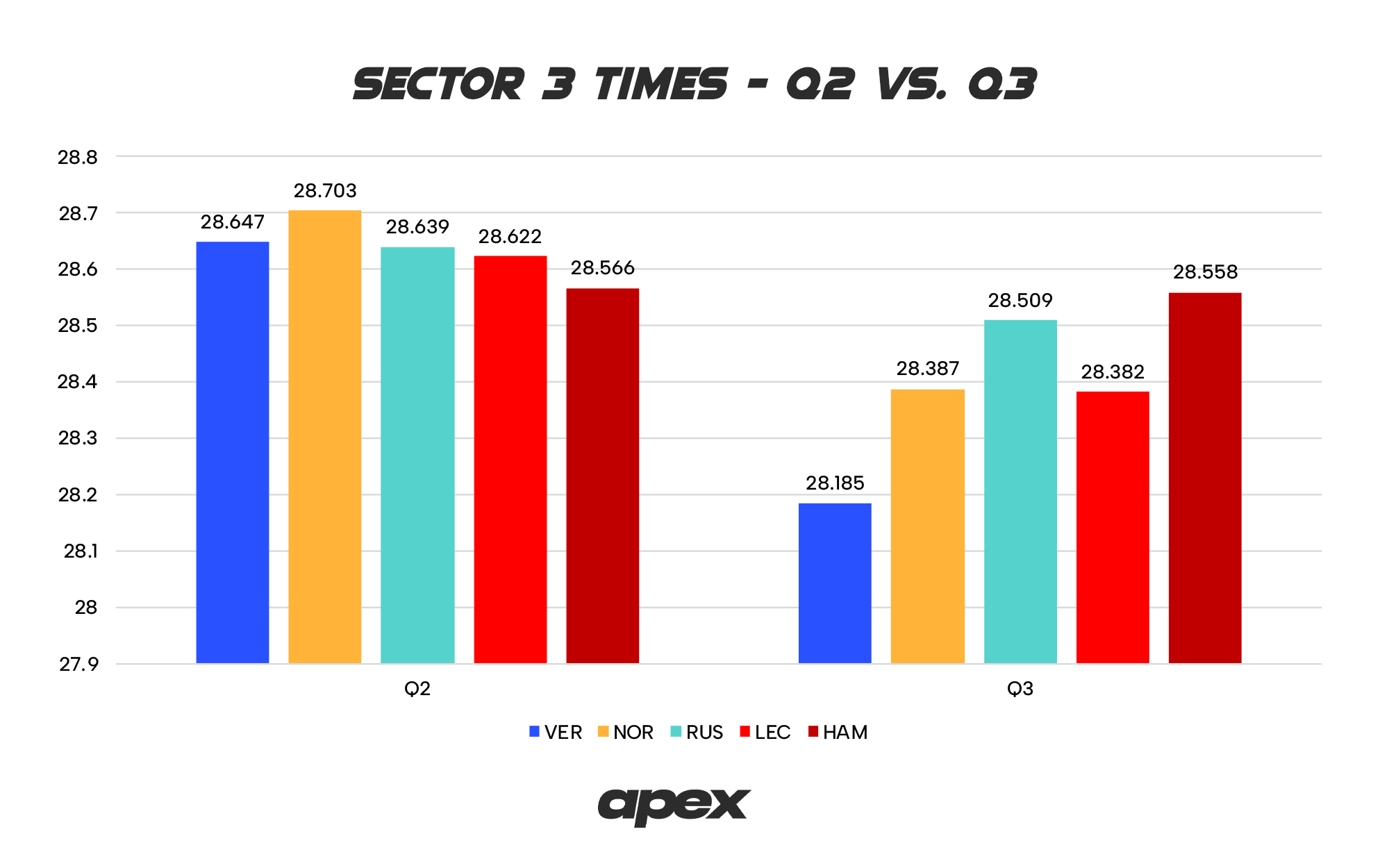
Max’s final Q3 sector three time was the strongest of any of these drivers, and by some way, whereas in Q2 it had been the second slowest, only with Norris’ being slower. If we then look at where a similar sector three time as Q2 would have left Max alongside his Q3 times through the first two sectors in an overall ‘mock lap time’, his comments about being P6 begin to make sense.
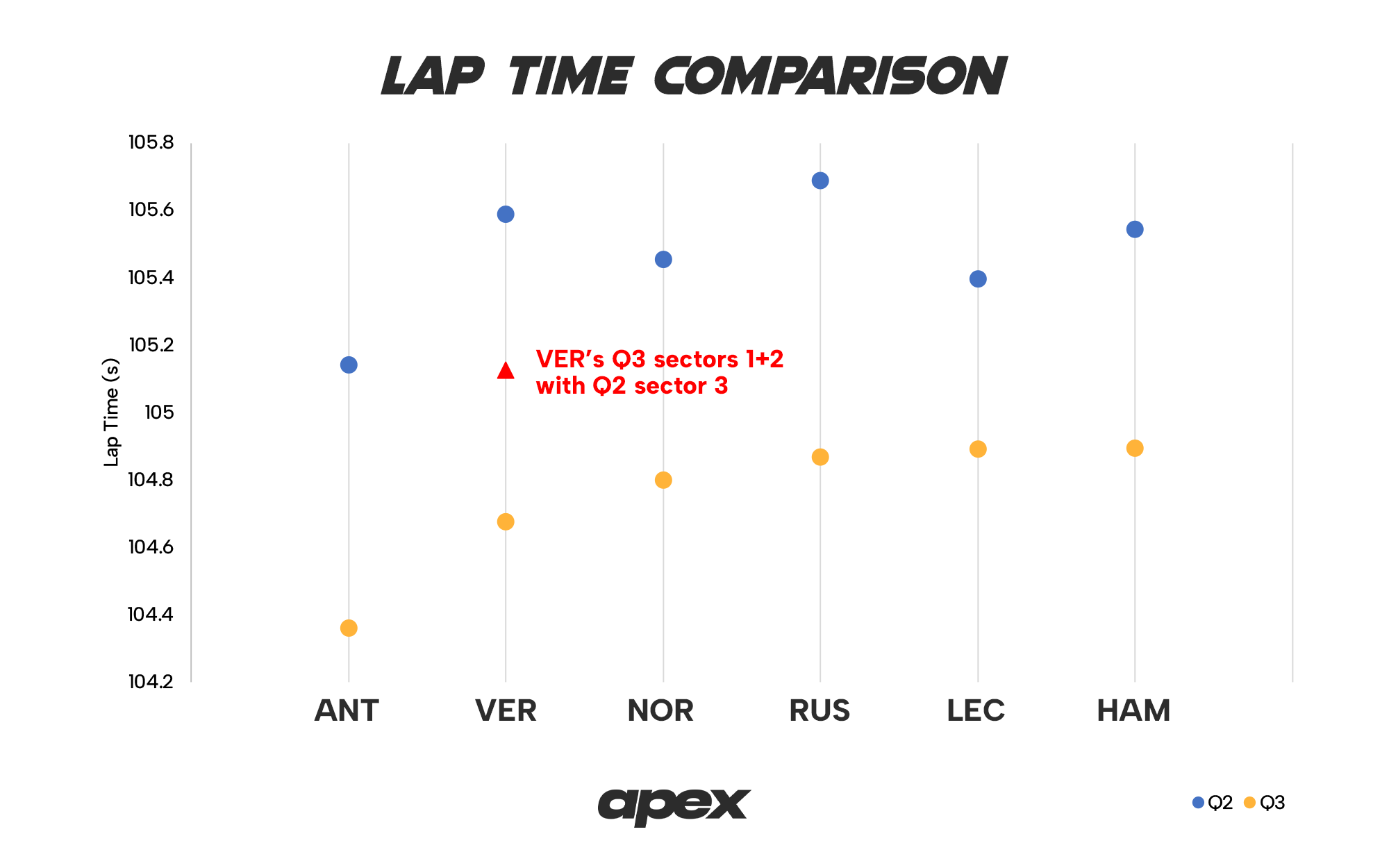
With the 0.462s increase in his lap time, it becomes a 1:45.140 instead of the 1:44.678 it was with the tow, leaving him right at the bottom of that group and even behind Piastri who ended P7 with a lap of 1:45.016.
Of course there are so many variables at play on every single lap, so this is far from a perfect measure of where he might have been at that point of the session had Hadjar not been there for the team to even consider the tow (in terms of track position, for example), but it does help illustrate the level of impact the team work had on Verstappen’s finishing position today.
The big question now though is where effectively ‘hacking’ their straight line speed deficit will leave Verstappen tomorrow when there is no tow and he has a race start to handle around all of these cars he perhaps is much more on par with performance-wise than the final qualifying result showed.
Verstappen himself said, “for sure, tomorrow I think I’ll be looking in my mirrors with the people around me”, and the real worry for him holding position will be the over one kilometre long run down the Kemmel Straight into the braking zone of Les Combes, where the slipstream has historically been incredibly powerful.
This year that could either be replaced or compounded by the difference in deployment strategy up Eau Rouge and Raidillon and onto the Kemmel Straight, which is somewhere Verstappen was losing time against the other top four teams, based on their quickest drivers’ quickest qualifying laps.
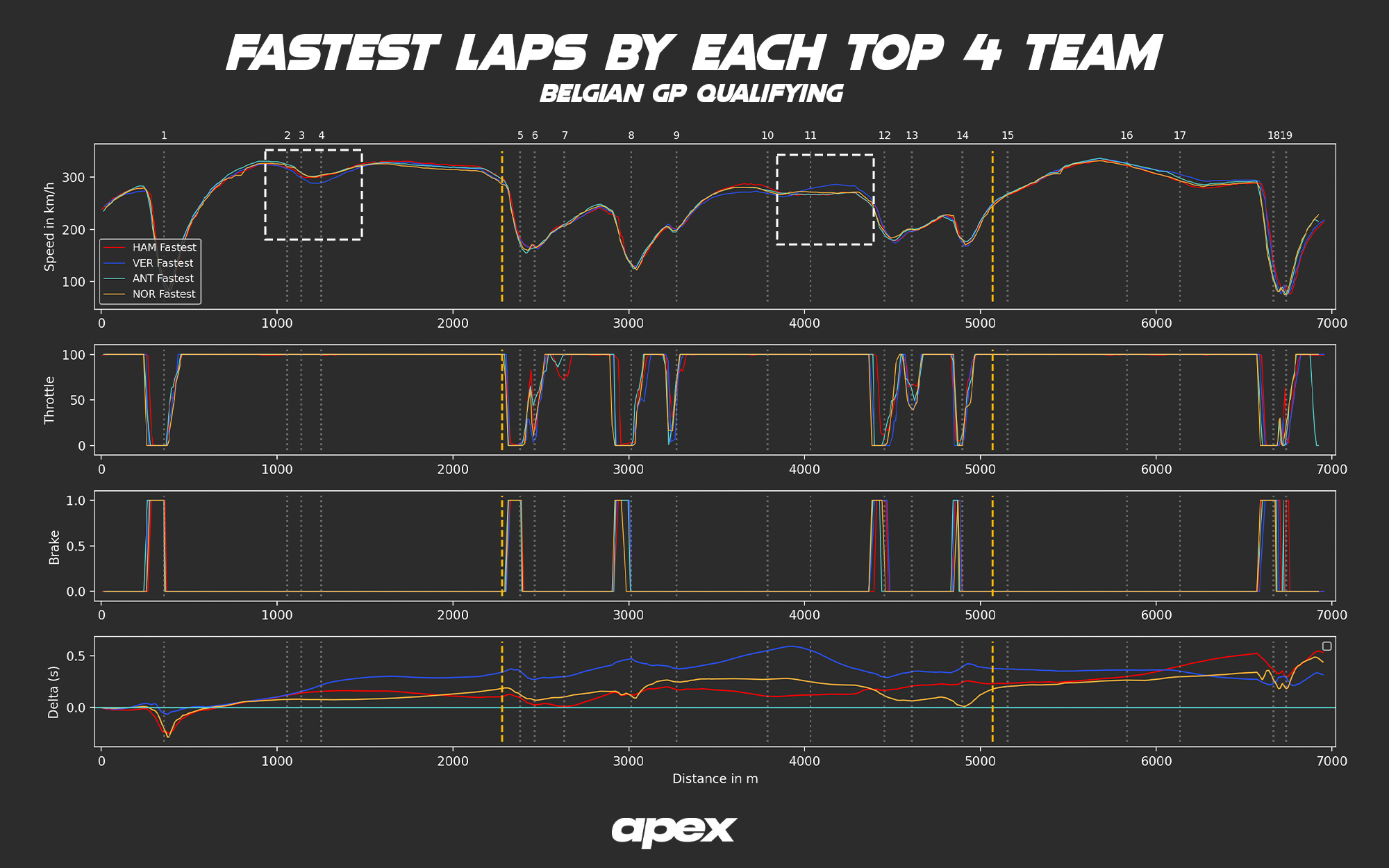
That said, the general energy profile that’s appeared around the lap of Spa, where drivers are lacking through sector two and clipping despite being flat on the throttle, could give rise to more yo-yoing or genuine changes of position through there in racing conditions - and Red Bull’s deployment bias to the run exiting Pouhon may pay off in helping them defend or come back through there.
In reality though, these are all unknowns until the lights go out tomorrow when there will be very different stories playing out on either side of the Red Bull garage as Verstappen works to defend position and Hadjar goes on the attack from the back of the field.