

Going Sprinting in Shanghai: Technical Preview for the Chinese Grand Prix
With just one weekend of this new era behind them, the teams now face another new challenge - the first Sprint event of the season - at a circuit that could impact energy management very differently.


The Chinese Grand Prix returned to the calendar in 2024 for the first time since 2019, but prior to that five year break, it had been a staple of the season for almost twenty years. F1 has raced in Shanghai since 2004 and originally the race was held in the latter stages of the season before being moved to April, and then March for last year, and now this year’s, editions.
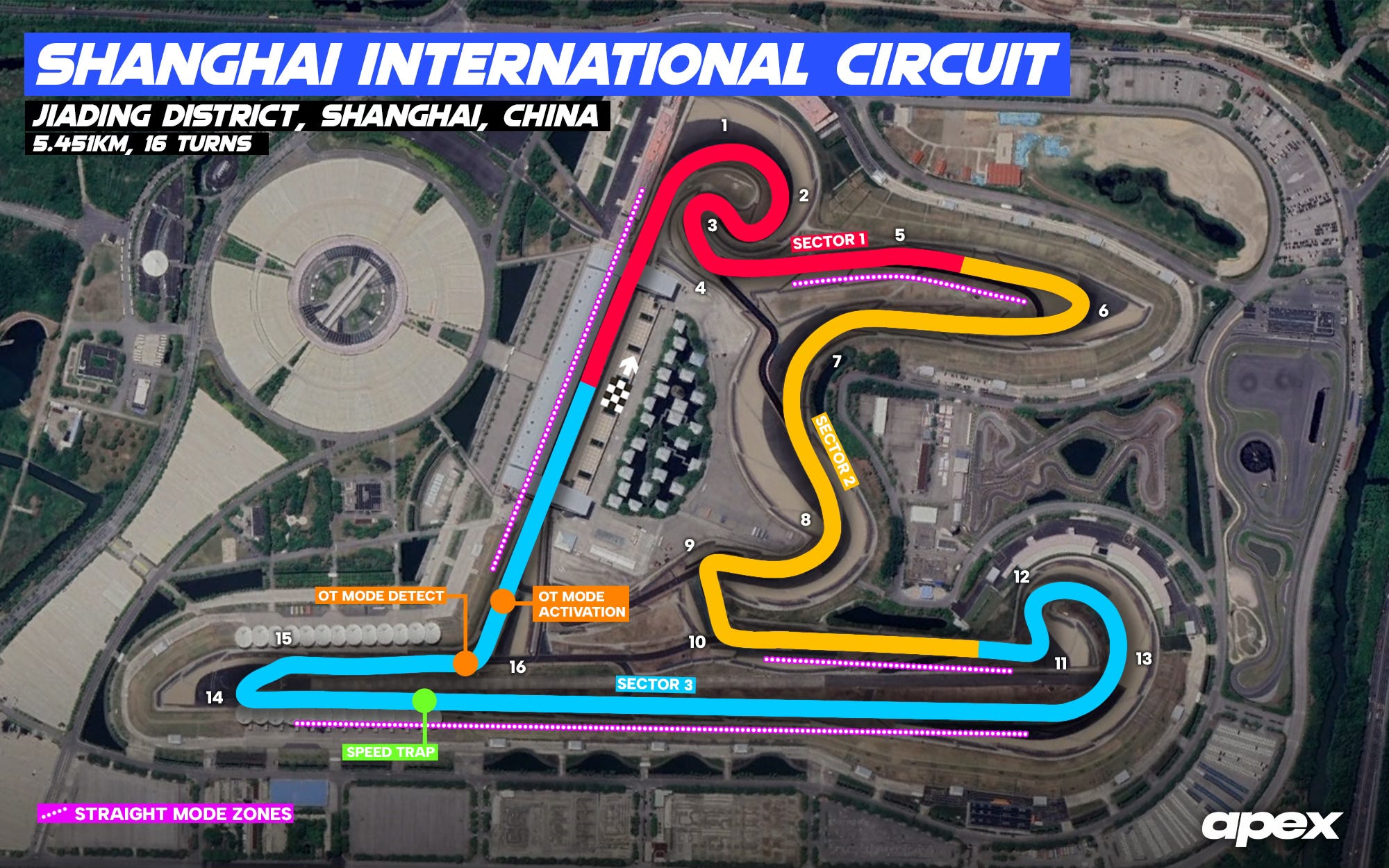
The Shanghai International Circuit itself was designed by Hermann Tilke, a renowned circuit designer behind many favourites on the F1 calendar including Yas Marina Circuit, Bahrain International Circuit, Circuit of the Americas and most recently the Las Vegas Strip Circuit. Tilke modelled the design for the venue loosely on the Chinese “shang” character, meaning ‘upwards’ or ‘up above’, and that’s created a layout that’s a technical combination of high and low speed. Historically, it’s one that’s been dominated by one driver.
Although Michael Schumacher still holds the race lap record in Shanghai since it was set back at the inaugural event in 2004, it’s Lewis Hamilton who’s stood on the top step after the grand prix the most at six times, and of course he also claimed victory in the Sprint here last year. He also leads the way for pole positions, podiums, fastest laps, laps led and points earned here - making it a real ‘Lewis track’.
Characteristic Considerations
A different recovery/deployment profile
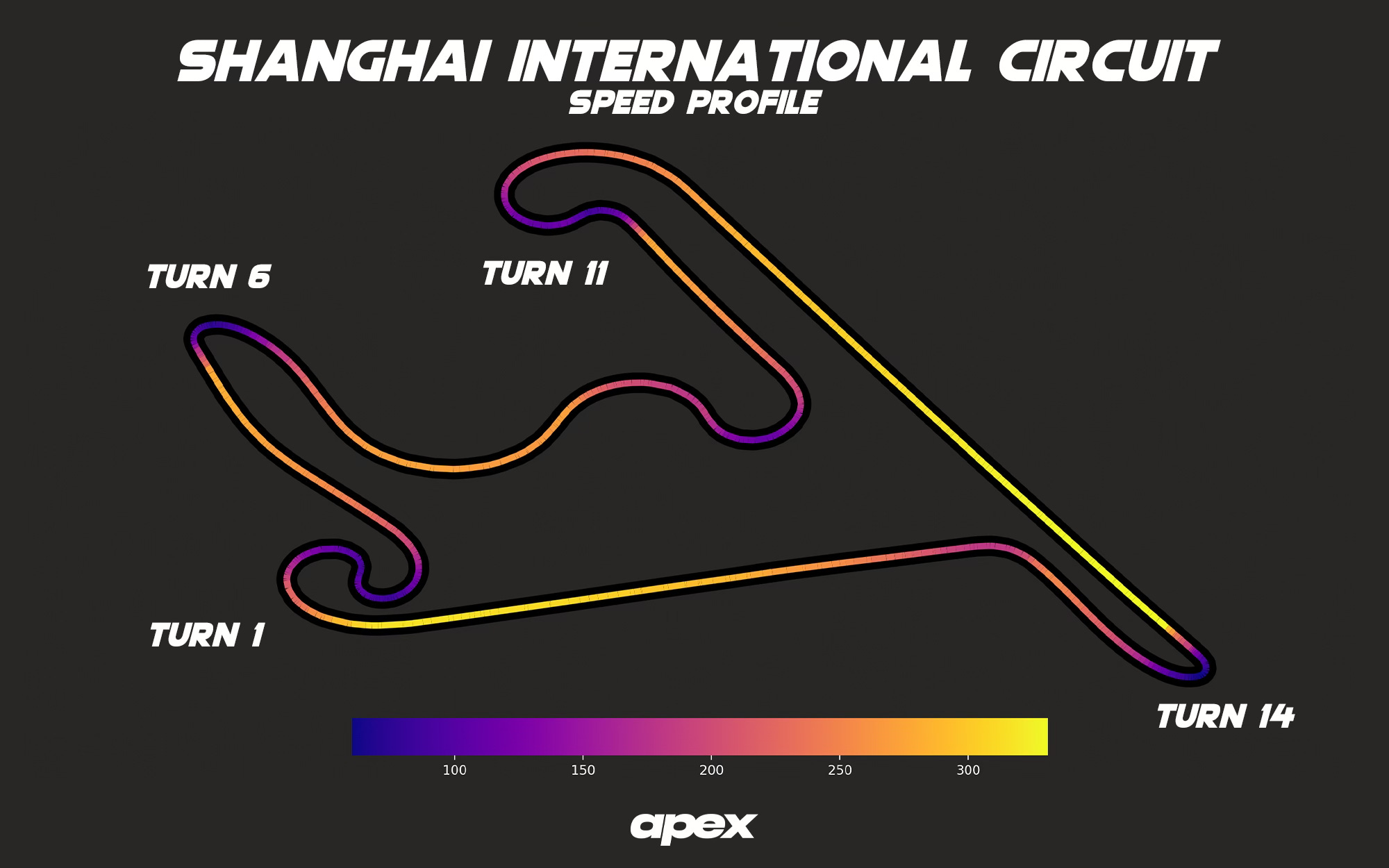
Compared to Albert Park, the lap of the Shanghai International Circuit is likely to have a very different, perhaps more balanced energy recovery/deployment profile. There are more low speed corners and sequences which should offer the drivers increased chances for harvesting, however, those are also balanced with higher speed corner sequences and one of the longest straights on the calendar.
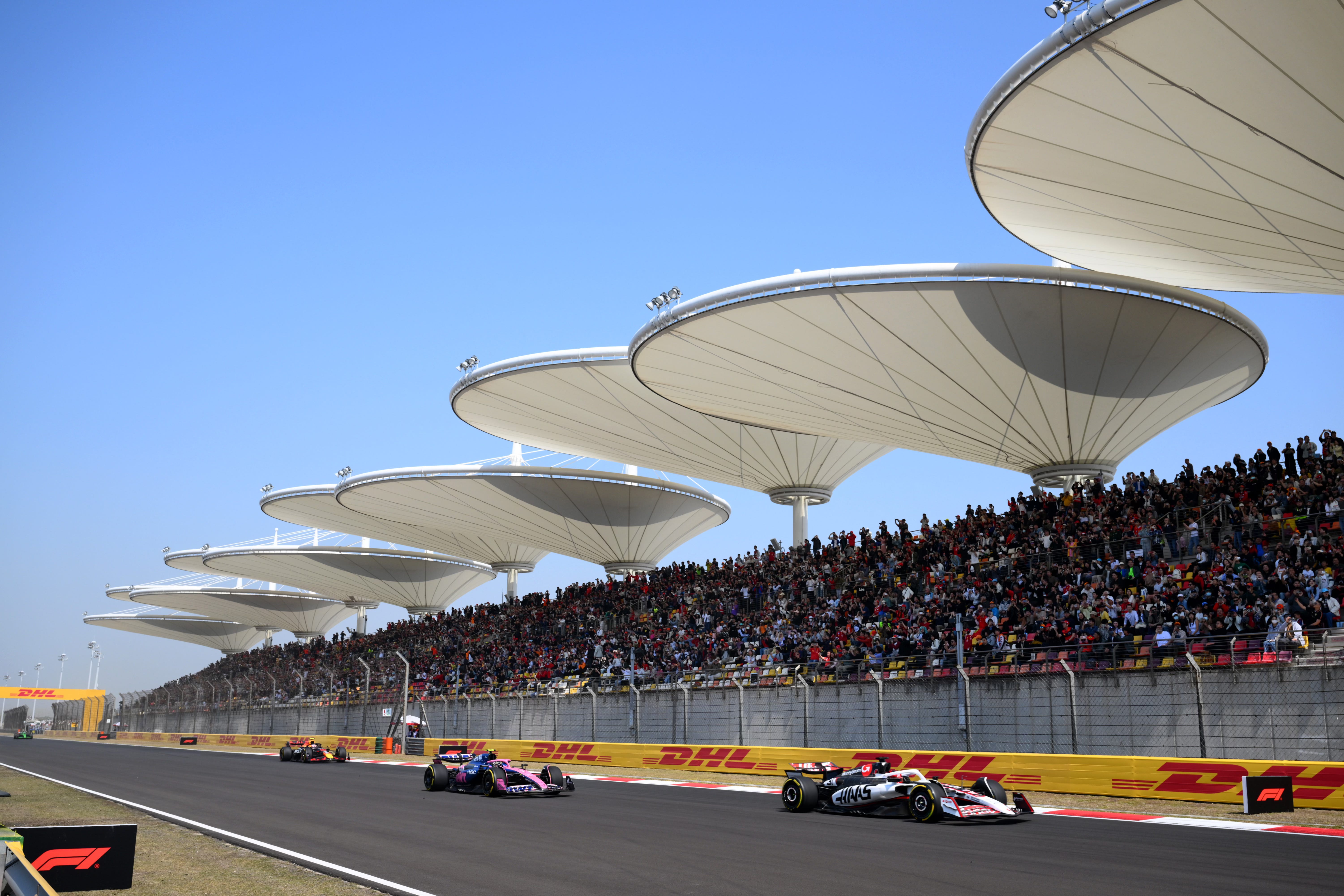
It’s that balance, but also presence of heavier braking zones out of the high speed, that puts Shanghai into a category of circuits where the FIA should be able to offer the maximum recovery per lap of 9MJ without the drivers needing to use excessive lift and coast or other harvesting techniques to meet it.
That should mean we get insight into a new performance profile for these cars this weekend, one that perhaps places them closer to their best over the majority of the lap than was the case in Melbourne.
Smooth surface
The surface at the Shanghai track was relaid ahead of last year’s Grand Prix and the result was very smooth: giving higher grip and reducing lap times. That sounds positive, but it can also give rise to significant graining which was observed over Friday and Saturday’s running in 2025, particularly on the front axle which is already under increased stress here. Into Sunday, track evolution mitigated the effect more. A year later, and Pirelli believe that this surface should have ‘aged’ to bring the grip levels down and with it the likelihood of graining, but it still could be a factor for the teams to watch.
Heavy on the brakes
The lap of Shanghai features a couple of braking zones that see the drivers, at least in the last era of car, drop from speeds north of 300km/h down to under 100km/h. Given that this year these are out of straight mode zones, that top speed could be higher again.
The most notable of these is turn 14, the right-hander hairpin that comes at the end of the 1.1km long back straight, but the runs down the much smaller straights into turn 6 and then 11 are also heavier braking events.
While these bode well for the harvesting opportunities, they are similar to the braking zones in Bahrain where we saw drivers frequently locking up. These 2026 cars are more prone to lock ups as the rear brake discs are running colder given the bigger role harvesting is playing in slowing them into corners. It means that when the drivers do press the brake, they’re not in the optimal operating window.
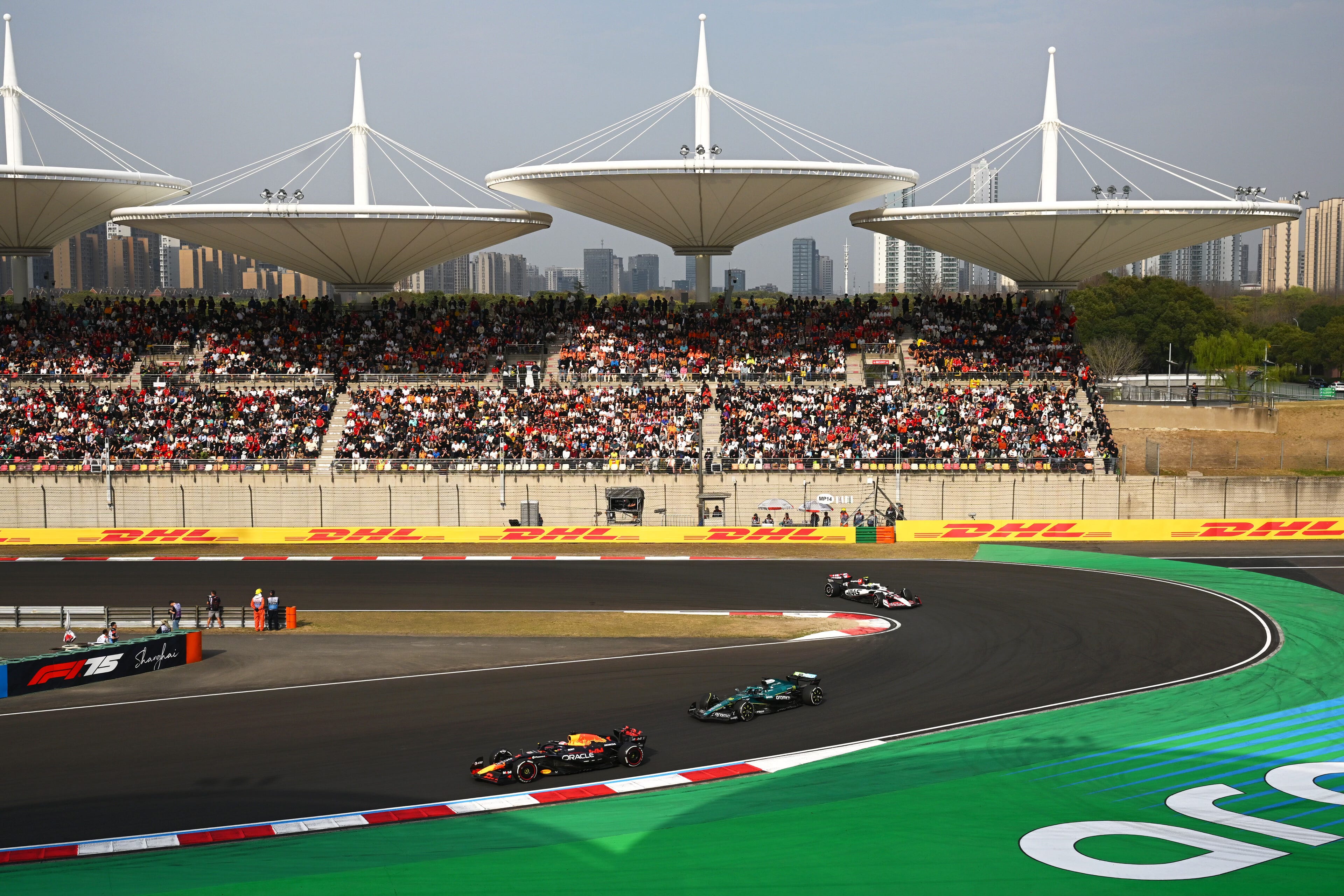
Managing that and the potential impact of numerous lockups on tyre allocation, which is already a key variable to a Sprint weekend, could be a real challenge.
Straight mode zones/Overtake mode activation
While under the last regulation set, Shanghai had just two DRS zones - down the main straight and the long, back straight - this year, there will be four ‘straight mode’ zones.
Those will include the old DRS zones but with the addition of the run from turns 4 to 6 as the second one the drivers will encounter over the lap, and the run between turns 10 and 11 as the third. Given that increase and the role of SM zones in compensating for the drop in lap time with the regulation turnover, Pirelli have stated that the performance simulations they’ve received from teams indicate that lap times could be similar to last year’s. That saw pole position achieved with a time of 1:30.641 which, with the new surface, was a 3.019s improvement on 2024.
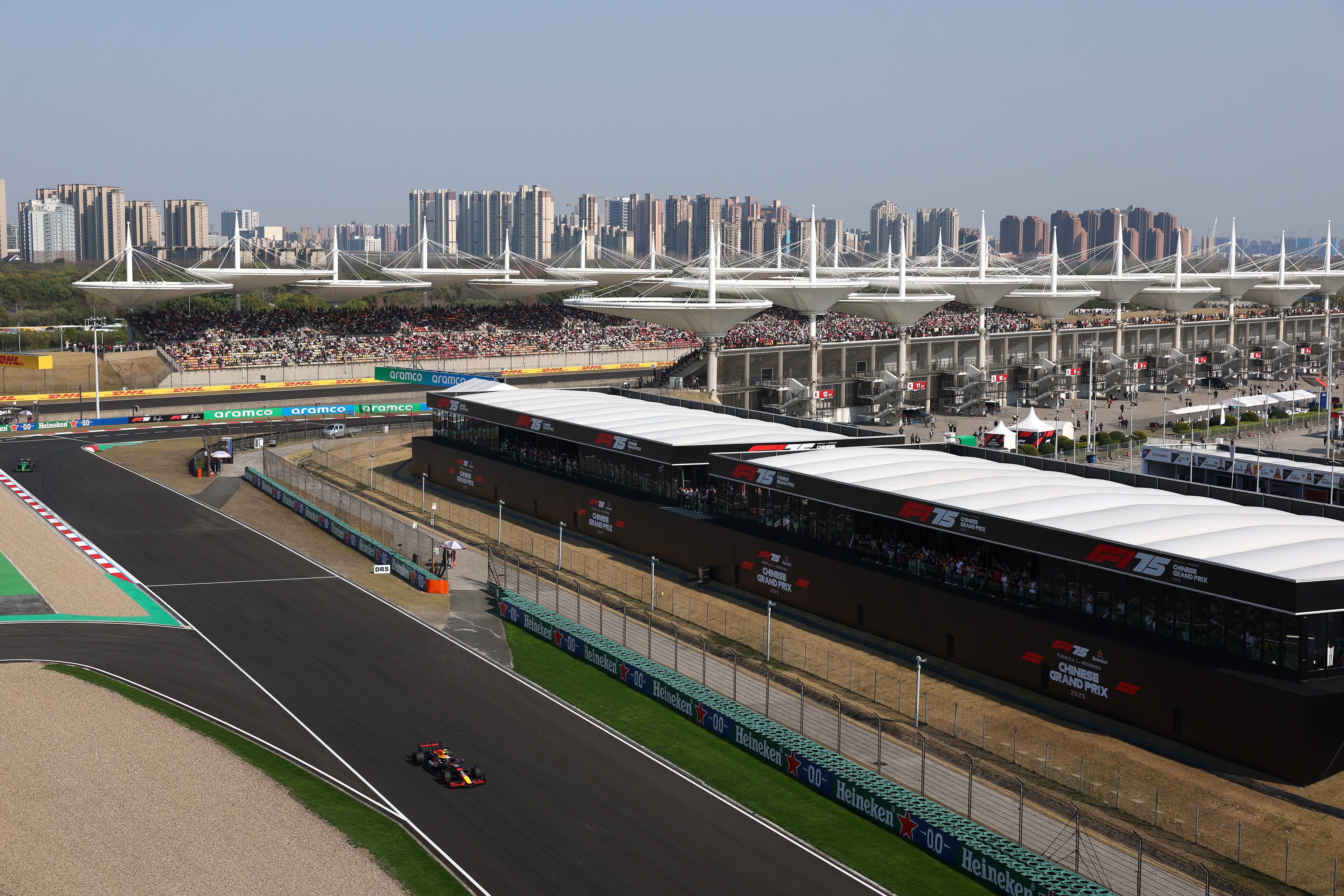
In addition to the straight mode zones, the new for this year overtake detection and activation points will come into and out of the final corner, turn 16.
The Compounds
Pirelli’s selection for the weekend remains unchanged since the circuit’s return to the calendar two years ago, which this year puts it in the middle of the range with the C2 as the hard, C3 as the medium and C4 as the soft.
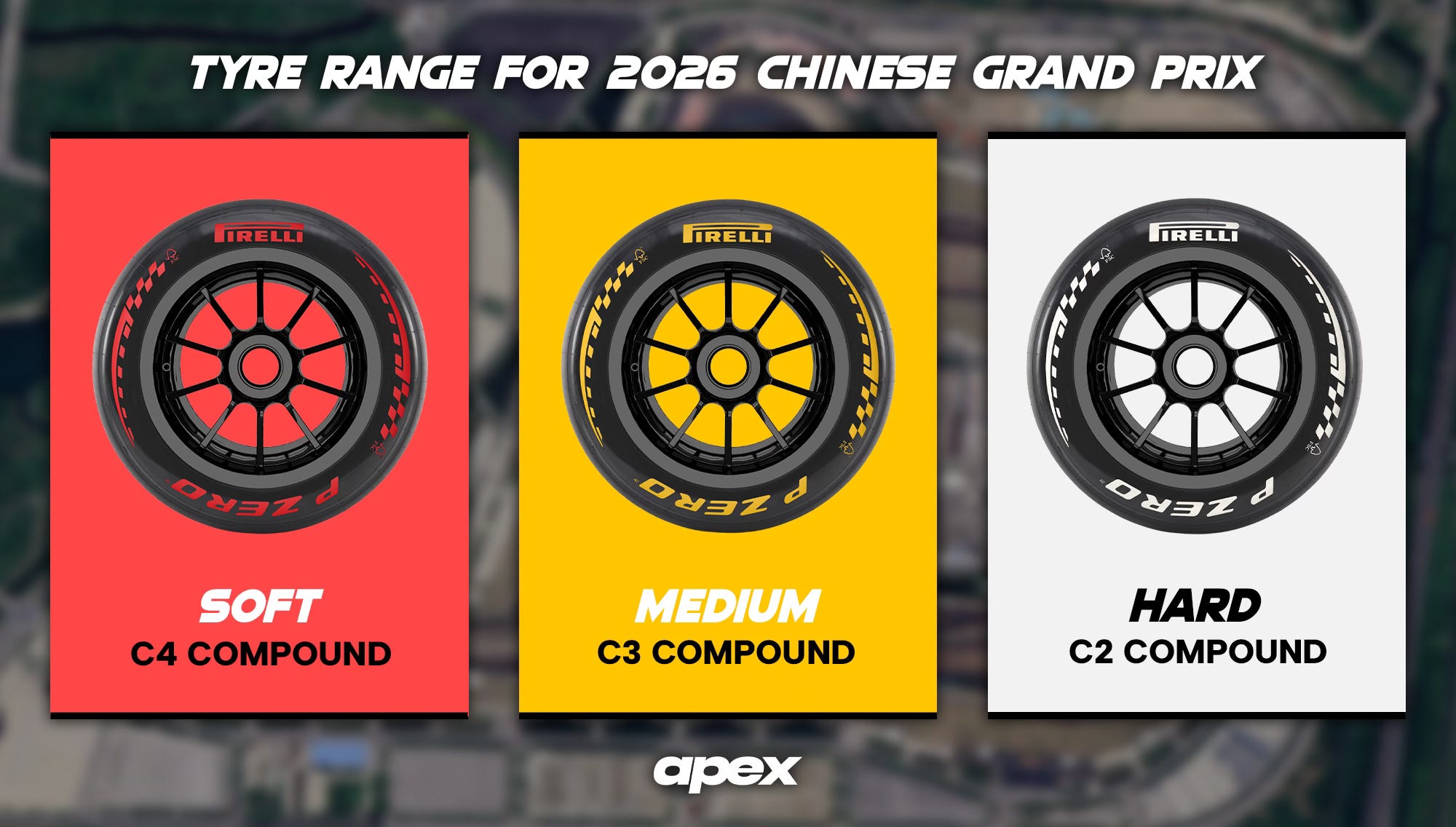
Of particular concern to the teams and drivers this weekend will be keeping the front left alive for the full lap, and avoiding excessive graining or degradation on it over the Sprint or Grand Prix. It’s a stress dynamic that arises from the ‘front limited’ nature of the circuit, and also the slow-medium speed, ever-tightening opening sequence of corners as the drivers turn over 270 degrees.
Also to consider here will be the impact of the Sprint on tyre allocation. A Sprint format weekend drops the allocation per driver from the usual 13 sets to 12, of 2 hard, 4 medium and 6 soft.
Strategy Corner
Last year's Chinese Grand Prix was an intriguing one strategically, as the new track surface and its evolution interacted with the teams’ pre-race expectations for tyre behaviour.
The Sprint revealed graining as the main issue, with the drivers finding it harder to look after their tyres in race trim and while running in dirtier air in the pack, which is also usually less spread over the shorter Sprints. That drove degradation but also resulted in Pirelli raising the minimum starting pressures into Saturday to help the tyres cope with the increased load they were under.
It’s why Pirelli’s motorsport director at the time, Mario Isola, predicted the one-stop to be out of the question with the two-stop being “obligatory” instead. But what played out over the grand prix was vastly different.
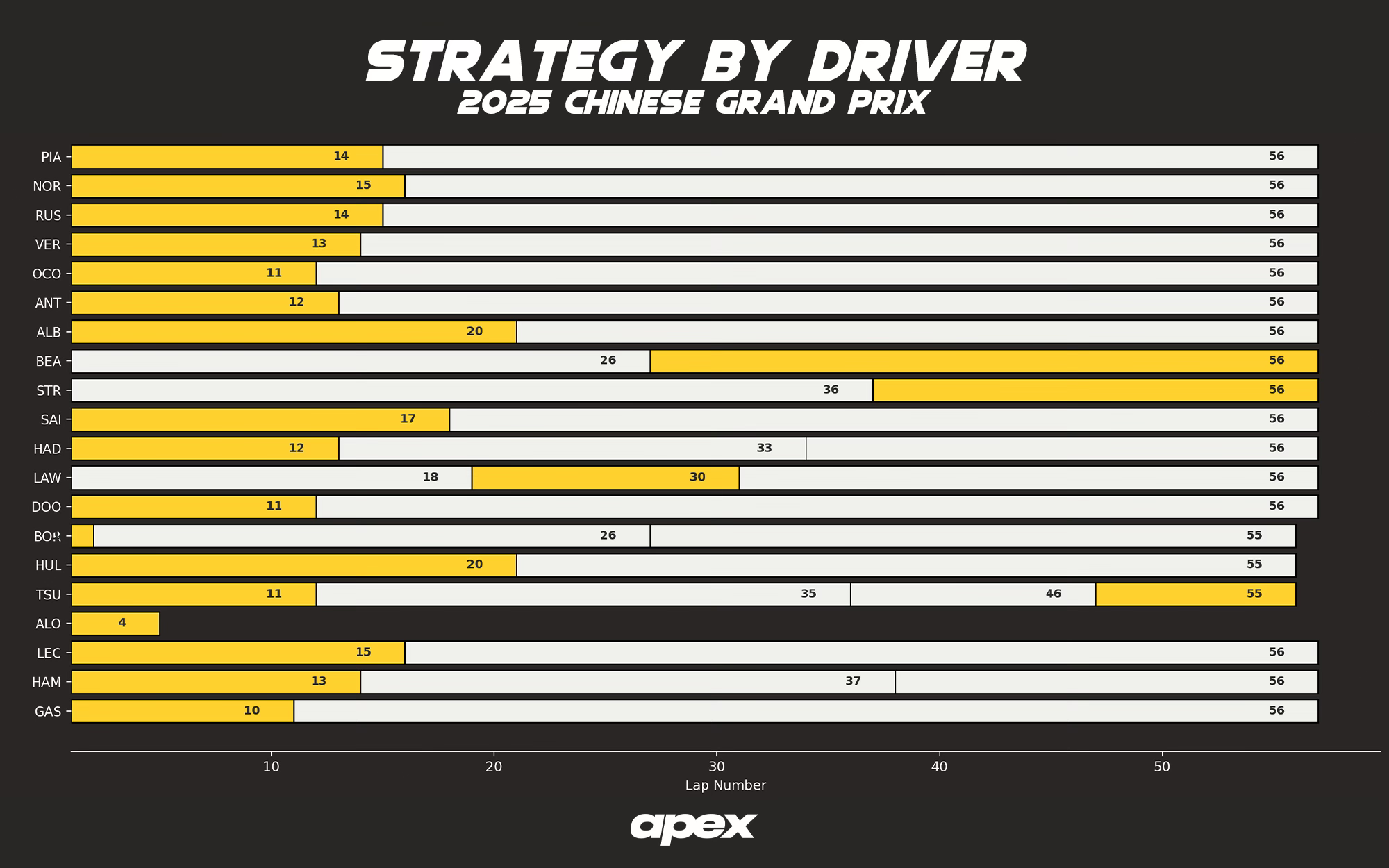
The medium was the starting compound of choice for 17 drivers on the grid, with the rest opting for the hard. There were a number of unknowns surrounding the behaviour of the hard tyre heading in, given that it hadn’t been run at all over the first two days of running and was the compound that had undergone the most changes over the winter, but as the race went on it proved to be a stable, consistent, and longer lasting option.
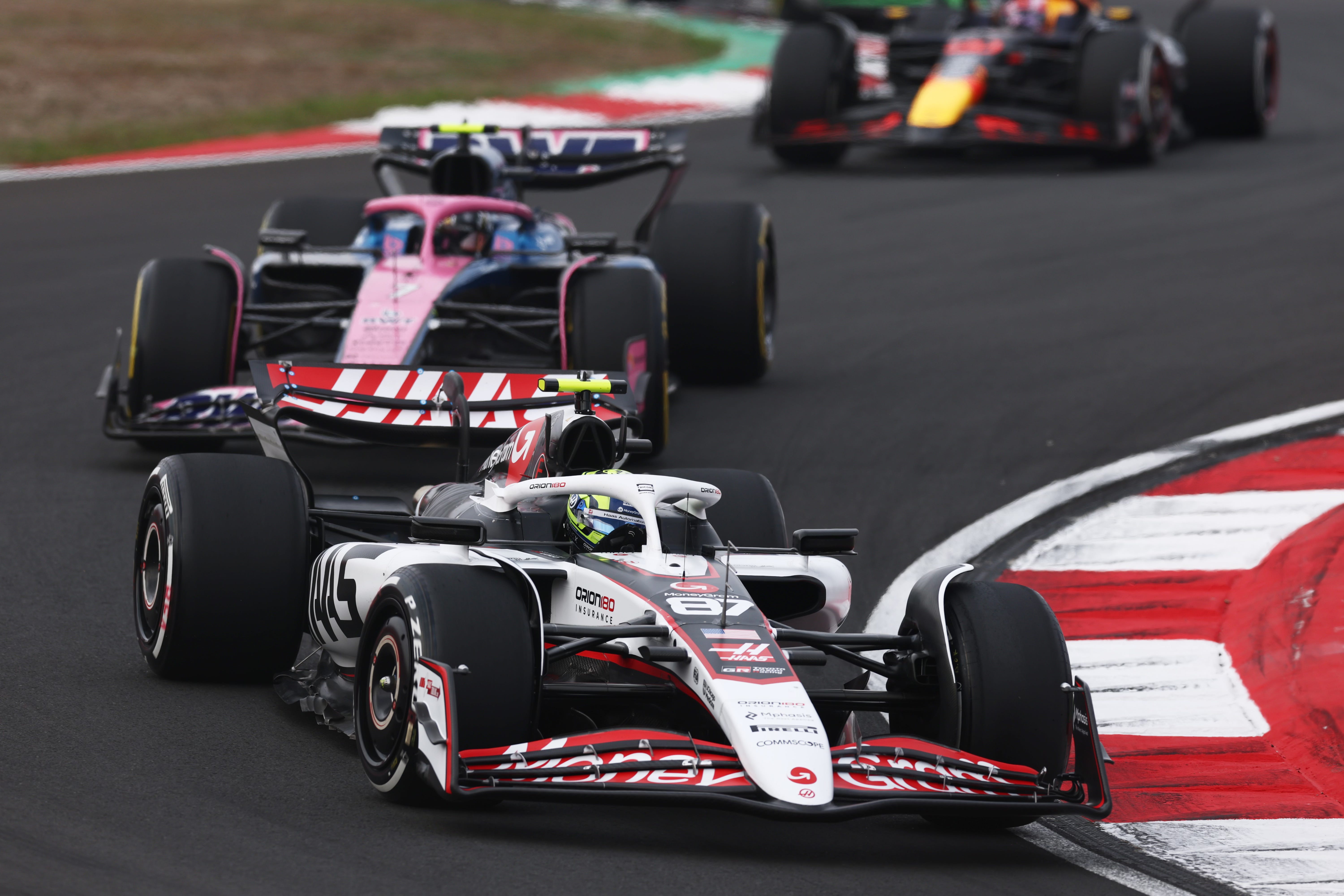
The evidence from Ollie Bearman’s opening stint on the C2 indicated to the rest of the field who’d begun on the medium that switching to a one-stop with a final, longer hard stint was not only feasible, but perhaps optimal. That worked out well for most, with the top five finishers all coming in to switch from the C3 to C2 between laps 13 and 15.
For Ferrari however, it gave rise to a nightmare situation as both of their cars were disqualified for different reasons. Leclerc’s was more directly related to strategy - he had been one of the drivers to run the one-stop and his car was 1kg under the minimum weight limit, which Ferrari explicitly stated was due to “very high” tyre wear.
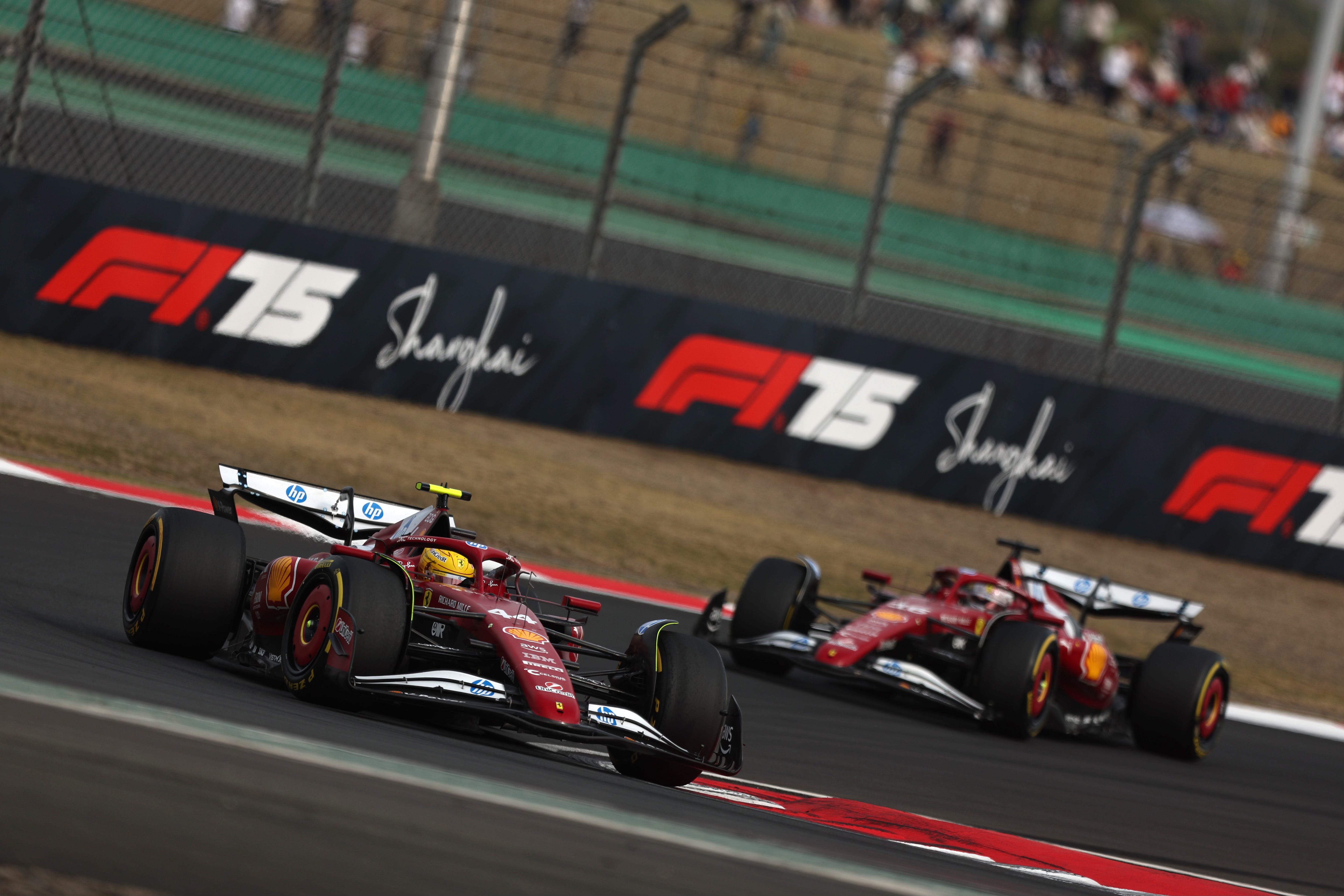
Hamilton was found to have rearward skid wear 0.5mm under the limit, as Ferrari said they “misjudged the consumption by a small margin”, which was presumed to be a result of the more compressed Sprint format and its impact on finding the optimal setup.
This year though, armed with the evidence of last year’s race, the teams are heading in potentially expecting either the unusual track surface to give rise to a similar strategy this year, or for its aging process to mean we revert back to the two-stop that had been seen here in previous years.
Fast Facts
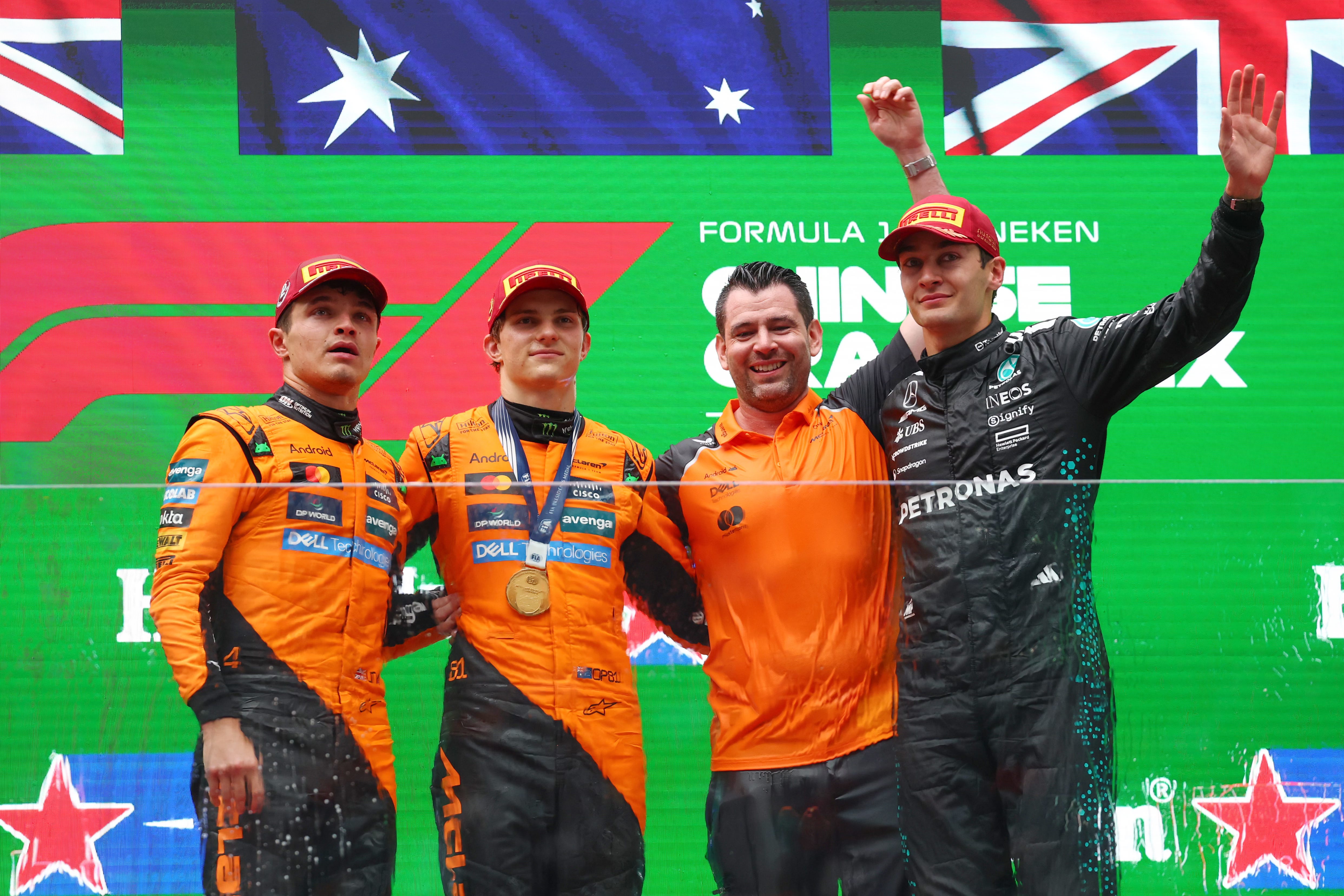
Pole position has historically played a large role in predicting the winner, with 61% (or 11) of the 18 grands prix held in Shanghai being won by the pole sitter. That includes Oscar Piastri who converted pole to the win here last year.
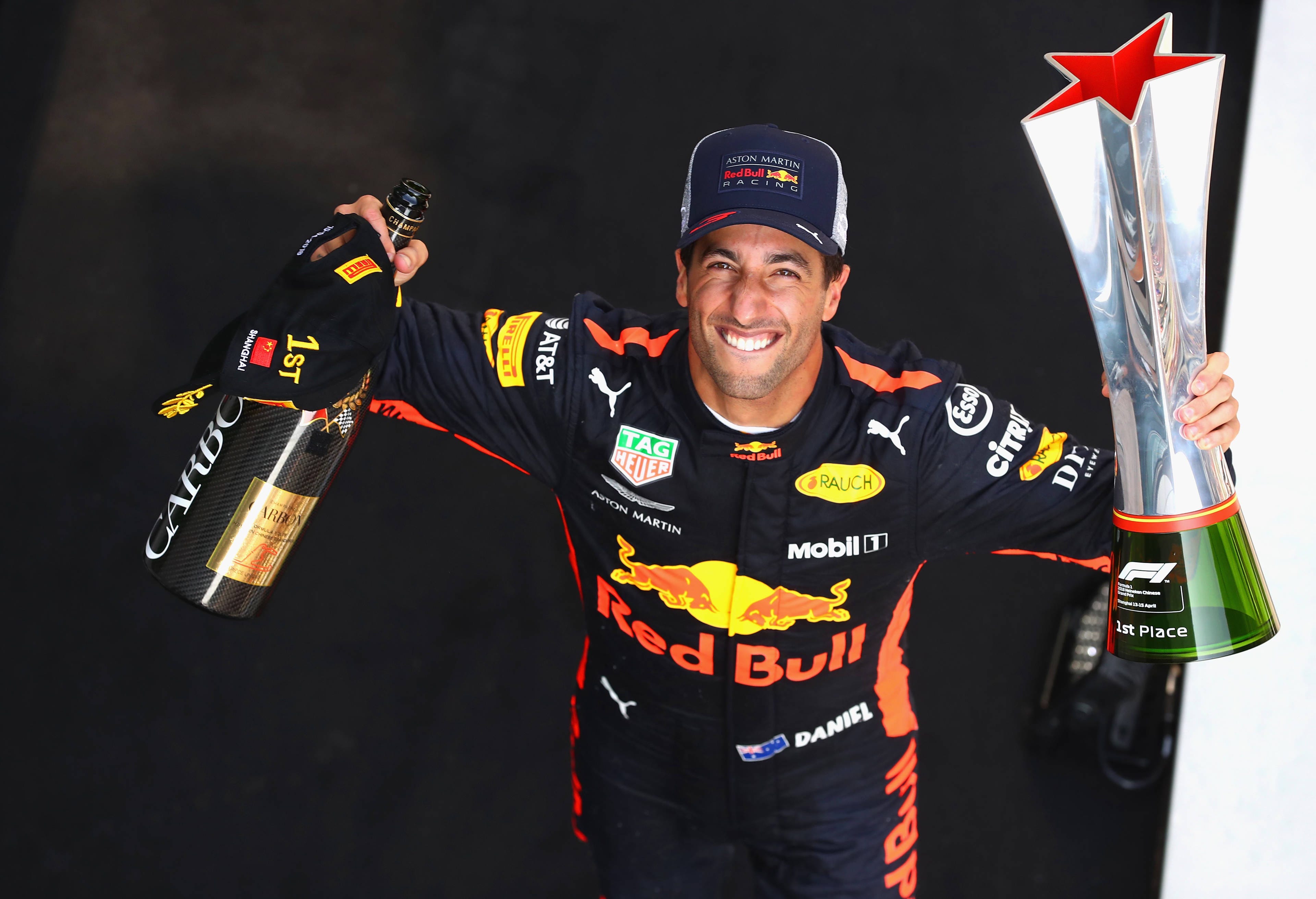
To win the Chinese Grand Prix from P6 on the grid in 2018, Daniel Ricciardo completed more overtakes than the entire field had at the season-opening Australian race in the same year.
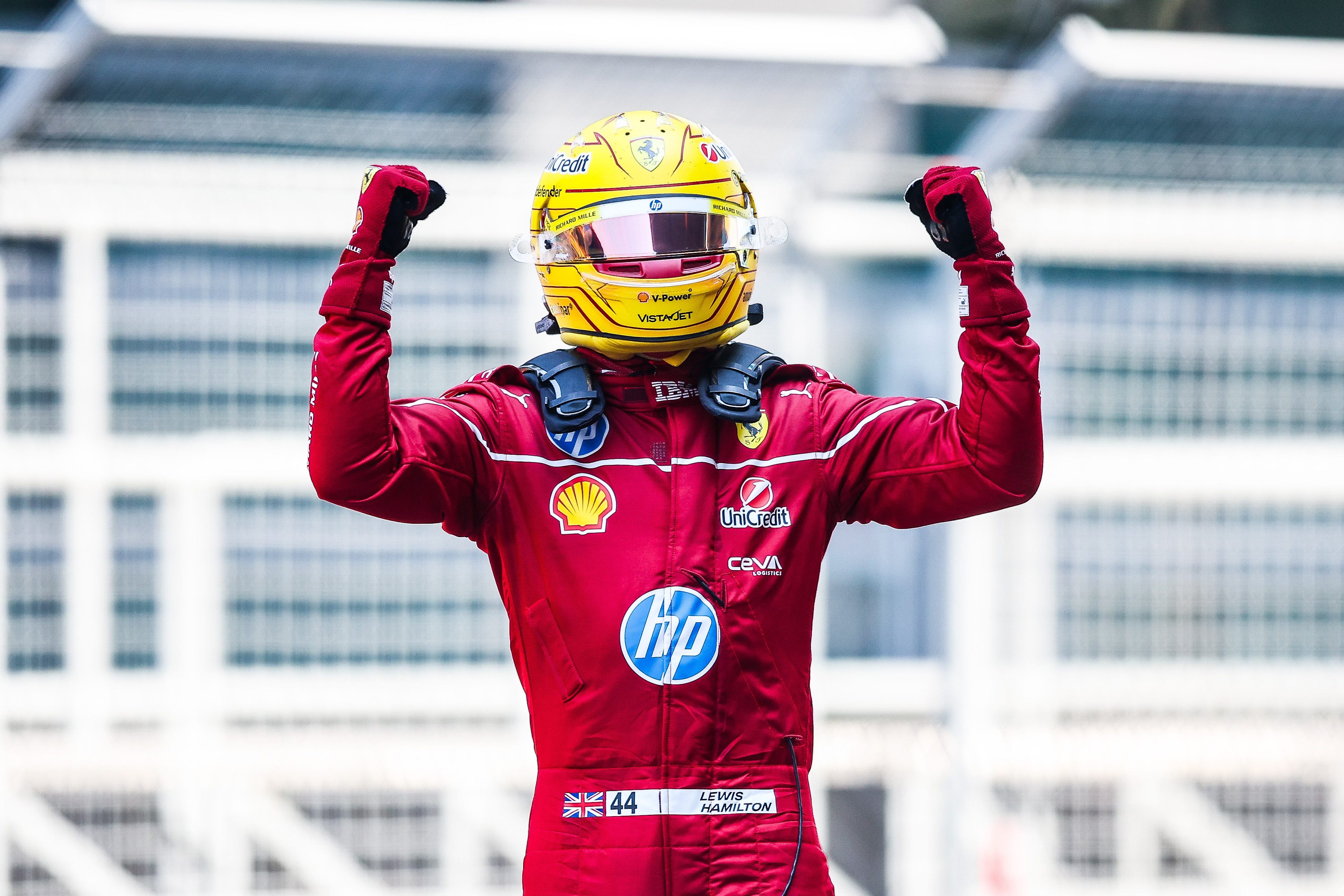
Lewis Hamilton’s Sprint win here last season was the only win of any format he had claimed, and still has claimed, since the 2024 Belgian Grand Prix.
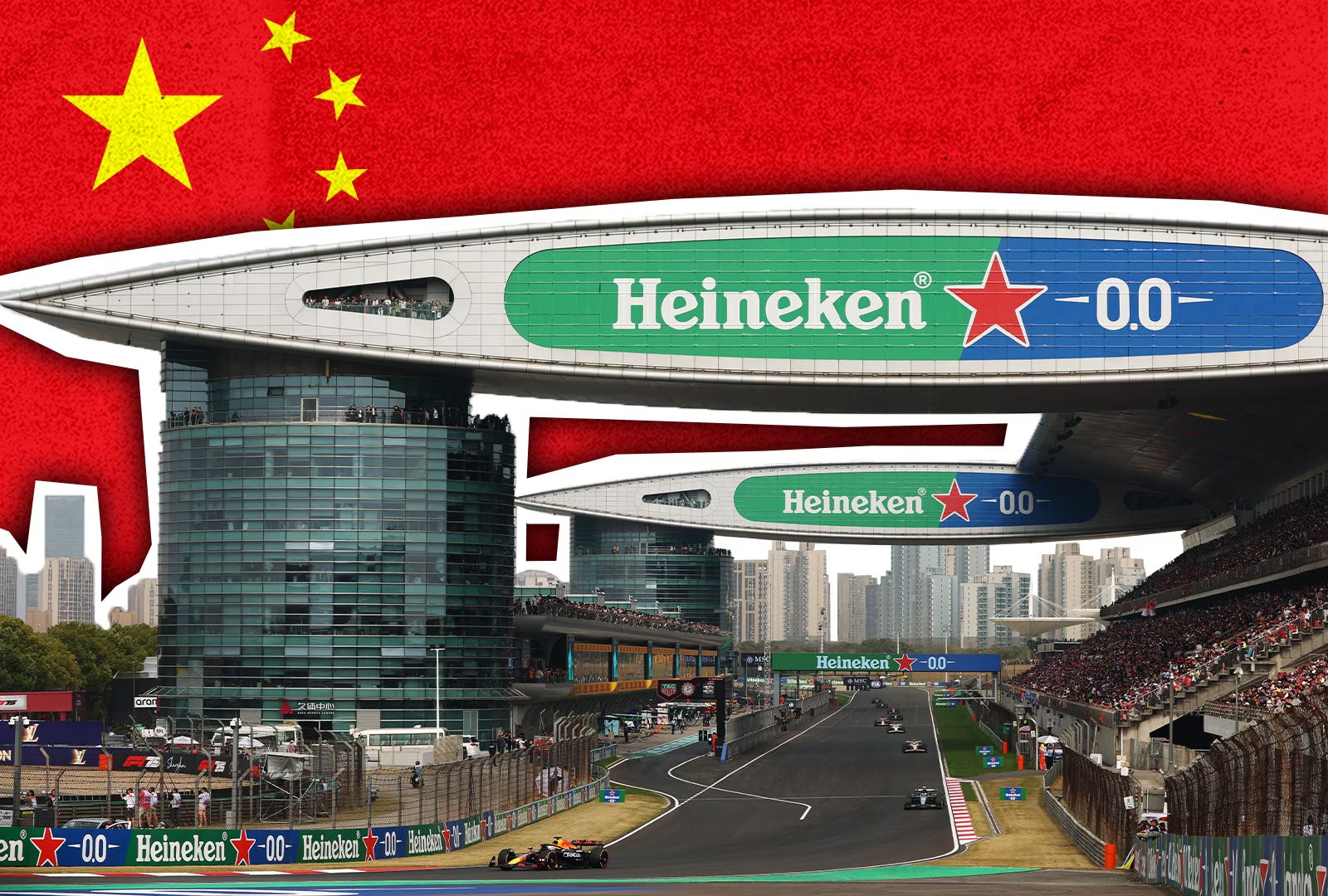
The Chinese Grand Prix kicks off with free practice one at 11:30am track time on Friday March 13th. Here’s how the rest of the weekend shapes up, with all times in local:
Practice 1 - March 13th - 11:30-12:30
Sprint Qualifying - March 13th - 15:30-16:14
Sprint - March 14th - 11:00-12:00
Qualifying - March 14th - 15:00-16:00
Chinese Grand Prix - March 15th - 15:00