


Ferrari unveiled the SF-26 this morning, and no sooner than it had launched was it out on track at Fiorano for preliminary running. Visually, it follows an identity that the team have run with before - bringing gloss red back after seven years of matte finishes, in a shade they say is inspired by “the red used at the turn of the millennium”.
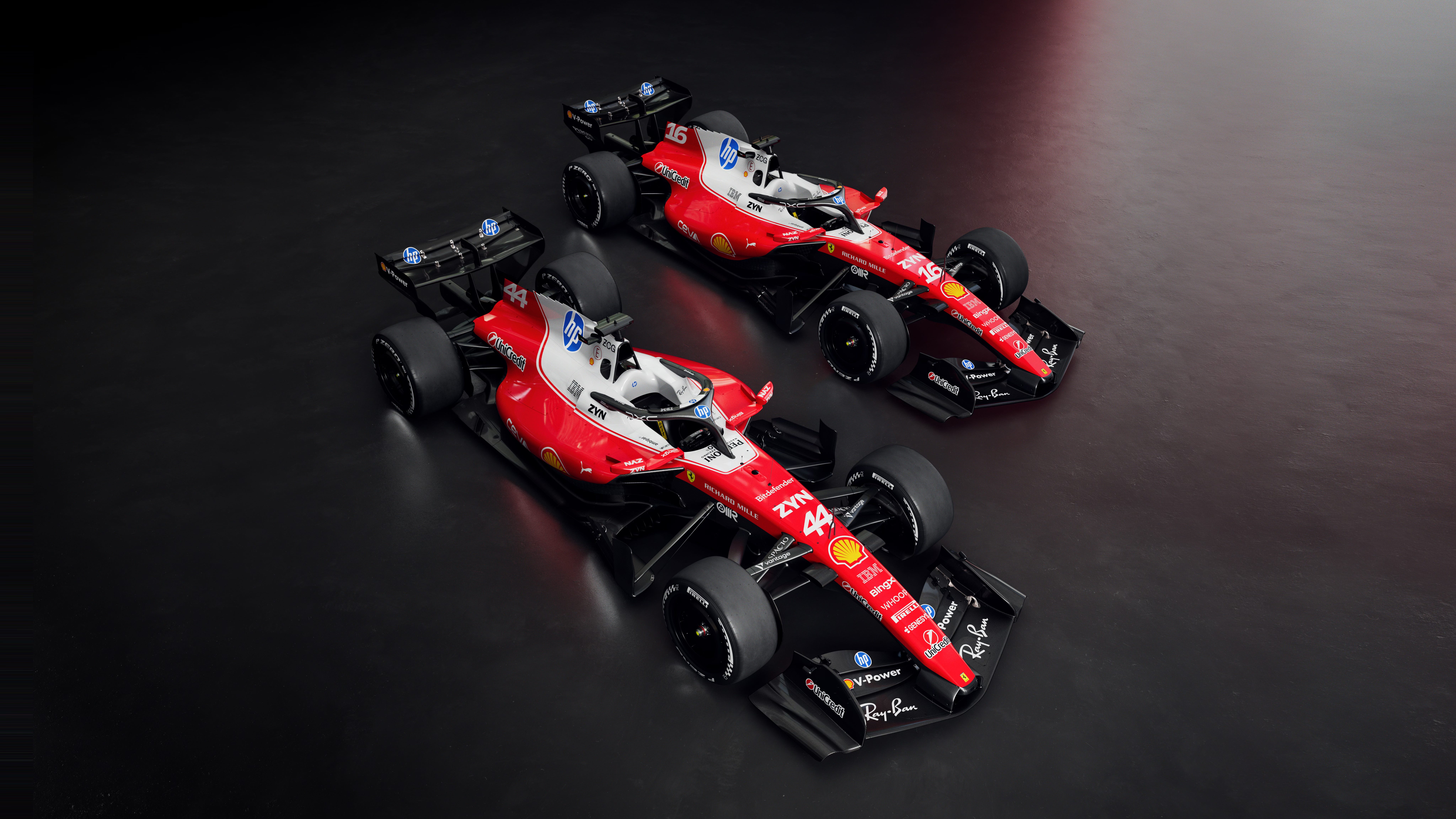
The addition of white around the cockpit and on the engine cover is aimed at creating a “strong, balanced visual contrast” but one that also speaks to their balance of “established roots and a forward looking vision”, as they evolve the historic identity of the team to meet this season’s new challenges.
The launch materials spoke to how they’ve done that on a technical level - with a focus from the very early stages on what the team have called “functional simplicity”.
Given the complete overhaul of the aerodynamics and powertrain demanded by this new regulation set, Ferrari say their designers opted to focus on creating a robust, flexible concept that can be developed rapidly over the season as more data is acquired - or, in other words, a functionally simplistic base concept.
Technical Director for Chassis, Loic Serra, emphasised the need to ensure that the car’s architecture allowed for in season development in a flexible, agile way. But that’s not to say they don’t feel they’ve captured as much of the regulatory context as possible in the SF-26, which Serra said they “dedicated significant time to in the concept phase”.
“You want the conceptual phase to be as long as possible because effectively you are starting from a blank page, so there are multiple options in the way you’re going to assemble the different elements.
You draft a solution, you look at it, you find ways to improve it, you draft a solution: it’s just the normal iterative process that we follow in development. So the more loops you have, the better you are.”
Involved from the start of that long conceptual phase were the drivers, given the demand the new systems, and their understanding and optimisation, will place on them. Charles Leclerc said “we have been heavily involved from the early stages of the project’s development”, while Lewis Hamilton spoke to the “fascinating challenge” that it presented as the pair worked “to help define a clear direction for the [SF-26]”.
The Result
That result of that conceptual work, and the work that followed in defining the initial design foundation, is a car that shares similarities with other early concepts we’ve seen to this point of the pre-season, yet also has its differences.
Front & rear wings
The front wing of the SF-26 stands out as quite unique compared to other early designs given the width of the mainplane versus the upper two (active) elements. It’s perhaps that width that enables the connection with the nose via two rather wide, squared off pylons to happen at the mainplane similarly to the VCARB03, rather than to the second element as we’ve seen from Mercedes. The nose itself is also more tapered in shape and appears to be sitting lower than we’ve seen so far.
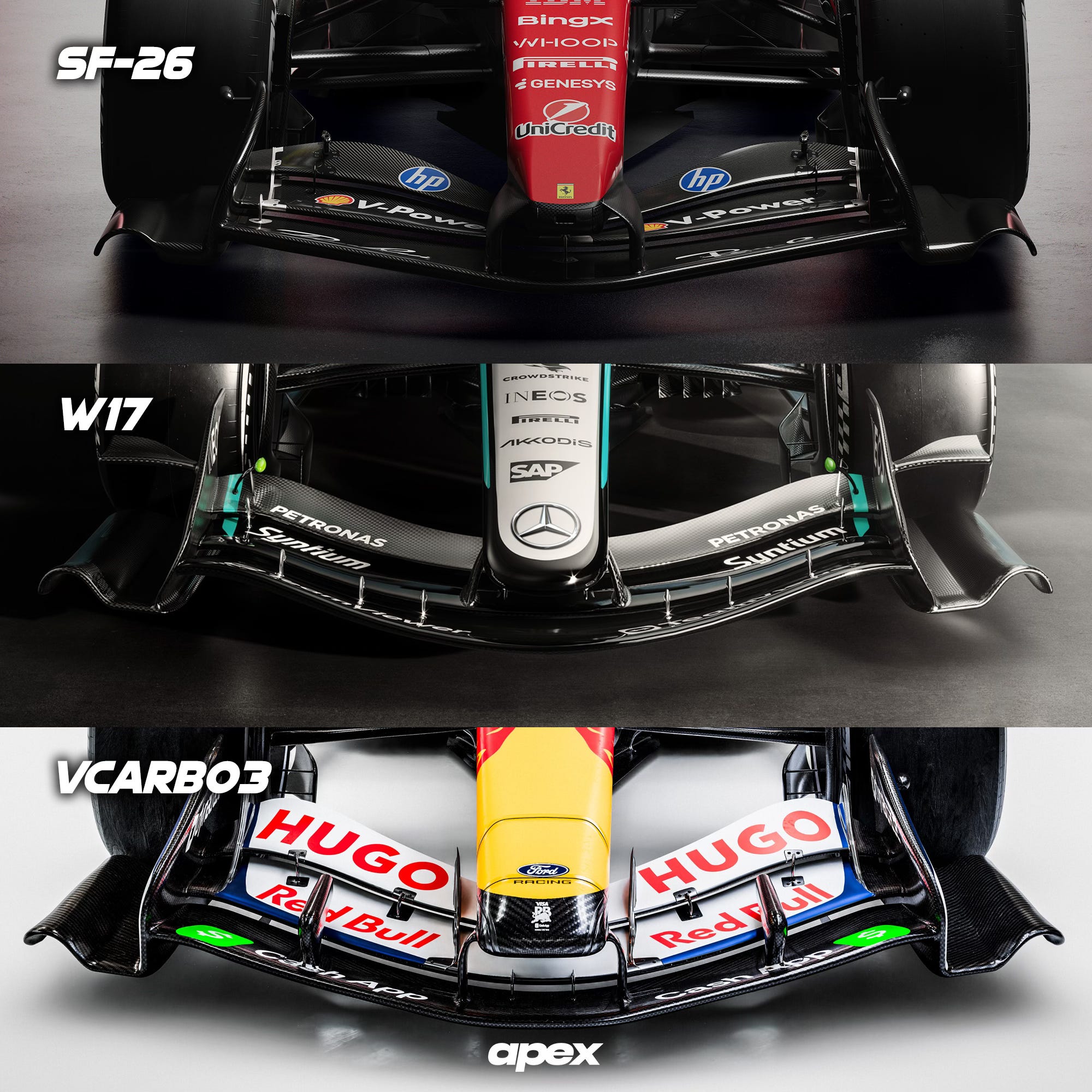
At first glance there’s no obvious indication of how the front wing’s active aerodynamic actuation will take place, but its possible that this is via the silver connections on the outboard ends which would echo the prototype Ferrari ran at the post-season test, or potentially it may also be via a middle stay under the tip of the nose.
The end plates are also more in line with those run on the Mercedes W17 at its first on track shakedown, with no additional winglets on the outside. Their shape is one that looks directed at inwashing - directing the airflow over the wing and to the front of the floor.
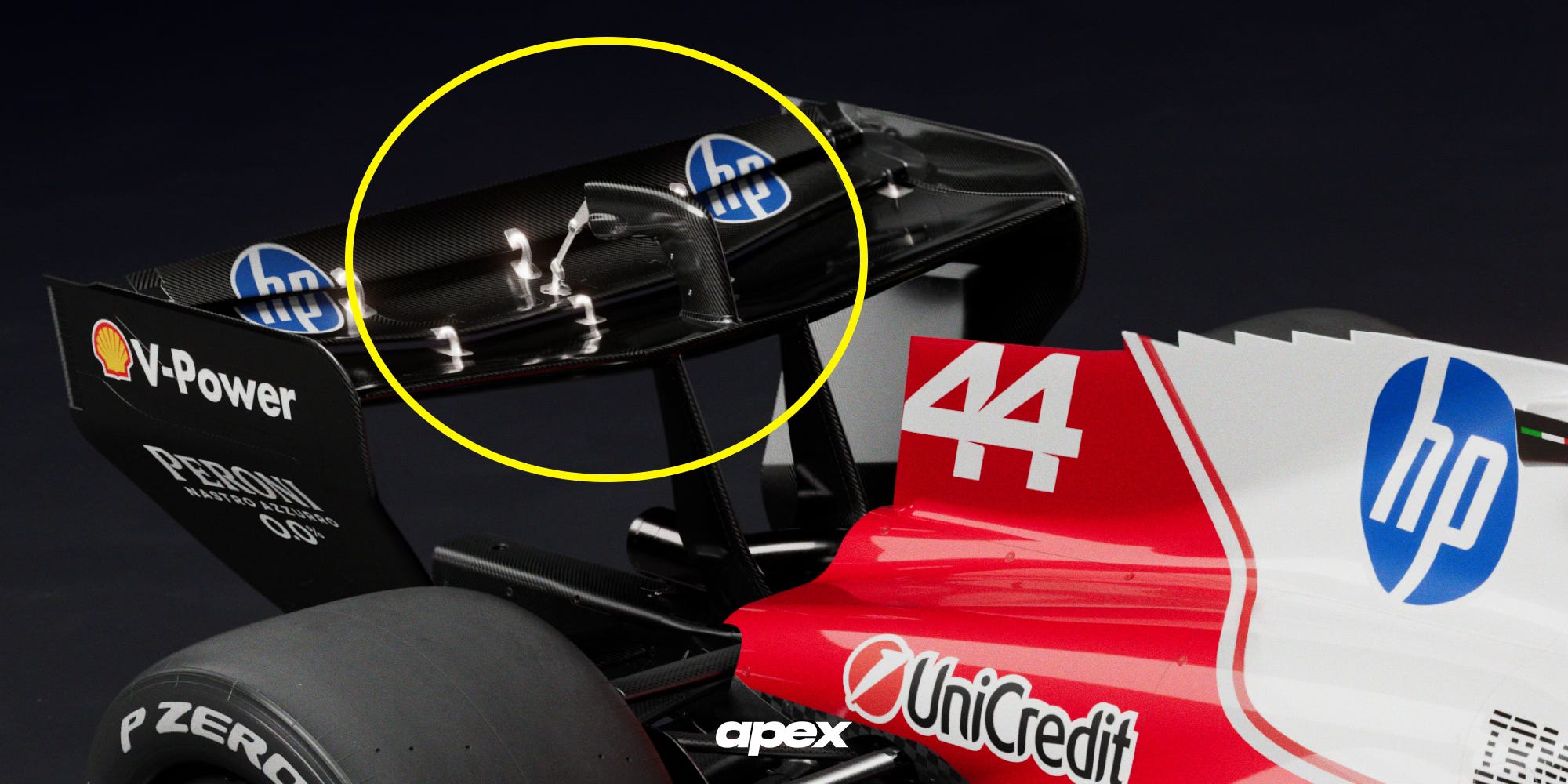
At the rear wing, things appear largely standard - the actuator for the active aerodynamics is very similar to an old-style DRS one, joining to the lower of the active elements, though that itself is connected to the upper one.
Bargeboards
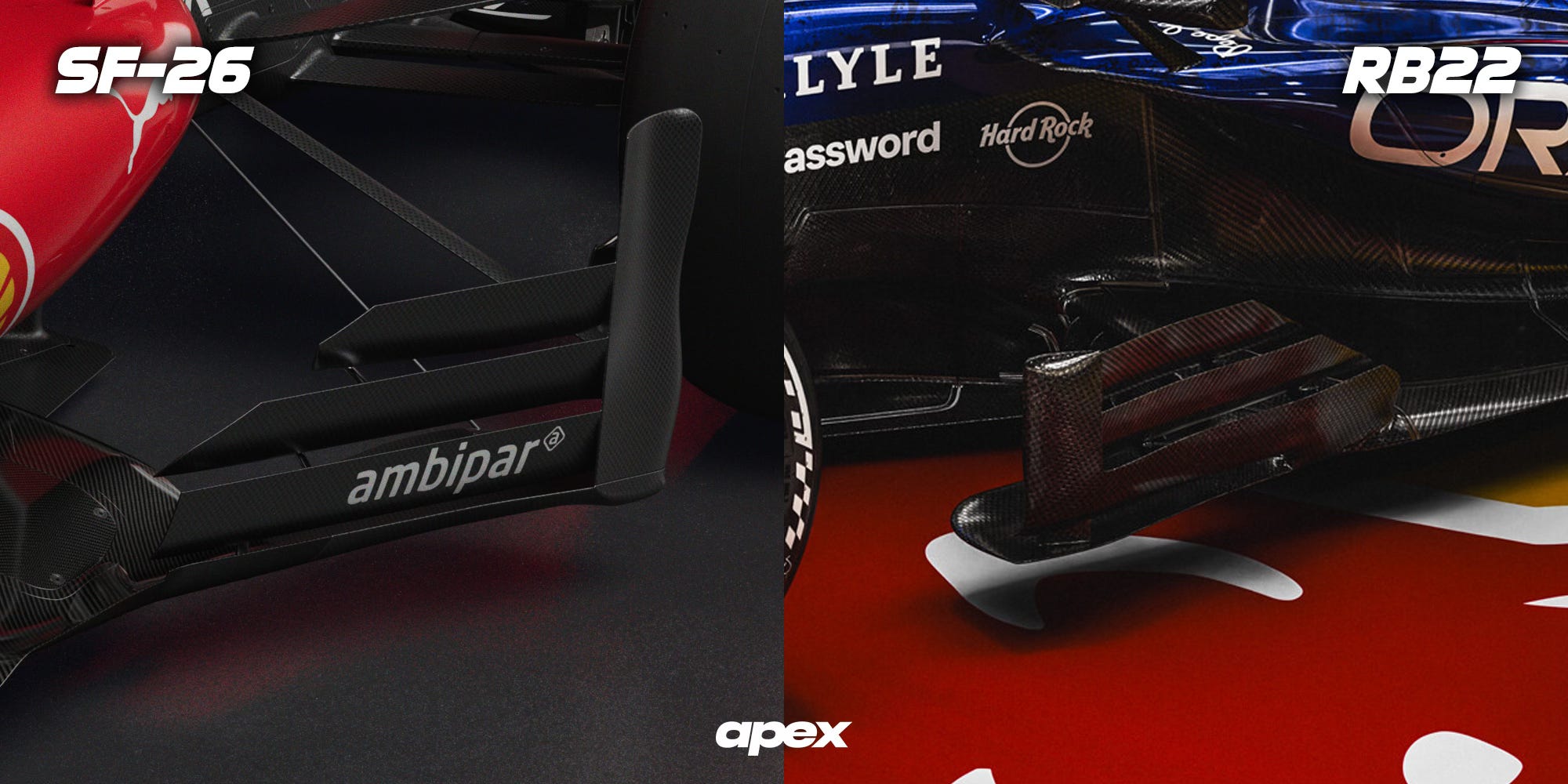
What stands out in the bargeboard, or ‘floor board’, region of the SF-26 are the two diagonal stays to the chassis, which are more visually obvious than the single horizontal stay on the VCARB03 or W17, for example, given the height of their mounting points on the chassis. The regulations state that teams can have “up to three ‘Floor Body Stays’” that “may be designed to only take load in tension”.
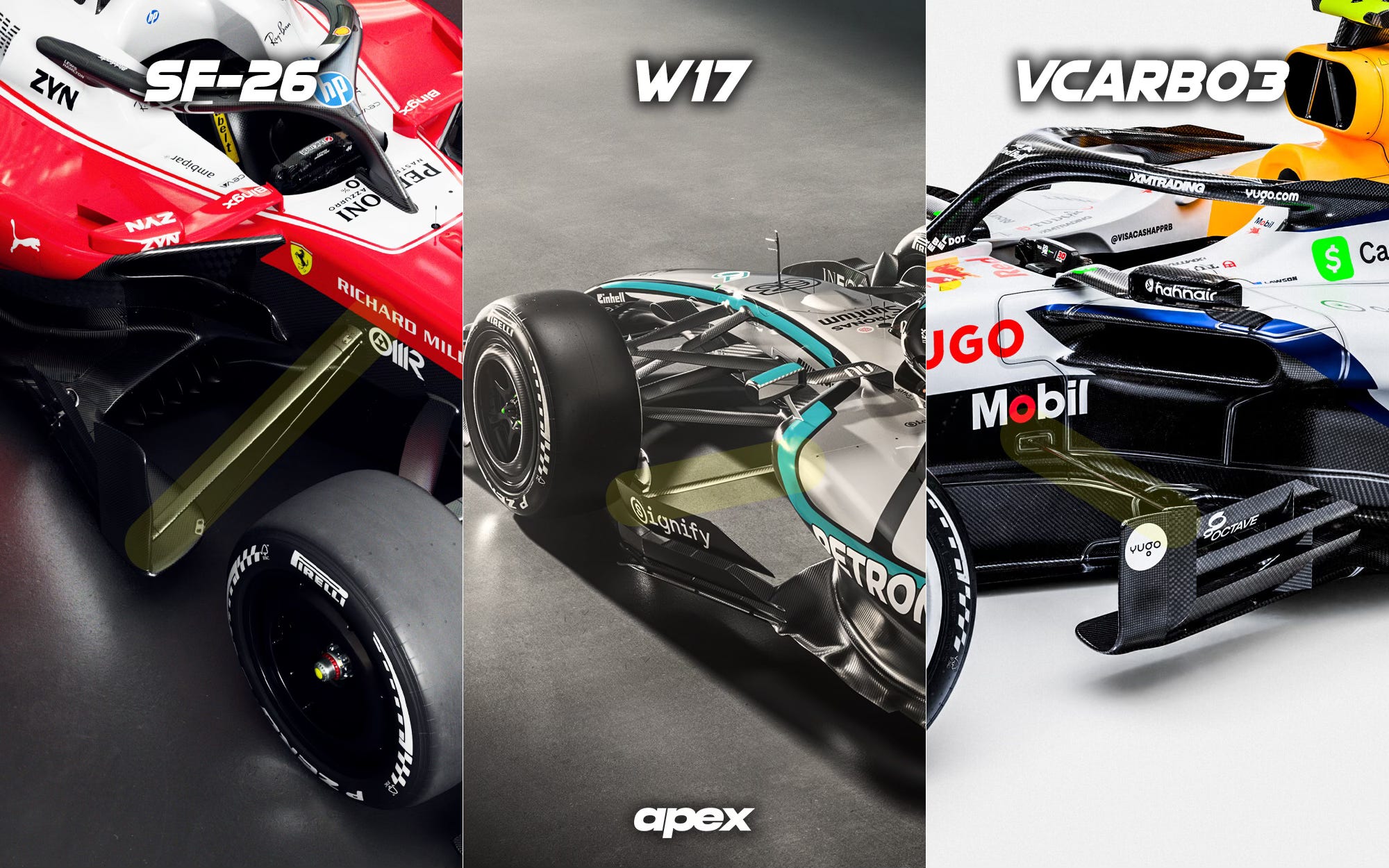
The ‘bargeboard’ itself takes a similar shape to Red Bull’s with horizontal elements joining a single vertical strake at the front, but the SF-26’s is much taller - taking up most if not all of the height allowed by the regulations.
Sidepods
Moving rearwards to the sidepod and Ferrari’s shape is one that doesn’t generate a hugely aggressive undercut, offering some element of downwashing front to rear but with the width maintained mostly to the rear suspension. At that point, the shape narrows in tightly, creating a coke bottle while maintaining a wider, more open outlet from the engine cover to the rear above.
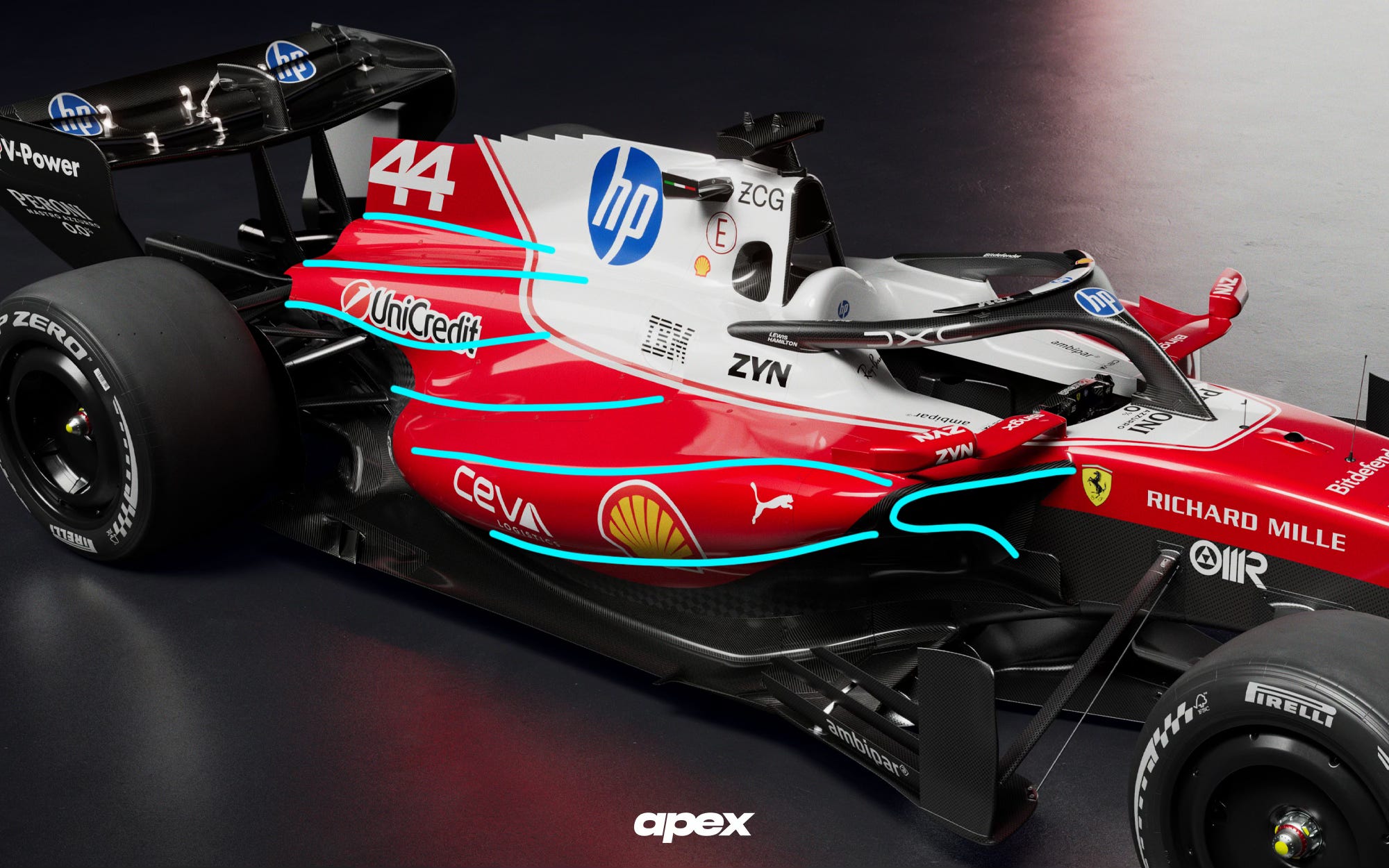
The inlet looks to follow a design concept we’ve seen across the field to this point, with an upper edge carried over from the last regulatory era, and a sizeable reverse P-shape.
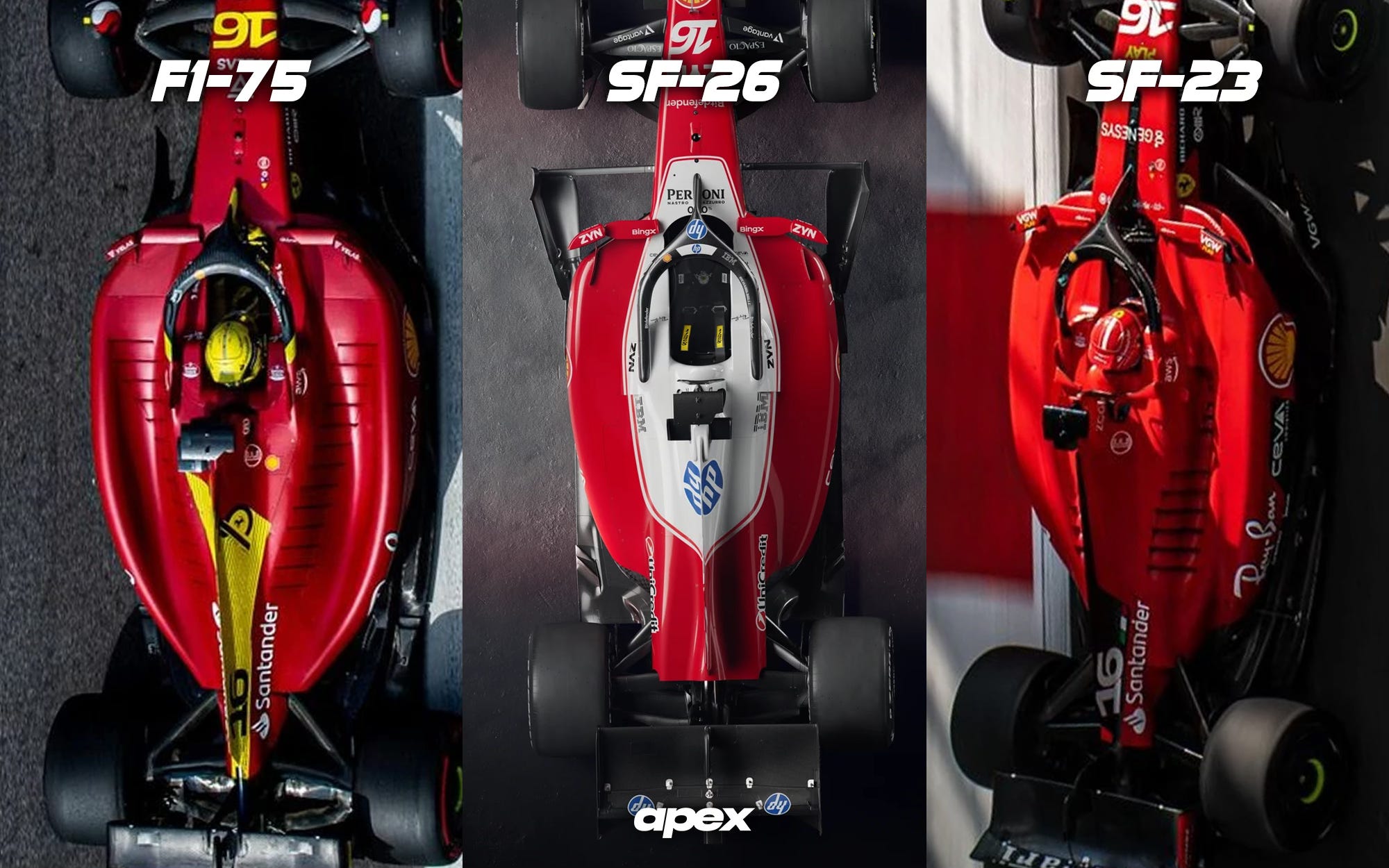
Interestingly, from above, these features combine to create a profile that’s not dissimilar to the F1-75 from the team in 2022 or even the SF-23 a year later, although without the deep, ‘bath-tub like’ dip in the top surface.
Airbox and sharkfin
The airbox of the SF-26 is unlike anything we’ve seen from other teams who’ve unveiled early concepts so far given not only its triangular shape, but also small size that will presumably provide minimal cooling flow.
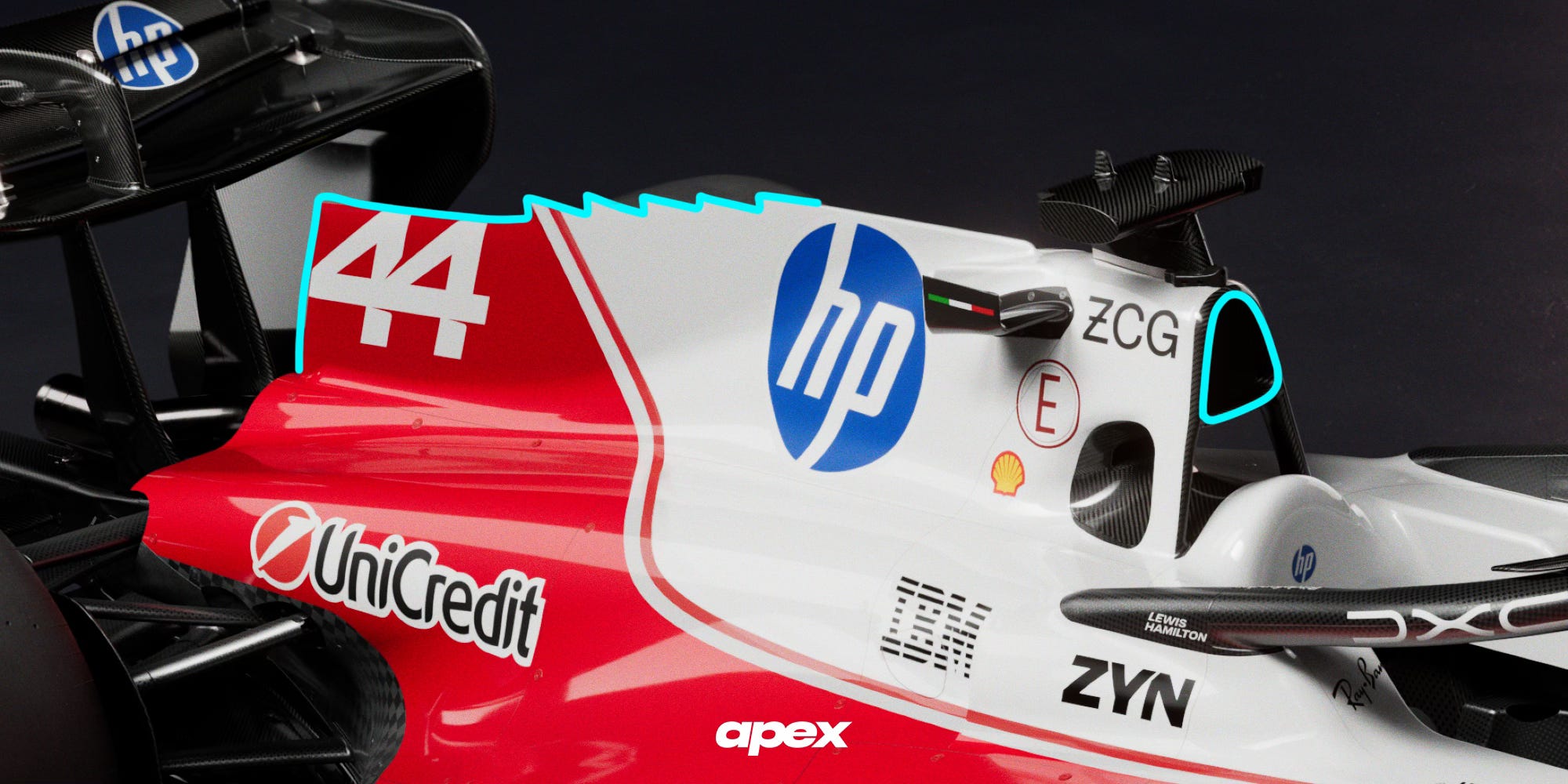
That said, it is something we’ve seen from Ferrari before. The F1-75 ran a similarly shaped, lower-in-height airbox, as did the SF-23, SF-24, and SF-25 - perhaps therefore it shouldn’t come as a surprise.
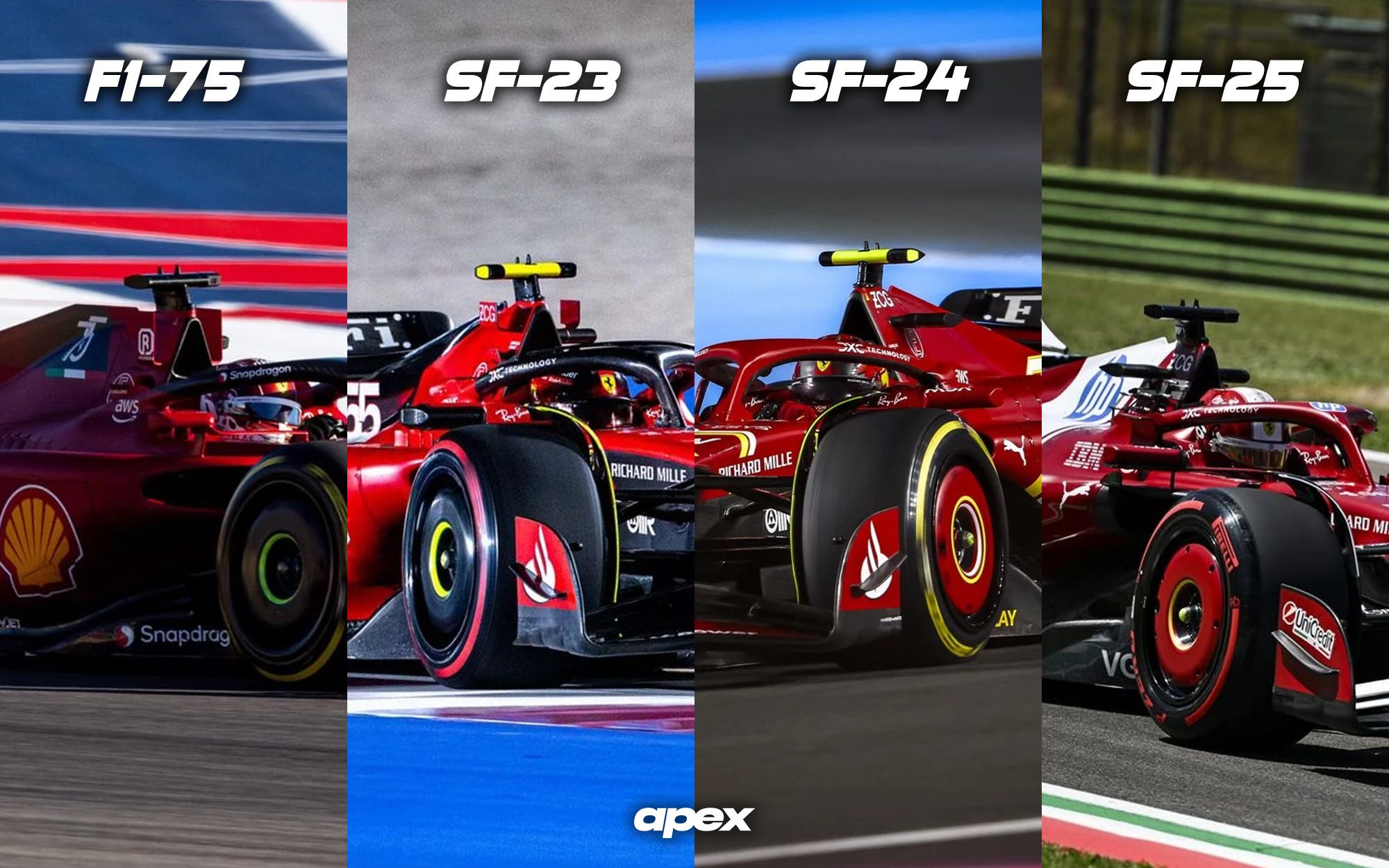
Behind this, the team have opted for a stepped sharkfin as opposed to the smooth lines we’ve seen rearwards from other teams.
The Verdict
Speaking after having run the SF-26 for its first laps at Fiorano, Lewis Hamilton described the “different feeling” of being in a cockpit surrounded by white rather than red, but also the “emotional experience” of running down to turn one and towards the Tifosi.
But he also acknowledged the “long journey” that this running marked the start of, putting an emphasis on the “dynamic” approach the team is going to have to take to adapting and developing this car over this, what he called, “discovery period”.
After completing five laps in the SF-26, Charles Leclerc said “everything went as planned, no big problems or unexpected things” but he also echoed his teammate’s sentiment about discovering the performance and limits of the car more as pre-season testing gets underway.