


That’s what Christian Horner said to the BBC in 2012 about the role Toro Rosso plays in the Red Bull driver timeline, but it remains a relevant comment even 13 years later.
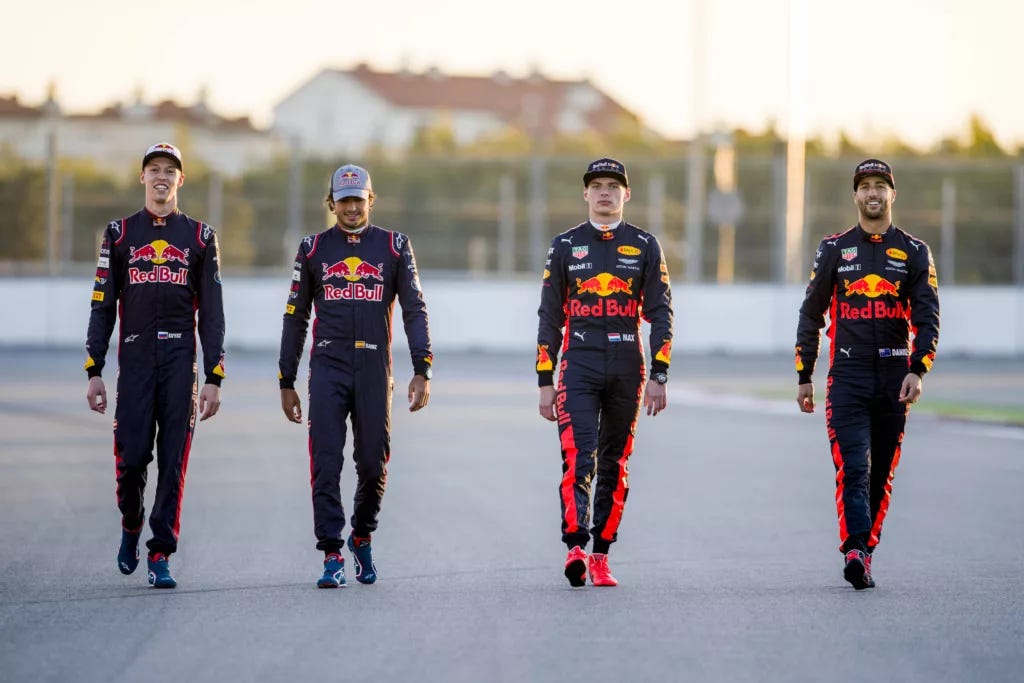
Red Bull have made the decision to promote Yuki Tsunoda to the top team effective immediately, replacing Liam Lawson after he spent just two races in the seat alongside Max Verstappen. In doing so, Lawson has been dropped back down to the sister team, now Racing Bulls, and has become the third driver to follow that path.
Whereas Toro Rosso once had a clear purpose in raising drivers and preparing them for the top team, with every driver who is promoted and underwhelms and is dropped back down this purpose becomes more muddied. Couple this with the identity crisis the team has had in recent years, branding itself as a separate entity under the AlphaTauri and VCARB names before leaning back into its junior-to-Red Bull identity as Racing Bulls, and the picture dilutes again.
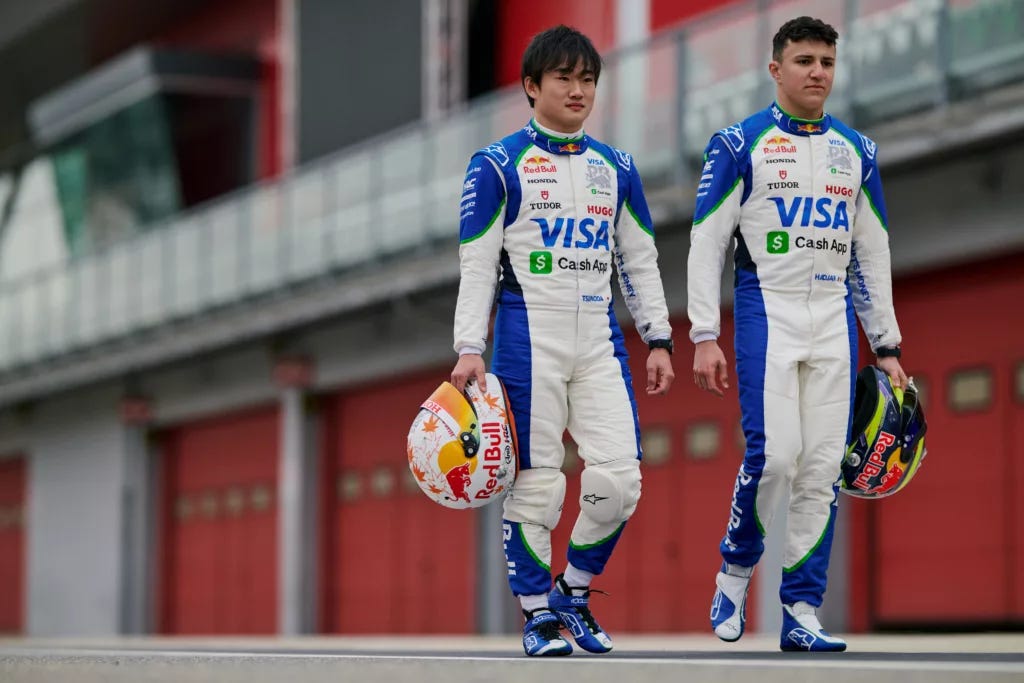
So does the sister team actually serve as a training ground for top talent anymore, where they can be given the time to acclimatise to the ever-pressurised environment of Formula 1, or is it merely a place for Red Bull to put its drivers when they have nowhere else for them?
Toro Rosso’s goal
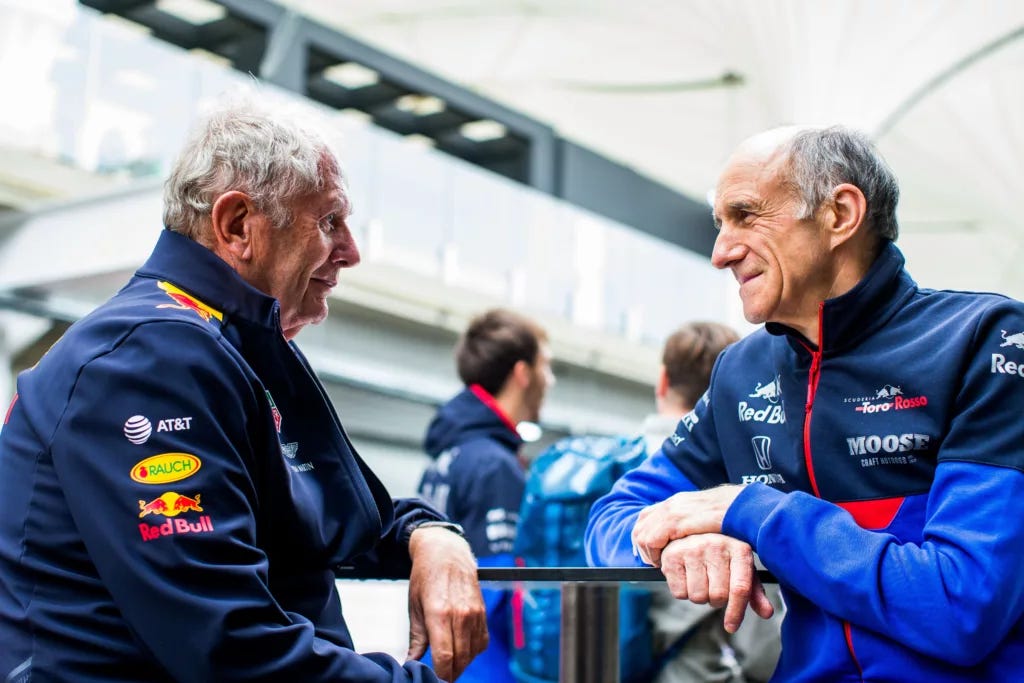
Toro Rosso was established in 2005 when the late-Red Bull owner Dietrich Mateschitz purchased the Minardi Formula 1 team, and before it entered the championship the following year Franz Tost was placed at the helm.
Tost quickly became integrated into the very DNA of the team, reflecting on the goal of the team when he began his role as to “educate young drivers and bring them to Formula 1”, as told to him by Mateschitz.
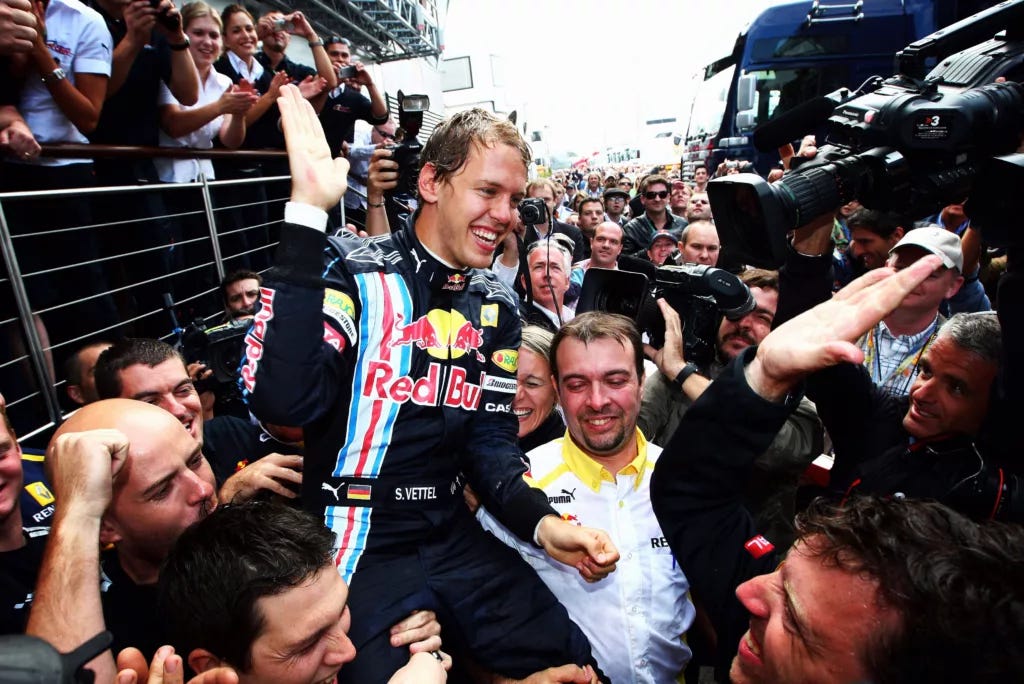
Later, this philosophy narrowed and became “to educate young drivers from the Red Bull driver pool to bring them to Red Bull Racing”. This worked almost immediately – in just their third season a young Sebastian Vettel claimed victory for Toro Rosso at the 2008 Italian Grand Prix, seeing him promoted up to Red Bull Racing for the following year.
But Vettel’s story of promotion is one that just seven other drivers have echoed from 2006 to the present day; 39% of the total number of drivers who have got behind the wheel of a Toro Rosso, AlphaTauri, VCARB or Racing Bull.
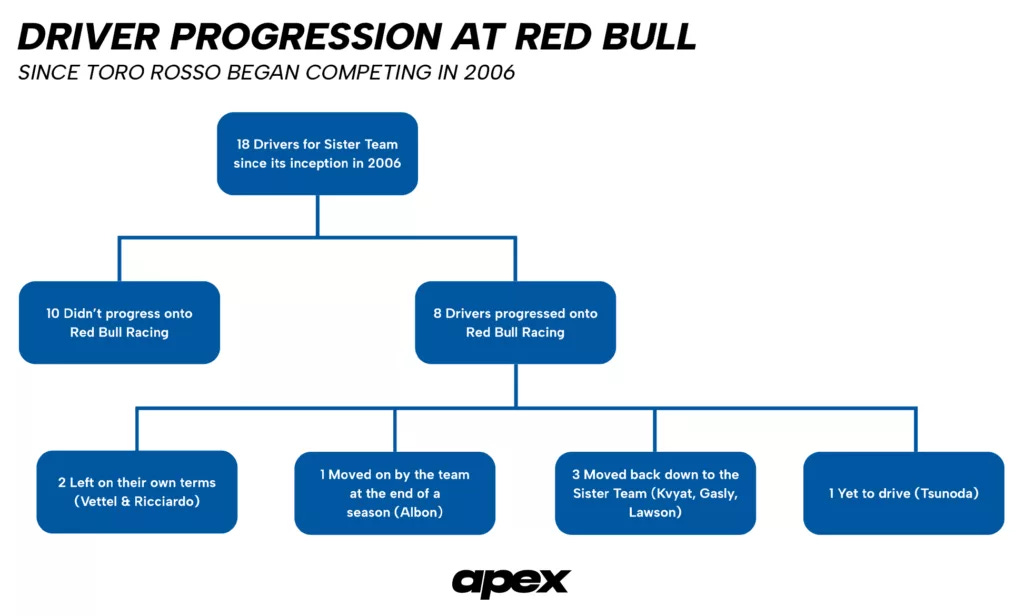
Of these eight who have followed the promotion path, 37.5%, or three drivers, have then been demoted back down to the junior/sister team after stints of varying lengths at Red Bull Racing. Red Bull’s team principal and CEO, Christian Horner, has given a familiar statement each time:
