

Can Ferrari take the fight to Mercedes? Australian GP Data Debrief
Mercedes showed their hand at the Australian Grand Prix - revealing their superior single lap pace, straight line speed and energy management. But does the data suggest Ferrari can take them on?


The Australian Grand Prix was our first true insight into a competitive order this season, and Mercedes fulfilled the ‘favourites’ role they’d been assigned after a relatively straightforward, calm, strong pre-season. Broadly speaking, the top four teams are still the top four teams, with not even a regulation reset as large as this able to disturb the advantage the big names have.
Race Pace


Can Ferrari challenge Mercedes?
Mercedes clearly had the strongest package in Melbourne, as evidenced by the 0.492s gap from Russell and Antonelli to Hadjar in qualifying, but also the 0.785s margin Russell had over his own teammate.
That advantage carried over to Sunday’s Grand Prix, with the Mercedes pair’s combined average pace leaving them 0.113s clear of the field. But, comfortingly to our chances of a intra-team battle this year, that was a considerably smaller advantage than they’d had over a single lap.
After having suffered deployment issues over Q2 and then been unable to refine setup over Q3 given the red flag, Ferrari regained the stronger pace they’d shown on Friday and over testing. While it, alongside their perhaps questionable strategy decision to not box under either VSC, wasn’t enough to put them in contention for the win, it was a much more encouraging show by the Scuderia.
That was something that Charles Leclerc commented on, saying, “we were quite strong in the race, which was a positive given that our expectations yesterday were not that high.” Still, he was aware that “we didn’t have the pace to hold onto first place later on”.
As the quicker driver of the two, as Antonelli also was at Mercedes, Lewis Hamilton was more positive about his and the team’s performance, but also their hope of being in the title fight - saying, “it’s clear we’re in [it]'“. What’s most critical to that hope now and closing that tenth margin to Mercedes’ benchmark is the development pathway they follow, which Vasseur has consistently said will be “aggressive”.
The top four remain the top four
Beyond the fight out front, what became clear from the Australian Grand Prix was that the top four teams are still the top four teams. Both McLaren and Red Bull had just one car for the majority, if not all, of the race in Melbourne, after Oscar Piastri crashed on the reconnaissance laps and Isack Hadjar retired on lap 11.
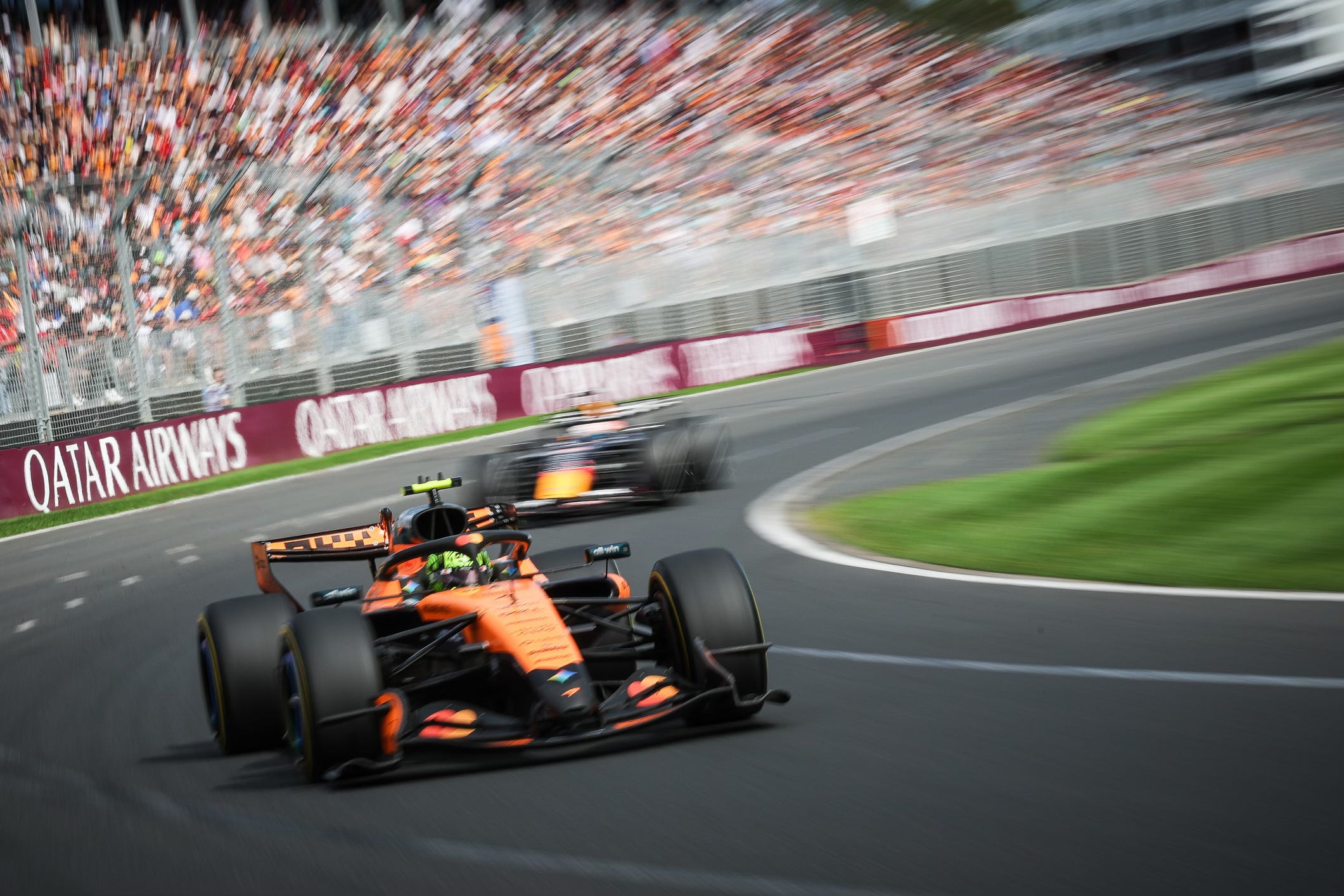
In many ways, Norris and Verstappen’s races echoed each other’s. They both suffered higher than anticipated levels of graining, followed the two-stop strategy with Norris boxing to cover off Verstappen at his later stop after the four-time champion had progressed back up through the field, and they battled for position over those late stages too.
Just 0.032s split their pace, with Verstappen marginally quicker than Norris but Hadjar’s few laps pulling Red Bull’s team average behind Norris as the McLaren representative. Norris commented on that post-race: “the fact that we could defend against Max and keep him behind, even though he had a lot more pace, was positive.”
What’s maybe most striking though is the gap from Red Bull as fourth quickest to the top team in the midfield, which is almost as large as the gap covering the top four themselves from Mercedes back to Red Bull - 0.734s.
A new team at the front of the midfield?
Leading the midfield, impressively so in their first race under the new marque, were Audi. Only Bortoleto contested the race as Hulkenberg DNS’ed as a result of a telemetry issue with his car, but his pace alone was strong enough to put him 0.387s clear of their closest rivals in Haas.
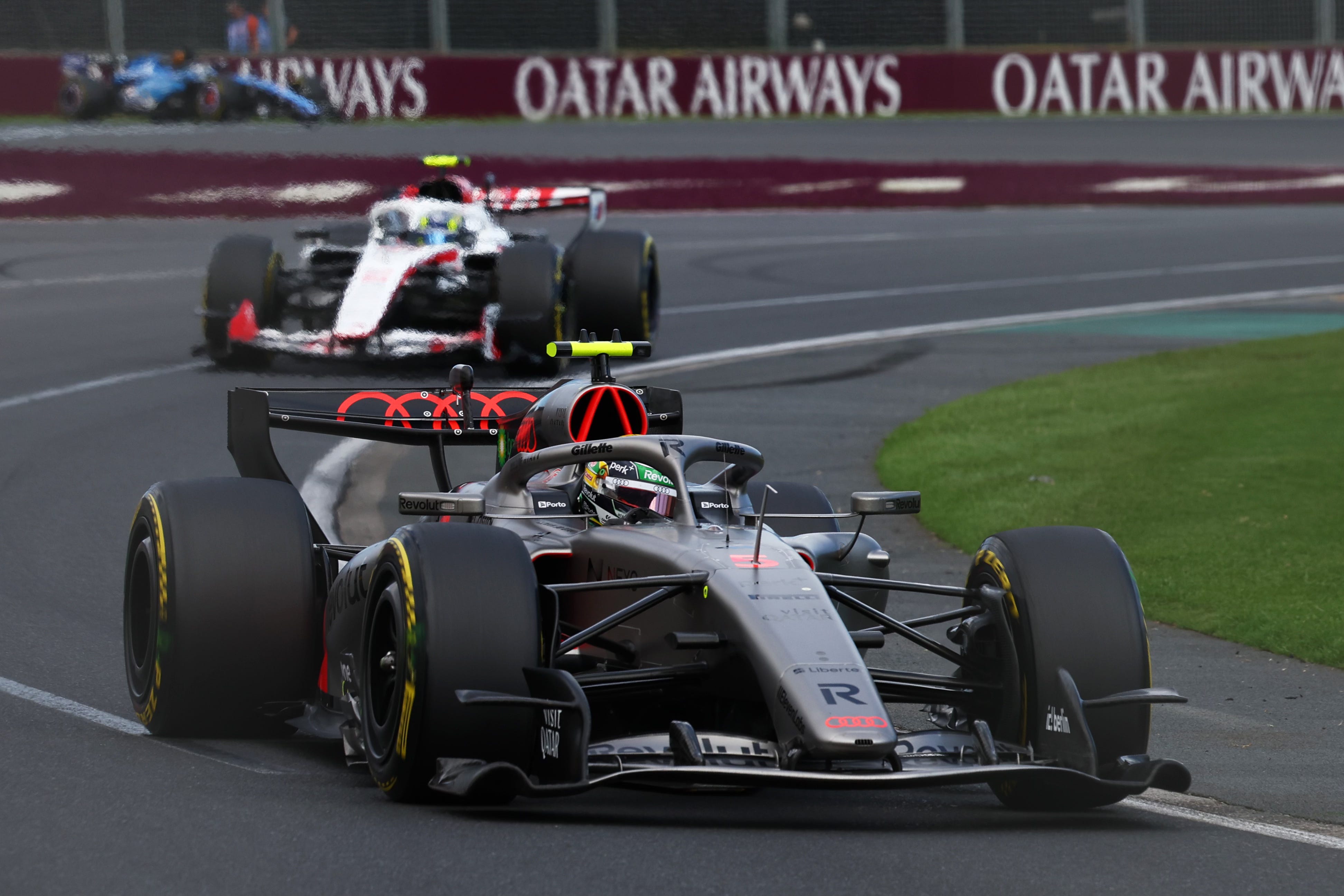
Bortoleto ran the two-stop strategy, which is likely influencing his pace advantage over those behind who ran the one-stop including a long stint on the hard tyre from boxing under the VSC - a group that includes Bearman, Lindblad, Gasly, and Ocon.
The teams who were coordinated for strategy are generally not split by much for pace, even with the obvious inter-car differences, which is notable. Haas lead that group behind Audi after having shown pace strong enough to enable a P7 finish for Bearman, Racing Bulls are just under a tenth back from them, and Alpine are around another 3 tenths back again.
It leaves Alpine in a rear of the midfield group with Williams, with whom they were more closely matched for pace; split by 0.26s. But Alpine got more out of that pace in terms of the race result given that Gasly claimed P10 and a point to open their campaign, while both Williams cars finished out of the points.
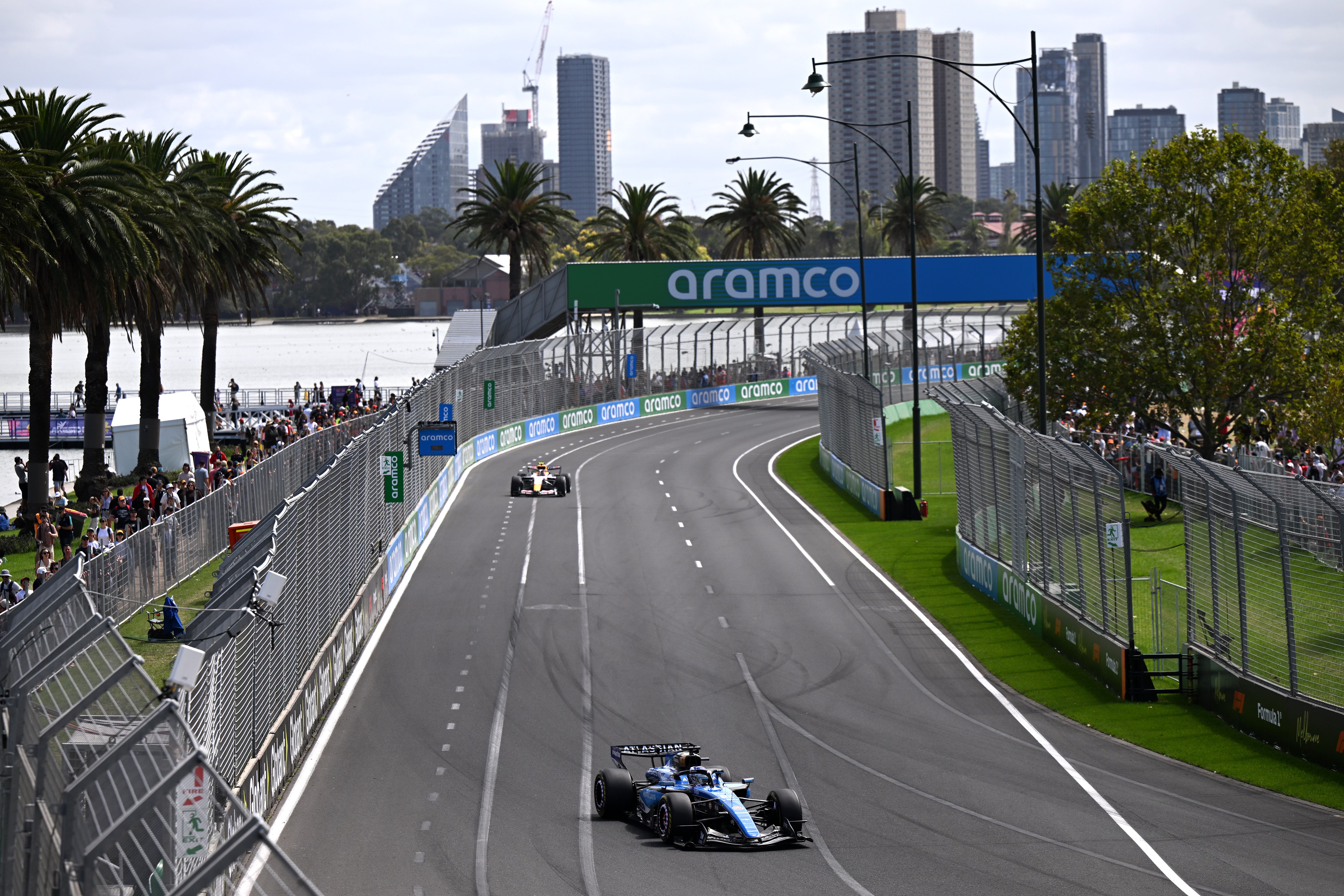
They are clearly ”lacking performance” at this stage, as James Vowles noted post-race, which ultimately comes down to the FW48 being overweight, and the impact of that compounded with the “small issues” that they encountered across the weekend.
Back-markers for different reasons…
Cadillac’s debut race was a success when measured against the goals they set themselves coming in. One car in Perez’s hands saw the chequered flag, albeit 3 laps back from the leader and over 4.5s off Russell’s pace, but the other with Bottas DNF’ed after running just 11 green flag laps.
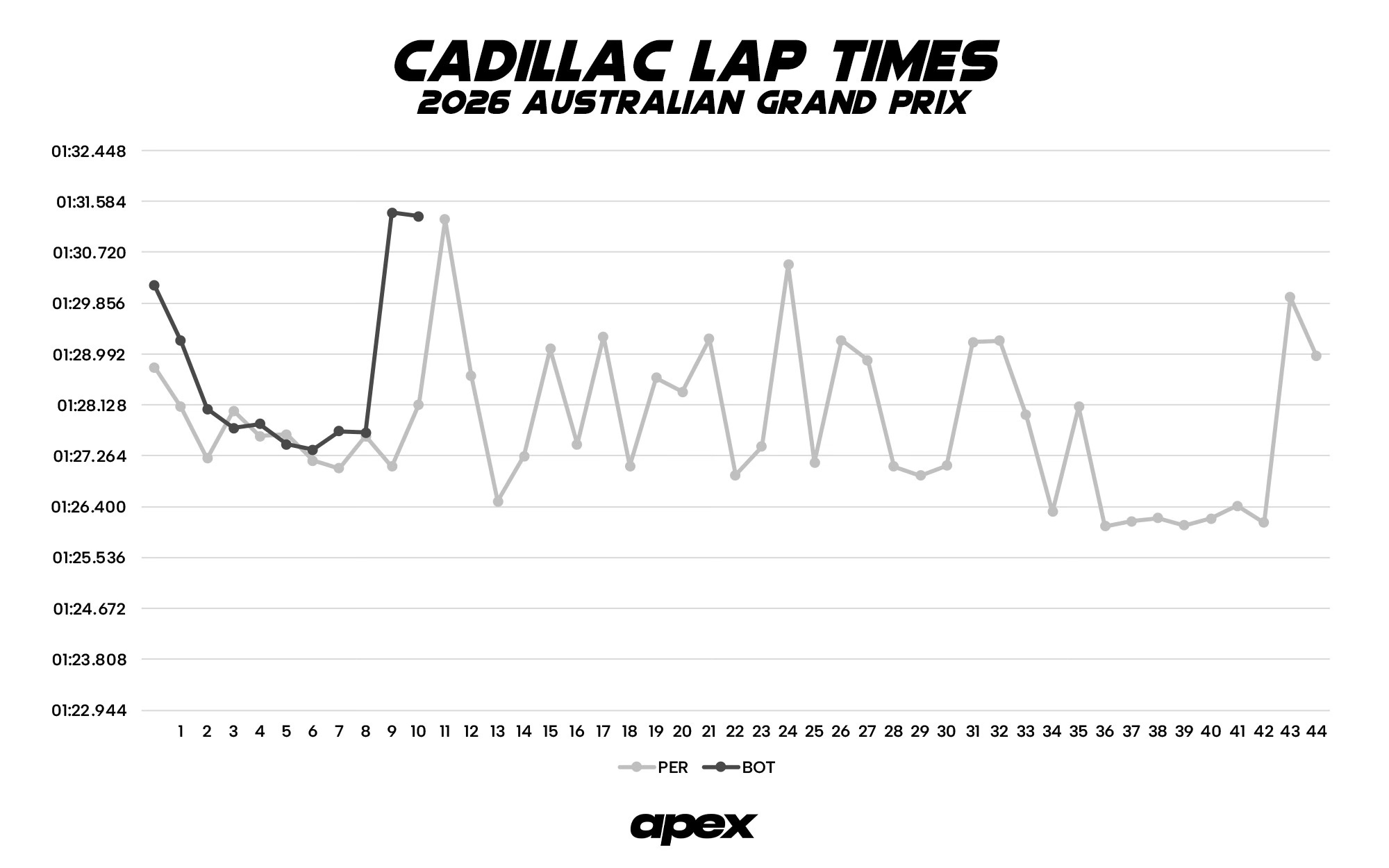
What’s also notable is that his pace over the laps he did complete was variable - it ran from anywhere as quick as the low 1:27s to as slow as the 1:31s - and we could assume that that is down to a lack of energy management consistency lap to lap. Perez suffered a comparable level of inconsistency in pace, with big swings in his lap times too which persisted all race long.
Even with these clear limitations, their team principal Graeme Lowdon praised the performance, calling it “a really good start to our journey.”
Aston Martin, on the other hand, ran limited laps for a different reason. They entered the weekend with Newey tempering expectations, saying that neither driver was happy to do more than 25 laps in the car for fear of getting “nerve damage” in their fingers from the excessive vibrations from the Honda power unit. As a result, the race was simply going to act as an additional test session for them and be used to evaluate the fixes they’d brought to Melbourne, as they were not prepared to risk needing additional spares, which they don’t have, or for the drivers to be put at risk either.
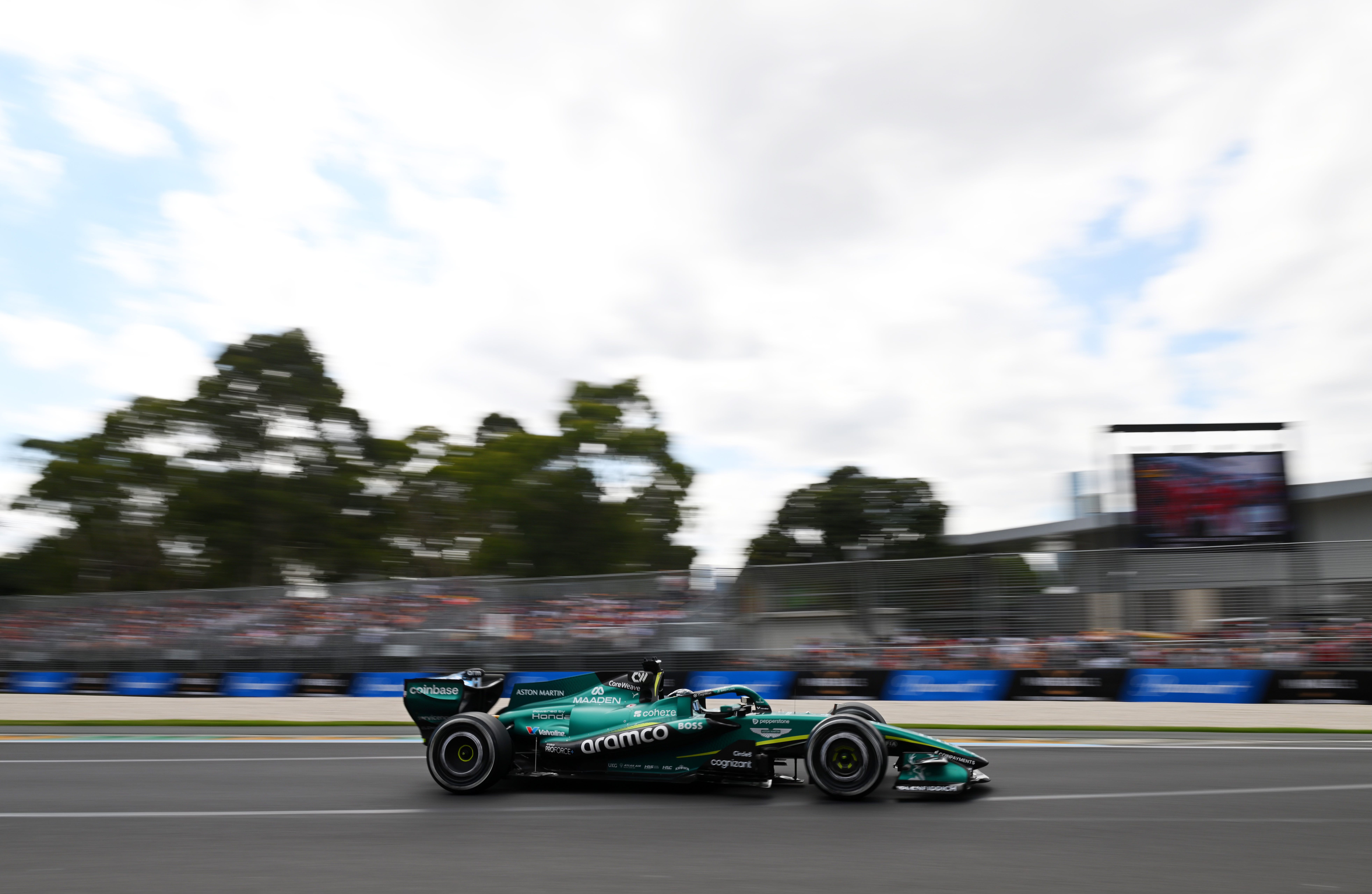
With that in mind, you could argue that their race performance exceeded expectations, even if it did result in neither driver finishing with both also coming in and out of the pit lane multiple times to “check the car over”. But before the ultimate retirements, Stroll completed 29 timed laps, while Alonso managed 16.
Their pace over these shorter stints leaves them as the tenth quickest team, with Cadillac’s inconsistency being their undoing in comparison, but they are still faced with a 3.8s margin to find to the leaders.
Stroll summarised that in saying “there's still quite a bit missing in terms of performance and reliability”, but he also noted the value of the lap count they achieved in giving them “a bit more direction going into China.”
Tyre Performance
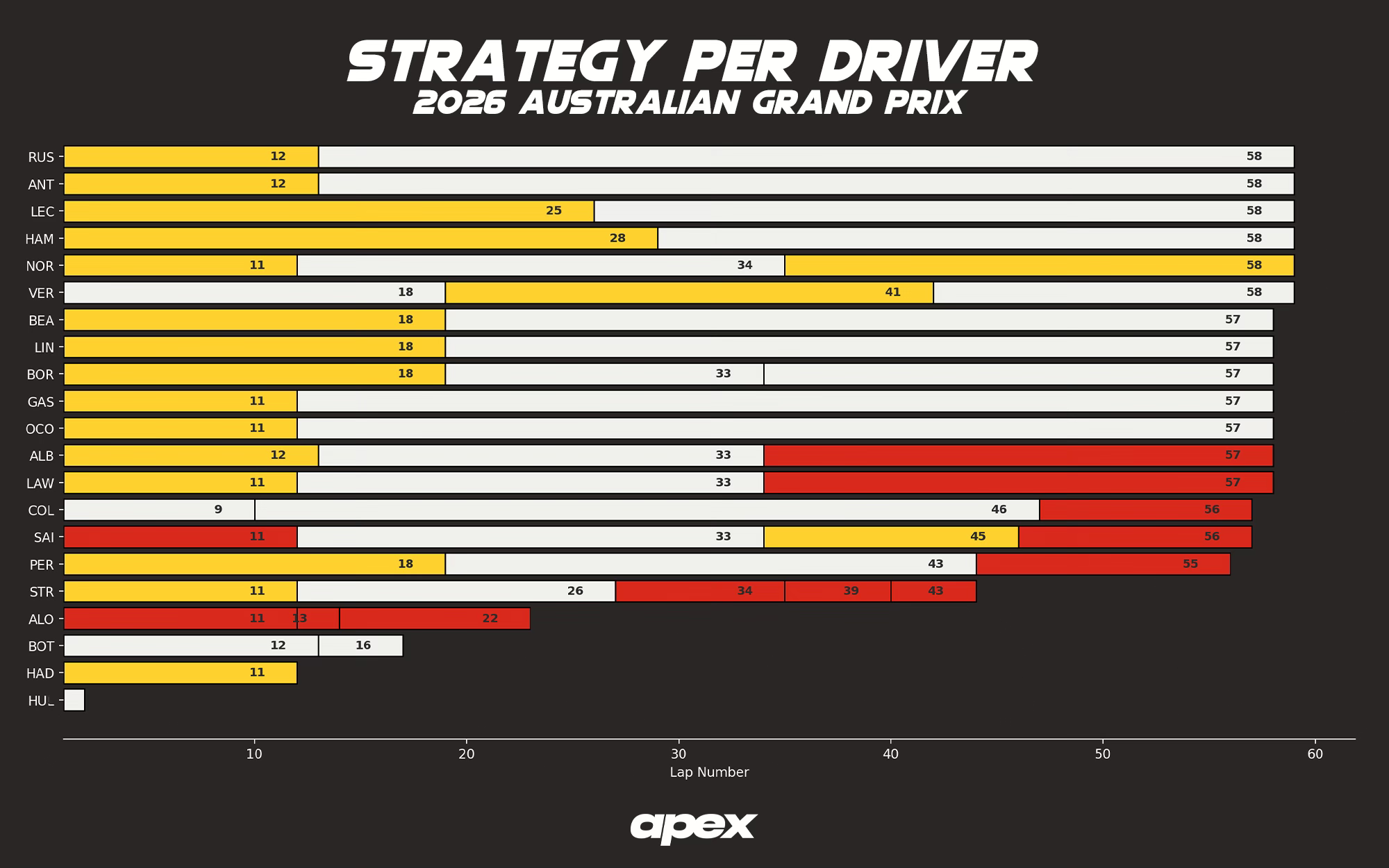
The field largely followed the one-stop strategy Pirelli had predicted as optimal heading into the race - starting on the medium but switching to the hard earlier than had been anticipated to capitalise on the opportunity of boxing under the two VSCs - for Hadjar, then Bottas.
More on the table?
Ferrari were the only team to not take advantage of those opportunities with either driver, leaving them with more evenly split stints over the medium and hard compounds as they chose to box close to the window Pirelli had recommended - lap 26 for Leclerc and 28 for Hamilton.
Ultimately though, the data suggests that their tyre wear over their hard stint was comparable to that of the Mercedes, despite a tyre life delta of around 13 laps between them.
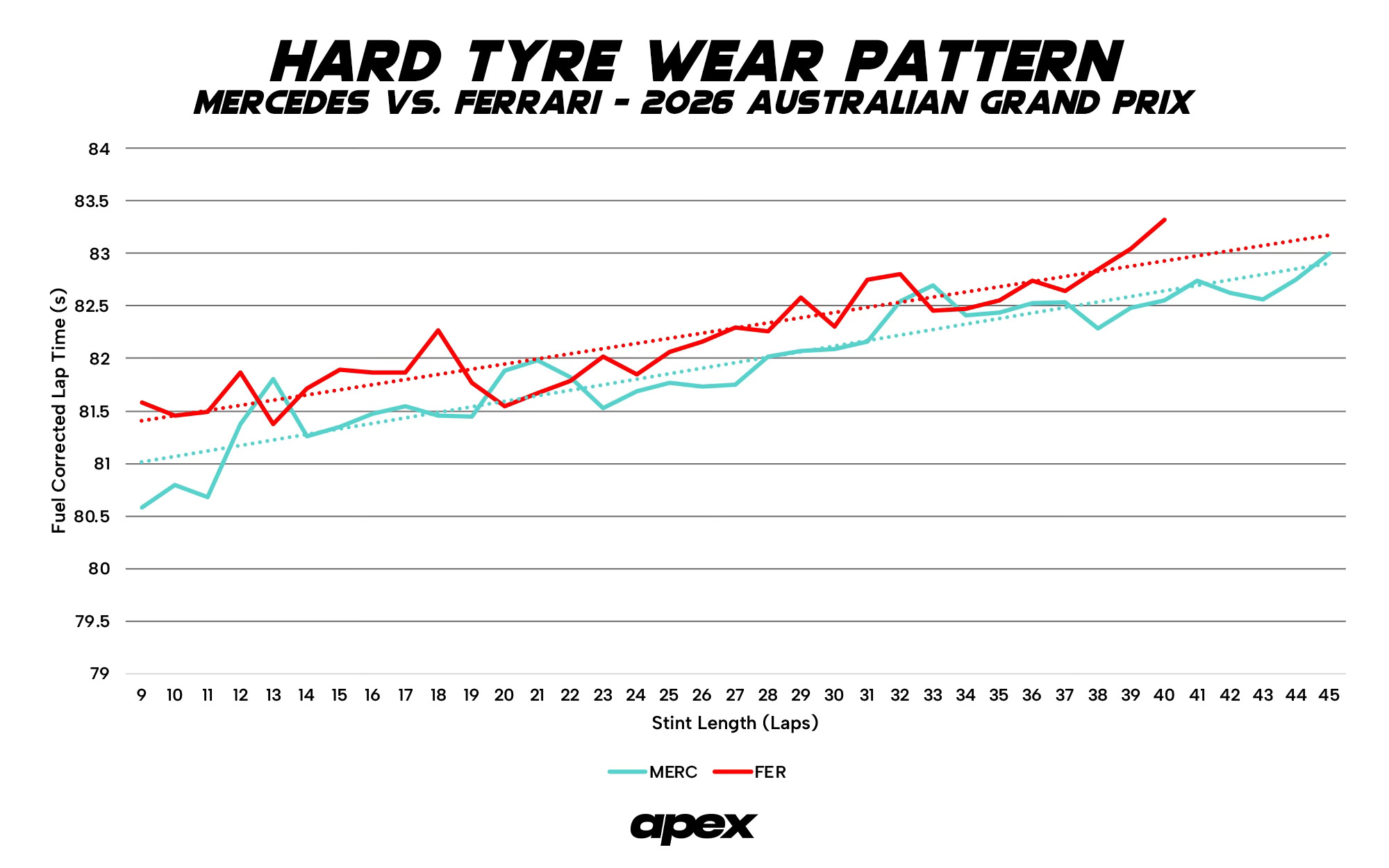
That came down to, as Pirelli’s motorsport director stated post-race, “limited degradation”. But that factor also meant, alongside the VSC oportunities, that a two- (or more) stop race incorporating the soft tyre was not off the table and was run by five drivers.
Degradation estimates, calculated using fuel corrected lap time averages over the field per compound, indicate that there was very little difference between the hard, medium and soft in how much drop off they each showed per lap due to wear or deg. That’s indicated by the gradient of the trendlines here, and supported by the values each being between -0.066 and 0.049, even if the medium tyre was generally the quickest of the three.
Verstappen was one driver who noted a difference versus this lower level wear, saying that graining had “compromised our stints and meant that we couldn’t really fight for more”.

